

First Impressions: A Well-Organized Medical News Hub
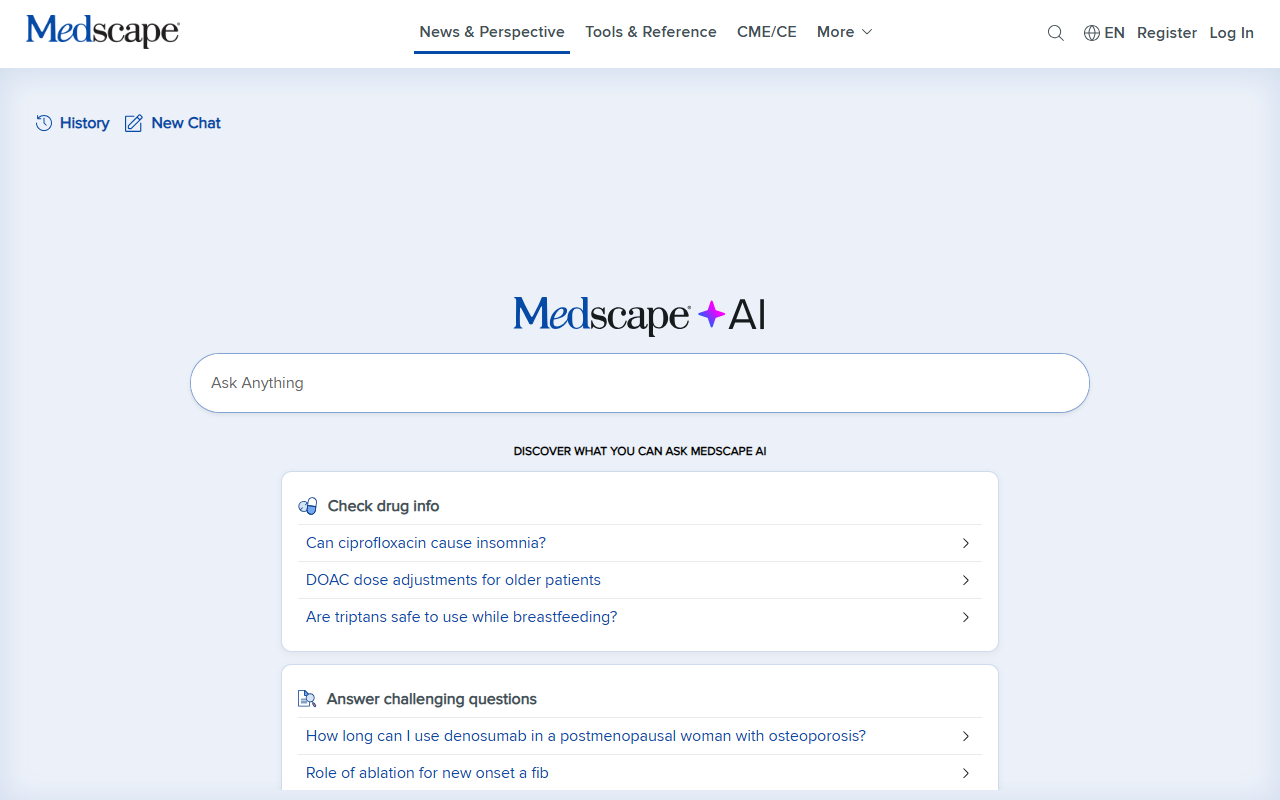
Upon visiting Medscape, I was immediately struck by the sheer volume of curated medical content tailored for healthcare professionals. The homepage greets you with a clean, specialty-driven navigation bar listing everything from Cardiology to Urology. The dashboard highlights featured news, perspectives from columnists like George Lundberg, and a regularly updated “Latest News” feed. I tested the free tier by browsing the Neurology section and found articles from April 28, 2026, such as “Zanubrutinib May Have PFS Edge Over Combo Therapy in CLL” and “Is It Time to Abandon Stepwise Escalation for Diabetes?” Each article opens to a full-text read with references, author disclosures, and related content links. For a clinician looking to stay current, the layout is intuitive, and the mobile app version mirrors the desktop experience well.
How Medscape Functions as an AI Reading Tool
Medscape is best understood not as an AI-powered generator but as a sophisticated reading and curation platform. The site aggregates thousands of medical articles, clinical guidelines, and conference reports, then filters them by specialty. While Medscape does not openly market its use of large language models (LLMs) for summarization or personalization, its recommendation engine uses algorithmic sorting to surface trending and specialty-specific content. For instance, the “Trending on Medscape” section dynamically updates based on collective reader activity. The “Fast Five Quiz” and “Clinical Case” features offer interactive reading—test your knowledge while consuming content. This makes Medscape a practical AI reading tool for evidence-based learning, even if the “AI” label here refers more to intelligent curation than generative AI. During my test, the free account provided unlimited access to news articles and quizzes, with no evident paywall for the reading itself.
Pricing, Integrations, and Target Audience
Pricing is not publicly listed on the website because Medscape is free to register and use for all healthcare professionals. The business model relies on advertising, sponsorship, and CME credits (which may have associated fees for certification). Integrations include a dedicated Medscape app (iOS and Android) that syncs reading history and saved articles. There is no public API for third-party use. Unlike dedicated AI reading assistants such as Consensus or Elicit—which use LLMs to summarize research papers—Medscape emphasizes expert-curated journalism and peer-reviewed summaries. It is best suited for practicing physicians, nurses, pharmacists, and medical students who need a digestible, specialty-specific news feed. Researchers seeking deep, original paper summaries may find Medscape too aggregated; they should look elsewhere for raw citation analysis.
Strengths, Limitations, and Verdict
Medscape’s genuine strength is its breadth: thousands of free, up-to-date articles spanning 30+ specialties, plus hands-on tools like drug interaction checkers and calculator apps. The inclusion of CME quizzes tied to reading material gamifies learning effectively. However, a real limitation is the lack of transparent AI features—the platform never explains how its “For You” algorithm works or whether it uses LLMs at all. Content is heavily edited, which ensures quality but also means you’re reading a filtered version of the primary literature. Additionally, the free tier includes advertisements and sponsored content, which can distract from pure reading. For clinicians who want a daily, curated read of the most important medical news without sorting through PubMed, Medscape is an excellent starting point. For anyone requiring independent, AI-generated summaries of specific research papers, I recommend pairing Medscape with a dedicated AI research tool. Visit Medscape at https://medscape.com/ to explore it yourself.










Comments