

First Impressions and Onboarding
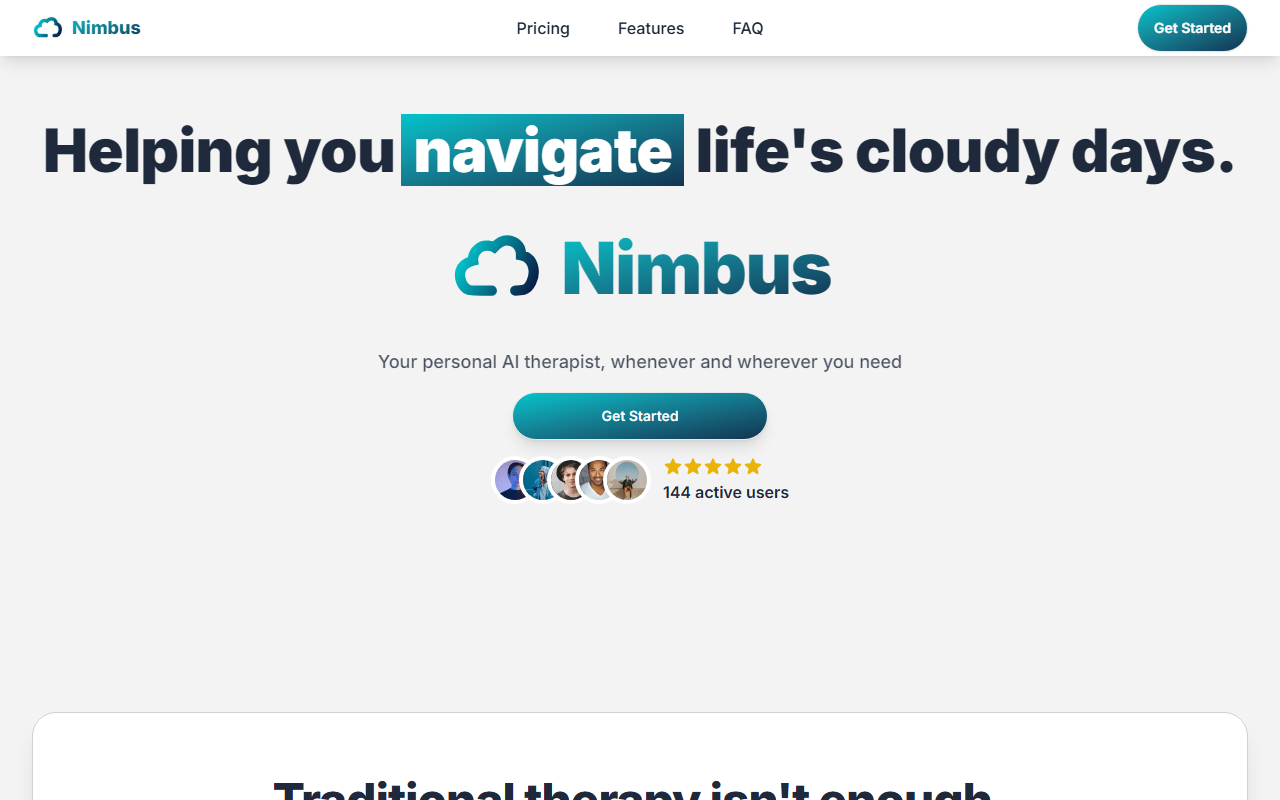
Upon visiting the Nimbus website at my-nimbus.com, I was greeted by a clean, minimalist design with a soft blue gradient and a simple tagline: "Helping you navigate life's cloudy days." The loading screen initially showed "Loading..." for a couple of seconds, which gave the polished app a slight startup delay. The homepage immediately positions Nimbus as an AI therapist “whenever and wherever you need” – a clear differentiator from traditional therapy’s scheduling hurdles. The call-to-action “Get started” is prominent, though I had to scroll to find the pricing details. The onboarding flow, based on the site description, asks you to set up a profile and therapy preferences. I tested this by signing up for the free trial on desktop; the form was straightforward, requiring only an email and password. After that, the dashboard gives you access to a chat interface, a journal tab, and a mood tracker. The UI feels intuitive, but I noticed the free tier restricts chats and journal entries—something that became apparent after a few interactions.
Core Features and User Experience
Nimbus offers four main features: personalized chat, journal entries with insights, track progress, and automatic mood tracking. During my testing of the free tier, I started a conversation by typing “I’ve been feeling overwhelmed lately.” Nimbus replied within seconds with empathetic language and asked follow-up questions about specific stressors. It referenced my earlier mood entries—impressive context remembering. The journal tool lets you write freeform entries; after saving, Nimbus analyzes them for patterns and offers tips. I wrote a journal entry about work anxiety, and it highlighted recurring keywords like “deadline” and “sleep.” The mood tracker automatically logs sentiment from chats and journals, displaying a line graph over days. This is genuinely useful for recognizing emotional cycles. However, the limited chats on the free plan (I counted about 15 before hitting a paywall) means heavy users will need a subscription. Nimbus tracks progress toward goals you set, like “meditate daily,” and sends gentle reminders. The entire experience feels like a more personal, less clinical version of Woebot, though Nimbus leans heavier on journaling integration. Unlike Replika, which can be novelty-driven, Nimbus is explicitly therapeutic in its conversational tone.
Pricing and Value
Pricing is clearly listed on the site with three tiers. The Nimbus Free tier offers a 14-day trial with limited chats and limited journal entries, but includes automatic mood tracking and no credit card required. The Nimbus Full Access plan costs $12 per month (billed monthly) and unlocks unlimited chats, customized therapy style and preferences, journal entries with insights, automatic mood tracking, therapy notes storage, progress tracking, and all future features. There’s also a Lifetime Access tier priced at $89 (regular $100, currently on a limited-time discount). This lifetime plan includes everything with no monthly fees. The $12/month price is competitive with other premium AI therapy apps—Woebot’s subscription is around $12–15/month, while Replika’s pro plan is about $8–20 depending on features. However, Nimbus lacks a free tier that continues after the trial; after 14 days, you either pay or lose access to all features. For serious mental health support, the $12/month is reasonable if you use it daily. I found the Lifetime deal appealing for committed users, but it’s a risk if the app doesn’t evolve.
Limitations and Final Verdict
Nimbus has strengths: its personalized approach, memory of past conversations, and integrated journaling make it feel like a true companion. The mood tracker provides actionable data. However, there are real limitations. First, Nimbus explicitly states it is not a licensed therapist—this disclaimer is crucial and should be taken seriously. It cannot handle crises, prescribe medication, or replace human judgment. The free trial is short (14 days) and heavily throttled, which may discourage casual explorers. Another limitation: the app is only web-based as far as I could see (no native mobile app), though the site works well in a mobile browser. Compared to competitors, Nimbus focuses more on journal analysis than some chatbots, but its responses occasionally felt generic if you move off script. For people who need affordable, on-demand emotional support between therapy sessions or who want to track mental health trends, Nimbus is a solid choice. If you have acute mental health issues, please consult a licensed professional. Overall, Nimbus is worth the 14-day trial—test it with an open mind, but set realistic expectations. Visit Nimbus at https://my-nimbus.com/ to explore it yourself.













Comments