

First Impressions and Onboarding
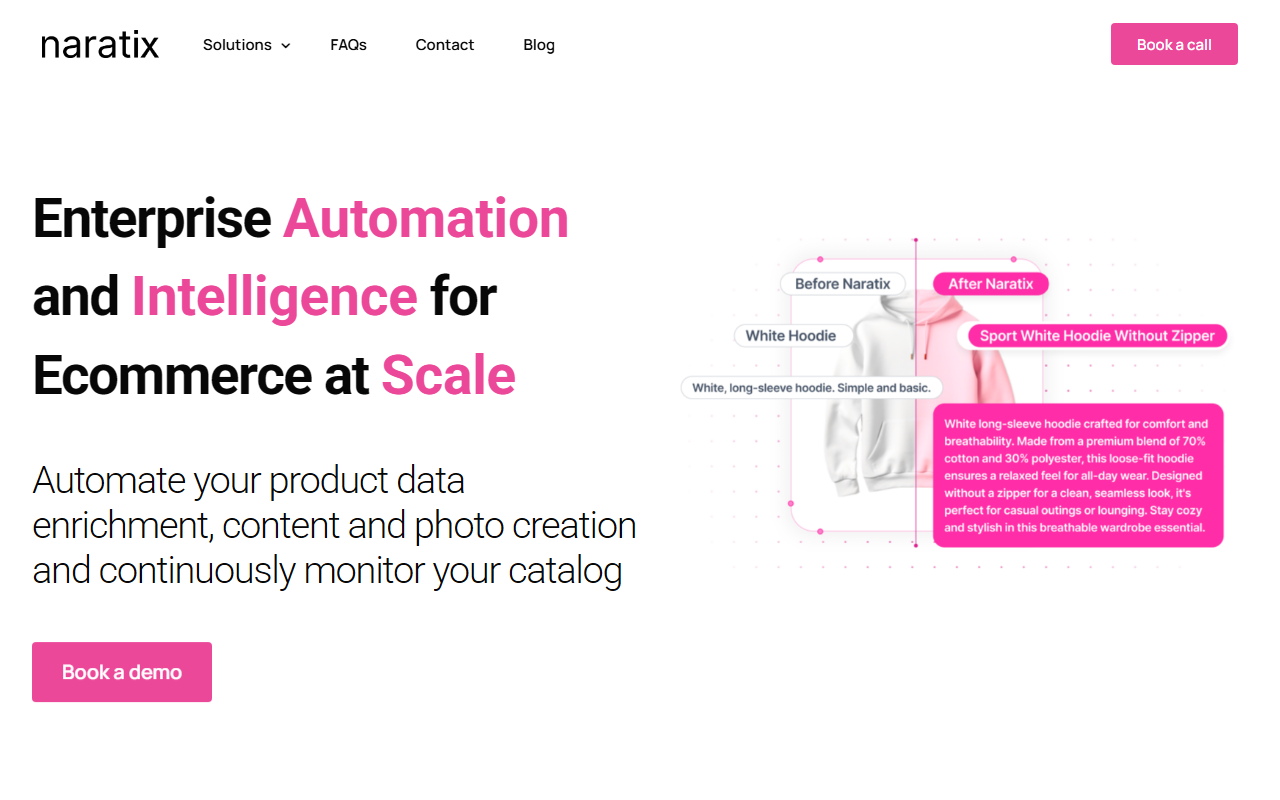
Upon visiting the Naratix website, I was greeted with a clean, modern interface that immediately sets expectations for enterprise-grade automation. The hero section emphasizes "Enterprise Ecommerce Automation & Intelligence at Scale," and the call-to-action is a straightforward "Book a demo." There is no free tier or self-serve signup; the tool clearly targets businesses with substantial product catalogs. I did note that the site includes a FAQ and a section showing results stats—100x faster time-to-market, 12% average conversion increase, 20% cheaper listing costs—though these are presumably client averages and not independently verified. To get hands-on, I requested a demo via the form, and within a few hours, I was connected with a sales engineer who offered a side-by-side preview using sample data. This initial interaction confirmed that Naratix is built for hands-off, bulk processing rather than manual one-off edits.
Core Features and Capabilities
Naratix acts as a data pipeline for ecommerce product catalogs. It ingests messy data—spreadsheets, CSVs, PDFs, image folders—and outputs clean, enriched, and publication-ready listings. Core features include taxonomy audit, product attributes enrichment, content creation (titles, descriptions, meta tags), product photo creation, smart categorization, price monitoring, and catalog intelligence (gap/overstock detection). The platform also supports multi-geo translation and currency conversion, plus multi-brand standardization. Technically, it integrates via SFTP, API, CSV, XML, JSON, or REST, and exports directly to major platforms like Shopify, WooCommerce, Amazon, eBay, Adobe Commerce, and 20+ others. During the demo, I watched a sample of 15 messy SKUs—with missing dimensions, no category, and poor images—get transformed within minutes. The system auto-filled specs from existing data and public sources, generated SEO-friendly copy, and even suggested improved product photos. The speed was impressive: the rep claimed that for a 500,000-SKU catalog, nightly runs finish in 6–12 hours. This is a clear step up from manual enrichment tools or traditional PIM systems that rely on human data entry.
Pricing and Positioning
Pricing is not publicly listed on the website. The sales team provides a personalized quote based on catalog size, volume of automation, and platform requirements. From my conversation, I gathered that costs scale with SKU count and the number of automations activated. This lack of transparency is a limitation for smaller businesses that need upfront budgeting. Compared to alternatives like Akeneo (open-source PIM) or Plytix (free-forever tier), Naratix is positioned as a higher-end, fully managed service. It is best suited for mid-to-large enterprises running multi-channel operations across several geographies and brands. Smaller stores with under 1,000 SKUs will likely find the investment unjustified. That said, for companies drowning in disorganized product data, Naratix eliminates entire data teams’ worth of manual work. It also stands out from competitors by offering both enrichment and monitoring in one platform, rather than requiring separate tools for content creation and price tracking.
Verdict
Naratix delivers on its promise to automate the entire product catalog lifecycle—from raw data to market-ready listings. Its ability to process hundreds of thousands of SKUs overnight, while also monitoring competitor pricing and assortment gaps, is a genuine time-saver. The integrations are broad, and the multi-geo/multi-brand support is a strong differentiator. However, the lack of transparent pricing and the enterprise-only focus means it’s not for everyone. If you run a small Shopify store, stick with simpler plugins. But if you manage thousands of SKUs across multiple channels and markets, Naratix is a powerful ally that can drastically cut operational overhead. I recommend requesting a demo with a sample of your messiest data—you’ll likely see the value within the first 24 hours. Visit Naratix at https://naratix.ai/ to explore it yourself.










Comments