

First Impressions and Interface
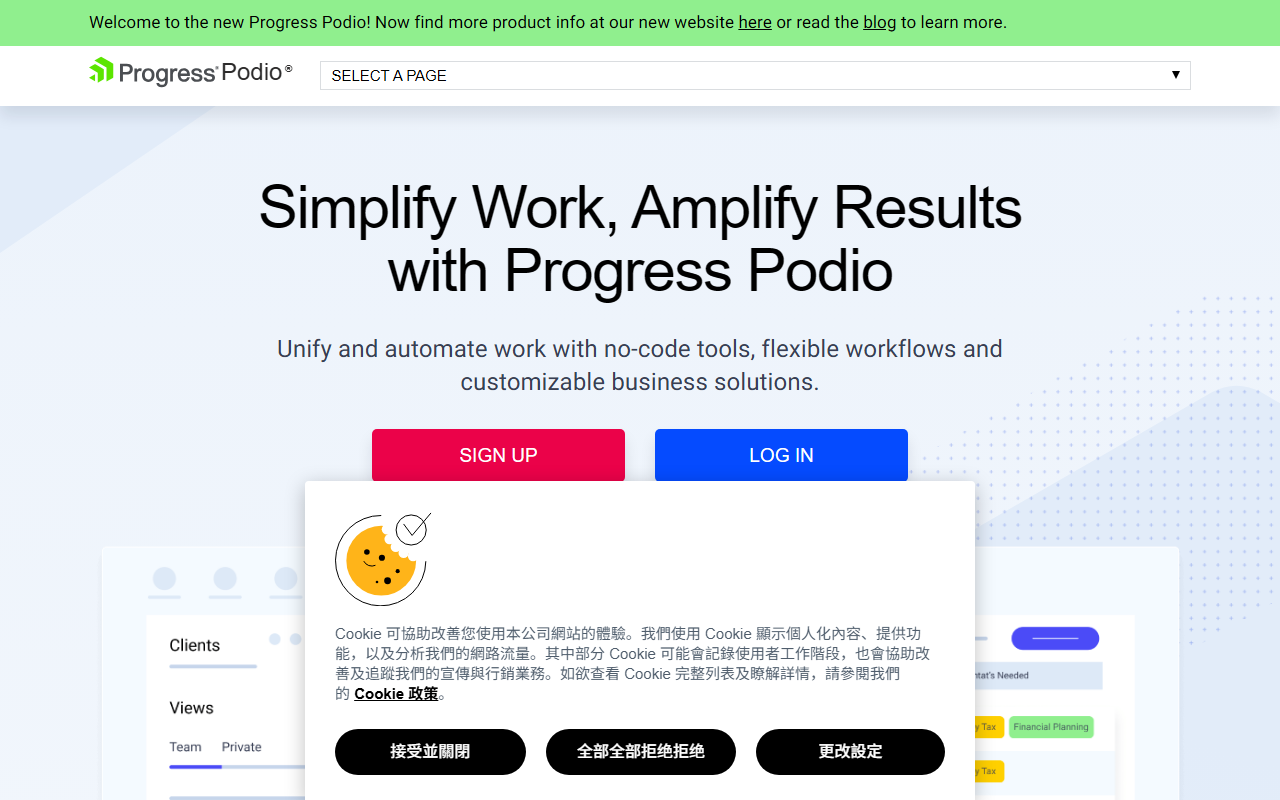
Upon visiting Podio’s website, the first thing I noticed was a banner announcing the transition to “Progress Podio” and a pointer to a new product site. The dashboard itself—accessible after a quick sign-up—presents a clean, modular layout. You land on a workspace overview where you can create “apps” (custom data structures) or use pre-built templates for CRM, project management, and approvals. The drag-and-drop builder is immediately visible; I clicked into a template called “Lead Tracking” and saw how fields, dropdowns, and linked items are configured without any code. The interface felt familiar to anyone who has used modern no-code tools, but with a stronger emphasis on relational databases—bidirectional links between items are a standout feature. Onboarding includes a walkthrough video and sample data, which made my first test workflow painless. Mobile apps for iOS, Android, and iPad extend the same functionality, though the web experience remains the richest.
Core Capabilities: Customize, Automate, Collaborate
Podio’s core value proposition rests on three pillars. Customization is deep: you can build custom apps with multiple views (table, kanban, calendar, badge) and link records bidirectionally. Webforms allow external data intake, and templates jumpstart the process. Automation uses If-This-Then-That rules that can assign tasks, update statuses, send notifications, generate PDFs from templates, and even trigger SMS or email delivery. The API-first approach means you can connect to other systems, though I didn’t test that layer extensively. Collaboration includes real-time commenting, file sharing, @mentions, and granular permissions down to item level. Activity logs and revision history support audit trails—useful for regulated industries. Importantly, Podio does not appear to leverage generative AI or large language models; its “intelligence” comes from rule-based automation, not machine learning. This places it squarely in the no-code work management category rather than text AI. Competitors like Airtable offer similar relational data design, while Monday.com focuses on visual dashboards and templates. Podio differentiates with its heavy emphasis on enterprise permissioning and partner ecosystem (the site lists trusted partners who build custom solutions).
Pricing and Target Audience
Pricing is not publicly listed on the website. The site only offers a “Sign Up” button leading to a trial, with no tier details visible before registration. Historical data suggests Podio uses per-user, per-month billing, but I cannot confirm current figures without logging into the billing section. That opacity is a limitation for quick budget assessments. The tool is best suited for organizations already comfortable with no-code logic and willing to invest time in setup. Small teams may find it complex, while mid-to-large enterprises with dedicated administrators will unlock its full potential. The case studies highlight use cases from a 30x growth startup to a global nonprofit—indicating scalability. G2 badges for “Easiest Setup” and “Best ROI” suggest users do achieve value, but the learning curve is real. If you need true AI features like natural language processing or automated content generation, look elsewhere—tools like Notion AI or Jasper are better matches. Podio excels at structured data management and process automation without writing code.
Verdict: Who Should Use Podio?
Podio is a powerful, flexible work management platform that shines when you need to build custom databases, automate repetitive workflows, and collaborate with granular controls. Its strengths are genuine: the no-code builder is intuitive, the relational field linking is rare among competitors, and the permission system is enterprise-grade. The limitations are equally real: no integrated AI features, no transparent pricing upfront, and a setup that requires time and planning—it’s not a plug-and-play tool for the average user. I recommend Podio to operations managers, IT departments, and teams that have moved beyond basic project tracking and need a system to manage complex, interlinked processes. It’s also a strong fit for organizations with existing Podio partners or those willing to invest in implementation. For anyone seeking a lightweight, AI-powered assistant, this isn’t it. But for those who value control and automation over out-of-the-box intelligence, Podio delivers.
Visit Progress Podio at https://podio.com/ to explore it yourself.










Comments