

First Impressions: A Data-Heavy Dashboard for Serious Investors
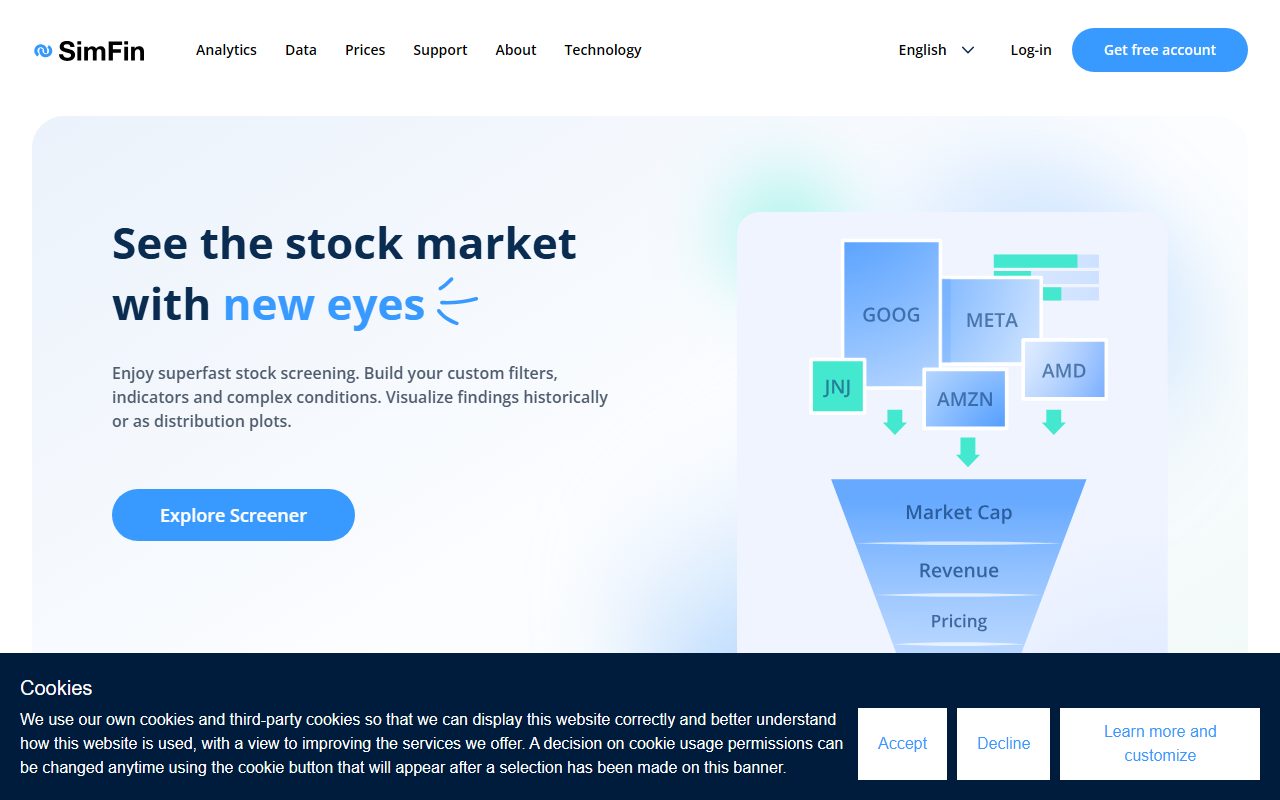
Upon visiting SimFin, I was greeted by a clean, modern site that wastes no time introducing its core promise: fundamental data, screening, and backtesting. The homepage highlights three primary pillars—superfast stock screening, backtesting strategies, and a downloadable data API. The layout is functional, not flashy, which immediately signals that this tool is built for analysts and quants, not casual traders. I noticed the platform offers over 7,000 financial metrics across 5,000 companies with 20 years of history. The onboarding is straightforward: you can register for a free account with no credit card, and from there you’re dropped into a workspace that feels like a hybrid of a database query builder and a visualization tool. The free tier allowed me to test the screener immediately, and I spent time building a simple filter based on price-to-earnings ratio and revenue growth. The response was instant—no lag. That speed is a significant advantage.
Key Features and Technical Capabilities
SimFin’s standout feature is its stock screener. You can combine unlimited rules, custom indicators, and individual weights to create a scoring model. For example, I set three conditions: P/E under 15, ROE above 10%, and debt-to-equity below 0.5. The screener returned a list of tickers with historical performance charts and distribution plots. The backtesting module lets you test a single stock or a full portfolio strategy against 20 years of data. I ran a simple value strategy—buy stocks in the lowest quartile of P/E with positive free cash flow—and the system generated a performance curve, sector breakdown, and benchmark comparison. The API is accessible via Python (with a dedicated library) or Excel plugin. I connected via the Python API and quickly pulled balance sheet data for Apple. The data comes in JSON or CSV format, and the documentation is clear. SimFin uses its own data extraction pipeline from SEC filings, which the team claims ensures superior data quality. This is a technical detail that matters for quant models.
Pricing, Market Position, and Who It's For
Pricing is not fully transparent on the main site. A free account provides limited API calls and access to basic screening. Paid tiers are mentioned vaguely, but I found no exact dollar amounts on the homepage. However, user testimonials hint at affordable rates for individual investors. Compared to alternatives like YCharts or Morningstar Direct, SimFin focuses more on raw data access and algorithmic strategy building rather than polished charts or sentiment analysis. It sits closer to Portfolio123 or QuantConnect but with a simpler backtesting interface. This tool is best suited for quantitative analysts, data scientists building predictive models, and serious value investors who want to filter and backtest based on fundamental data. Beginners might feel overwhelmed—the screener requires understanding of financial metrics, and there is no educational layer. The platform seems designed for users who already know what they want to query.
Final Verdict: Strengths and Limitations
SimFin’s genuine strengths include data quality and speed. The API is stable (as per user reviews citing only 2-3 days of downtime in two years), and the ability to export raw fundamentals is invaluable for custom analysis. The strategy sharing feature—allowing users to copy and share investment strategies—adds a community angle not common in pure data tools. However, limitations are real: coverage is currently 5,000 companies, which is heavily US-centric (European data is limited, Swedish and other markets are requested but not yet added). The interface is not intuitive for non-technical users; you’re expected to understand financial ratios and construct filters from scratch. Also, the lack of pricing transparency may frustrate prospective buyers. I recommend SimFin to anyone who needs a reliable, uncluttered source of fundamental data with backtesting and API access. Beginners should start elsewhere or pair SimFin with an educational resource. Visit SimFin at https://simfin.com/ to explore it yourself.













Comments