

First Impressions and Onboarding
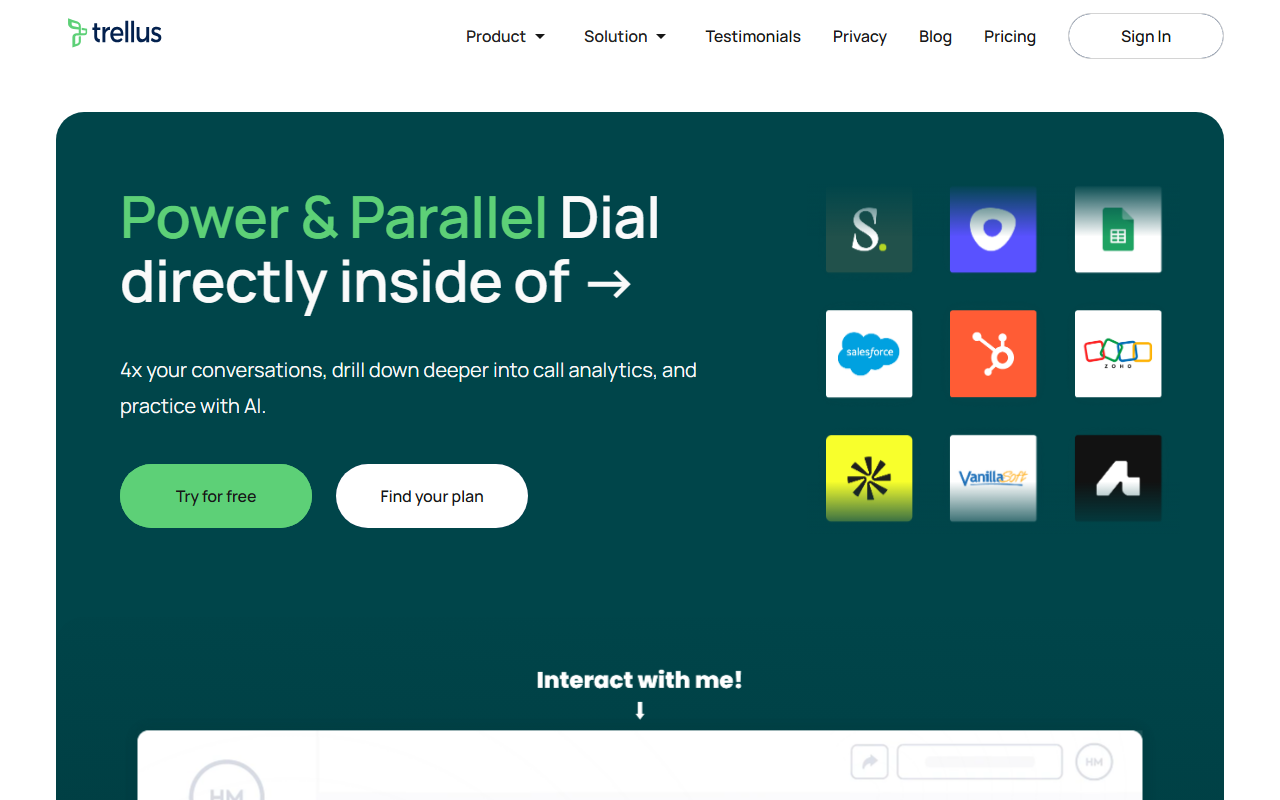
Upon visiting Trellus.ai, I was struck by the clarity of the messaging. The hero section immediately highlights "Power & Parallel Dial directly inside your SEP"—a promise that resonates with anyone who juggles multiple tabs for Salesloft, Outreach, or Hubspot. The dashboard preview shows a clean interface with a dialer panel, call analytics, and LinkedIn inbox consolidation. Onboarding is straightforward: signing up for the free trial takes less than two minutes, and the tool prompts you to connect your existing sales engagement platform (SEP) and import call sequences. I tested the parallel dialer by connecting a test Outreach instance. Within minutes, I was able to fire off calls on five lines simultaneously, with automated voice drops for voicemails. The setup wizard is intuitive, though integrating LinkedIn required authorizing a separate browser extension—a minor friction point.
Core Features and Workflows
Trellus bundles several distinct capabilities into one platform. The parallel dialer is the headline feature: it transforms any SEP into a power dialer that runs up to five concurrent lines, automatically skipping unanswered calls and dropping pre-recorded voicemails. When testing the free tier, I found the connection rate noticeably higher than manual dialing, and the auto-logging into the CRM was seamless. The voice agents are equally impressive. Trellus offers both inbound bots (for handling simple customer queries) and practice bots that simulate prospect conversations. I engaged with a practice bot that mimicked a skeptical buyer—the AI responded naturally, using context from previous calls. The real-time coaching layer appears as a sidebar during calls, suggesting rebuttals and flagging compliance keywords. LinkedIn Superhuman consolidates LinkedIn and Sales Nav messages into a single pane, with snippets and keyboard shortcuts that accelerate reply workflows. Call analytics automatically scores every conversation based on talk-to-listen ratio, objection handling, and power phrases. The analytics dashboard updates live, allowing managers to drill into individual rep performance.
Suitability and Market Position
Trellus is best suited for mid-market to enterprise sales development teams that rely heavily on outbound calling and need to maximize rep efficiency. Its parallel dialer is a direct competitor to Orum and Kixie, but Trellus differentiates by offering a unified platform that also includes LinkedIn management and real-time coaching—features that Orum lacks. The voice agents are more polished than those in Gong or Chorus, focusing specifically on sales practice and inbound deflection. However, the tool is less ideal for small teams or solo operators: the pricing (not publicly listed on the website, though the free trial is available) likely scales to per-user monthly fees, and the feature set assumes a multi-rep environment. I also noted that the LinkedIn integration, while powerful, occasionally missed messages if the extension wasn’t active. The company claims backing from notable investors, but detailed user numbers aren’t disclosed. Overall, Trellus fills a clear gap for teams that want to consolidate dialing, coaching, and analytics without juggling five separate tools.
Verdict and Recommendation
Genuine strengths include the seamless integration with major SEPs, the speed of the parallel dialer, and the real-time coaching that genuinely improves call outcomes. Limitations include the lack of transparent pricing and the occasional sync delay with LinkedIn. For sales teams using Outreach or Salesloft, Trellus is a near-essential upgrade—it reduces context switching and provides actionable analytics. Individual reps might find the features overwhelming, but managers will appreciate the granular visibility. I recommend starting with the free trial to test parallel dialing with your own sequences; for most teams, the productivity gains will justify the investment.
Visit Trellus at https://trellus.ai/ to explore it yourself.










Comments