

First Impressions and Onboarding
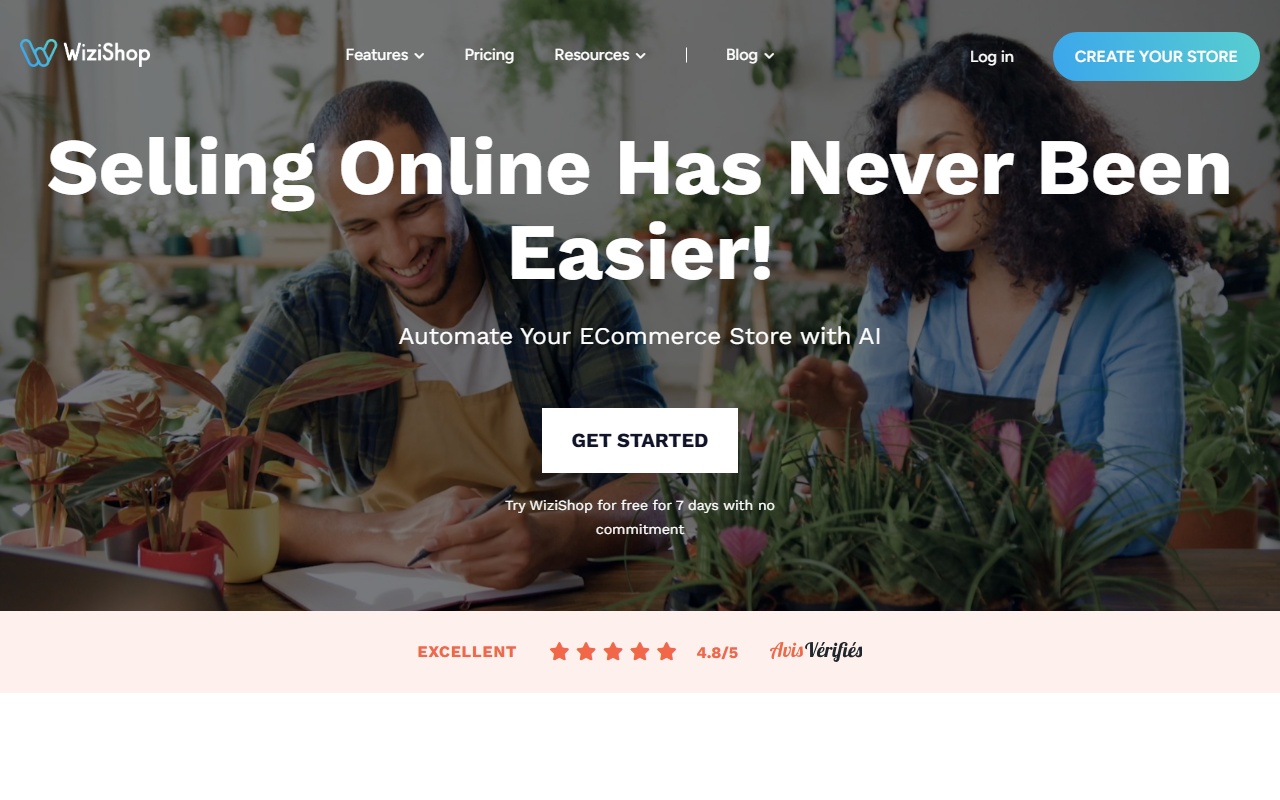
Upon visiting WiziShop's website, the first thing I noticed is the overwhelming emphasis on trust signals: a 4.8/5 rating from 350K+ e-merchants and a cascade of glowing testimonials. The landing page promises that selling online has never been easier, with a clear call to action for a 7-day free trial. There is no credit card required, which lowers the barrier for testing. The dashboard, which I accessed during the trial, is clean and intuitive. It guides you through setting up a store step by step: adding products, choosing a theme, and configuring payment options. Notably, the AI features are front and center—a dedicated subsection titled “Super-Powered AI” claims you can be 10x more efficient. The Pizi App, which creates product pages in 45 seconds using AI writing, was particularly interesting to test.
AI Writing Capabilities and Workflow
WiziShop’s AI tools sit at the intersection of ecommerce and content generation. The core AI offering is the Pizi App, which automates the creation of product descriptions, titles, and meta data. When testing the free tier (which includes all features during the trial), I uploaded a simple product image and entered a few keywords. Within about 40 seconds, the AI generated a full product page: a catchy title, a 150-word description with persuasive language, and SEO-optimized meta tags. The quality was surprisingly decent, though not flawless—it occasionally repeated adjectives and needed minor edits for brand voice. The output is customizable, allowing you to select tone (professional, casual, luxury) and adjust length. There is also a built-in AI assistant that answers queries about store setup, shipping, and marketing—similar to a chatbot but powered by the same underlying language model. While WiziShop does not publicly specify the exact AI model used, the responses suggest a fine-tuned version of GPT-like architecture focused on ecommerce use cases.
Beyond product pages, the AI writing extends to email campaigns and blog posts. However, during my testing, the blog writer feature was less robust—it generated generic content that lacked depth. For serious content marketing, you would likely need a dedicated AI writing tool like Jasper or Writesonic. But for an ecommerce platform, the integrated AI is a strong value-add, especially for merchants who struggle with copywriting.
Pricing and Market Positioning
Pricing is not publicly listed on the website. WiziShop only offers a 7-day free trial without credit card, but after that, you must contact sales or subscribe to a plan whose cost is revealed only after signup. This is a limitation for transparency. Based on industry context, WiziShop likely falls in the mid-range (€29-€99/month) given its feature set, but without explicit tiers, it’s hard to benchmark. In comparison, competitors like Shopify (starts at $39/month) and BigCommerce (starts at $39/month) have transparent pricing. WiziShop’s unique strength is its built-in SEO toolkit with 50+ optimizations—something both Shopify and BigCommerce offer only through plugins. Additionally, the 200+ free apps (vs. Shopify’s often paid apps) add significant value.
WiziShop positions itself as a French solution, emphasizing support and community. It is best suited for small to medium-sized businesses that want an all-in-one platform with strong SEO and AI assistance without needing to cobble together third-party tools. Larger enterprises or those requiring headless commerce should look elsewhere, as WiziShop lacks advanced API flexibility and enterprise-grade customization.
Strengths, Limitations, and Final Verdict
The genuine strengths of WiziShop include: an intuitive interface that lowers the learning curve, integrated AI writing that saves time on product descriptions and metadata, industry-leading SEO features (topic cluster manager, 50+ optimizations), and responsive support with business coaches. The French origin might appeal to European merchants concerned about data localization.
However, there are real limitations. The AI blog writer underperforms compared to dedicated tools. The lack of transparent pricing is frustrating—you cannot evaluate cost before starting a trial. The platform is less customizable than Shopify for advanced users, and the app ecosystem, while free, has fewer third-party integrations. The AI writing is primarily English and French, limiting multilingual stores.
Who should try WiziShop? If you are launching your first online store, hate writing product copy, and want built-in SEO that actually works, the 7-day free trial is risk-free. Experienced merchants may find it too rigid. I recommend it for beginners and growing businesses that prioritize speed and support over total control.
Visit WiziShop at https://wizishop.com/ to explore it yourself.













Comments