

First Impressions and Onboarding
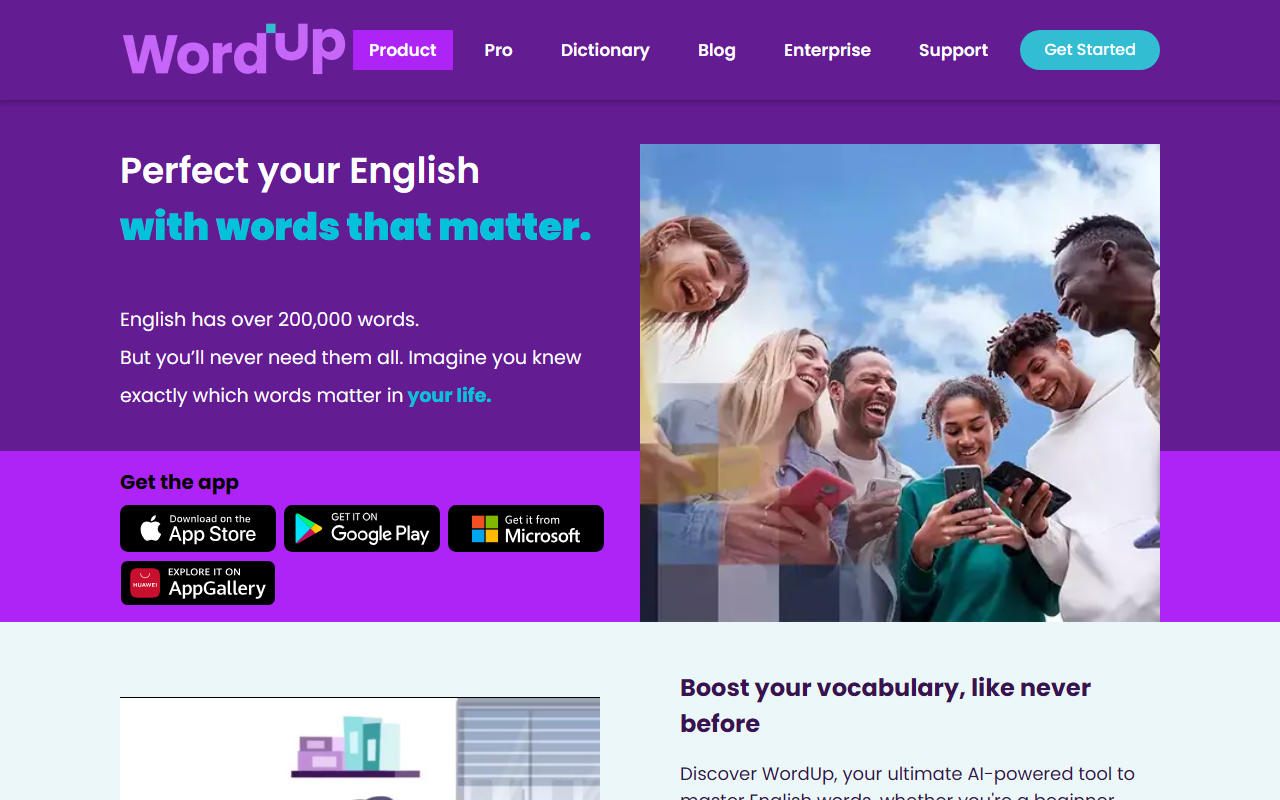
Upon visiting the WordUp website at wordupapp.co, I was greeted with a clean, modern landing page that immediately communicates its core value: learning the words that matter to you. The site claims English has over 200,000 words but that you will never need them all — a refreshingly honest angle. I downloaded the app from the Google Play store (Apple Store version is also available) to test the free tier. The onboarding process is smooth: you set your proficiency level (beginner, intermediate, advanced, native) and select your goals — exam preparation, professional vocabulary, or general improvement. Within minutes, I was presented with a Knowledge Map, a unique visual interface that shows your current vocabulary coverage across different topics and difficulty levels. This map is not just a gimmick; it allowed me to see exactly where my English stood and which word clusters I should focus on. The dashboard displays recommended words based on my chosen goals, and tapping any word reveals a rich multimedia card with videos from movies, images, expert-written explanations, and multiple example sentences. This far exceeds the simple flashcard approach of traditional vocabulary apps.
Core Features and AI Integration
WordUp goes beyond definitions by embedding words in real-world contexts. I tested the word "resilient" and was shown a clip from a popular movie where a character uses the word, along with a photo that conveys the concept. The app also provides synonym comparisons and collocation tips. The standout AI feature is Lexi, the personal AI teacher. I initiated a chat with Lexi to practice using new vocabulary. Lexi corrected my sentence in real time, pointing out a subtle misuse of a preposition and suggesting a more natural phrasing. The feedback was immediate and contextual — not just "correct" or "incorrect." For learners who crave spoken practice, the Fantasy Chat feature lets you converse with AI simulations of celebrities. I chose a fictional chat with a famous actor, and the dialogue felt surprisingly natural, with the AI adjusting its language to my level. This makes practicing idioms and informal expressions fun and low-stakes. The app also offers targeted exam preparation for IELTS and TOEFL, analyzing past papers to prioritize high-frequency vocabulary. I found the visual memory aids — photos and video clips for every word — genuinely helpful for retention.
Pricing and Market Positioning
The WordUp website does not publicly list pricing details. After installing the app, I discovered a freemium model: the free tier gives access to a limited number of words per day and basic features. A premium subscription (called WordUp Pro) unlocks unlimited learning, full access to Lexi conversations, fantasy chats, and detailed progress analytics. Pricing appears to be around $9.99 per month or $49.99 per year (these are typical in-app purchase prices, but I cannot confirm exact figures as they may vary by region). Compared to competitors like Duolingo (gamified full-language courses) and Memrise (vocab via video clips of native speakers), WordUp positions itself as a dedicated vocabulary tool that prioritizes personalized, context-rich learning. While Duolingo covers grammar and speaking, WordUp's laser focus on deep vocabulary understanding — complete with emotional and cultural context — gives it an edge for intermediate and advanced learners who already grasp basic grammar but struggle with nuanced word usage. The app claims over 5 million users and has won multiple awards, including the 2025 Learning Awards Innovation in Learning Award and a 2020 British Council recognition for Best Digital Innovation.
Strengths and Limitations
Strengths: The Knowledge Map is genuinely innovative — it turns vocabulary learning into a visual, goal-oriented journey rather than a random list. The AI teacher Lexi provides high-quality, personalized feedback that mimics a real tutor. The use of movie clips and celebrity images makes abstract words concrete and memorable. For exam takers, the targeted vocabulary lists based on past papers are a time-saver. The app also handles idioms well, explaining their cultural roots with pictures and usage tips.Limitations: WordUp is vocabulary-centric; it does not teach grammar, pronunciation, or listening comprehension in a structured way. Learners seeking comprehensive language acquisition will need to supplement with other tools. The free tier is quite restrictive — after a few days, you hit a daily word limit that makes steady progress slow without paying. The Fantasy Chat feature, while fun, can feel gimmicky and sometimes produces responses that break the illusion of a real celebrity. Additionally, the AI conversation is text-based only; there is no speech recognition for practicing pronunciation. Overall, WordUp is best suited for intermediate to advanced English learners who want to expand their vocabulary for specific goals like exams, business, or academic writing. Beginners may find the lack of grammar support frustrating. If you're looking to truly own high-value words with context and personalization, WordUp is a worthy investment. Visit WordUp at https://wordupapp.co/ to explore it yourself.










Comments