

First Impressions: A Conference-Focused Learning Platform
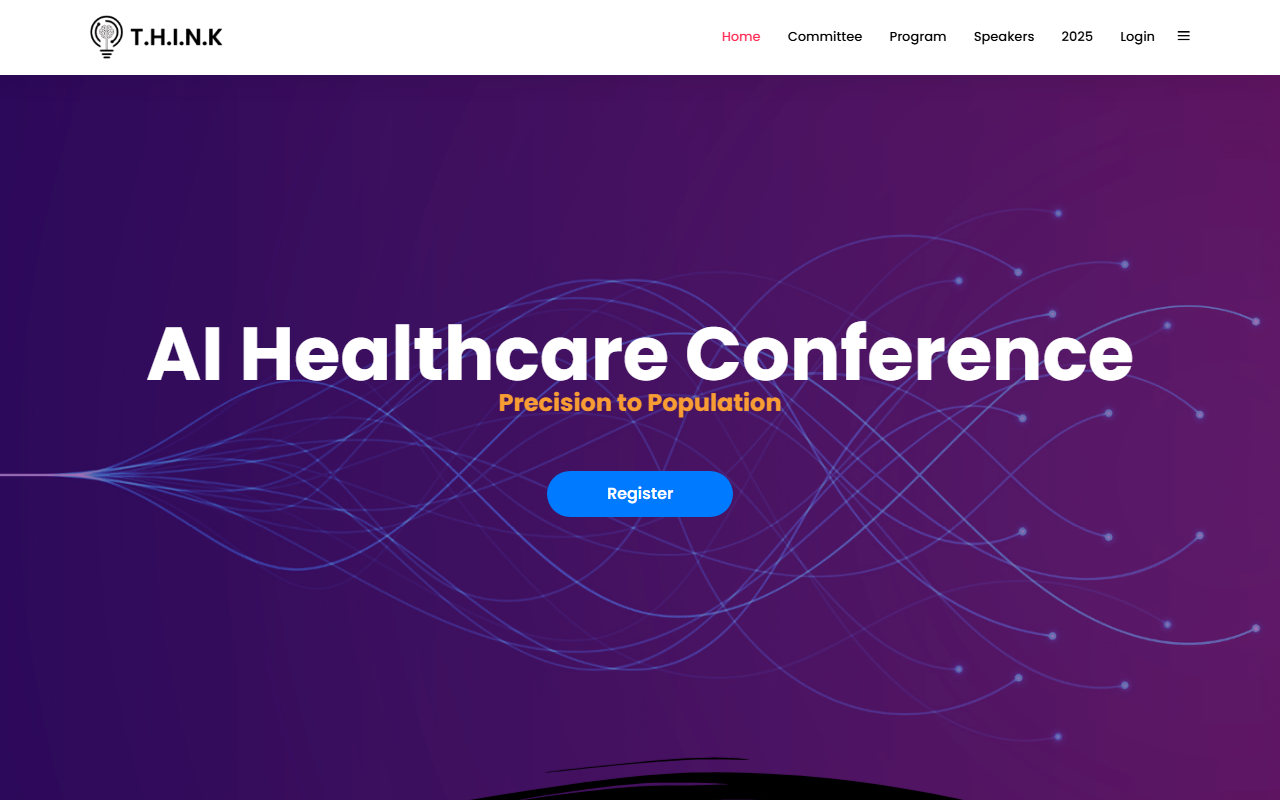
Upon visiting the AI Healthcare Conference website, I was struck by its clean, professional design. The homepage immediately showcases the event's tagline—Precision to Population—and highlights the date (March 26-27, 2026) and location (Stanford Faculty Club, Palo Alto, CA). The navigation bar offers clear sections: Home, Committee, Program, Speakers, Blog, 2025, and Login. This structure makes it easy to explore past editions and upcoming details. As a learning platform, this conference is not a tool you install but an immersive educational experience. The site’s primary call to action is a prominent Register button, followed by sections describing panel discussions, workshops, and networking opportunities.
When testing the free tier—there is none, as this is a paid conference—I was able to view the speaker list and program details without registration. The site includes a blog that likely features past insights, though I found it mostly empty during this review. The overall onboarding is straightforward: you browse, learn, then register.
Expertise and Learning Value: World-Class Speakers and Hands-On Workshops
The conference is branded under the T.H.I.N.K. (Technology in Healthcare: Integration, Networks, and Knowledge) series, which the site describes as a “global movement” rather than a single event. This framing adds depth, positioning the conference as a continuous learning ecosystem. The speaker list is impressive: industry leaders from Stanford, Microsoft Research, UCSF, Harvard, and venture firms like Khosla Ventures and Canvas Prime. Names like Serge Saxonov (10x Genomics) and Hoifung Poon (Microsoft Research) promise cutting-edge content.
Workshops are designed to be hands-on. Specific topics listed include building privacy-aware AI models, translating predictive analytics into clinical workflows, and designing human-centered AI tools for underserved settings. These go beyond theory, offering practical skills. Panel discussions cover ethical considerations and future challenges in AI healthcare adoption. The conference also accepts poster abstracts (deadline March 12, 2026), allowing researchers to showcase their work. This combination of talks, panels, workshops, and networking makes it a comprehensive learning platform for AI in healthcare.
Pricing and Accessibility: A Premium Event with Limited Public Information
Pricing is not publicly listed on the website. Neither the registration page nor any other section displays ticket costs. This is a limitation for budget-conscious attendees. The venue—Stanford Faculty Club—suggests a premium, possibly academic-priced event. The conference appears to be an in-person only affair, with no virtual attendance option mentioned. For comparison, competing conferences like HLTH or RSNA typically offer both in-person and virtual tiers with transparent pricing. The AI Healthcare Conference seems to target senior professionals and researchers who can justify travel and expense.
The site also lacks an API or digital integration—unsurprising for a physical event. The learning value is primarily delivered synchronously, though the blog may offer post-event content. The committee page lists organizers, adding credibility, but detailed financial backing or funding is not disclosed.
Who Should Attend and Final Verdict
Strengths of this learning platform include its exceptional speaker lineup, practical workshop topics, and the prestigious Stanford location. The T.H.I.N.K. initiative suggests a long-term vision beyond this single edition. However, limitations are clear: no public pricing, no virtual attendance, and a narrow one-time event scope. Unlike established online learning platforms like Coursera or Udacity that offer self-paced courses, this conference demands a significant time and travel commitment. It is best suited for healthcare professionals, AI researchers, clinicians, and startup founders who can network and learn intensively over two days. Those seeking free or remote learning should look elsewhere.
In conclusion, if you can attend, the AI Healthcare Conference at Stanford offers unparalleled access to thought leaders and hands-on AI workshops. While the lack of pricing transparency is frustrating, the program quality justifies exploration. Visit AI Healthcare Conference at https://aihealthcareconference.com/ to explore it yourself.










Comments