
First Impressions and Onboarding
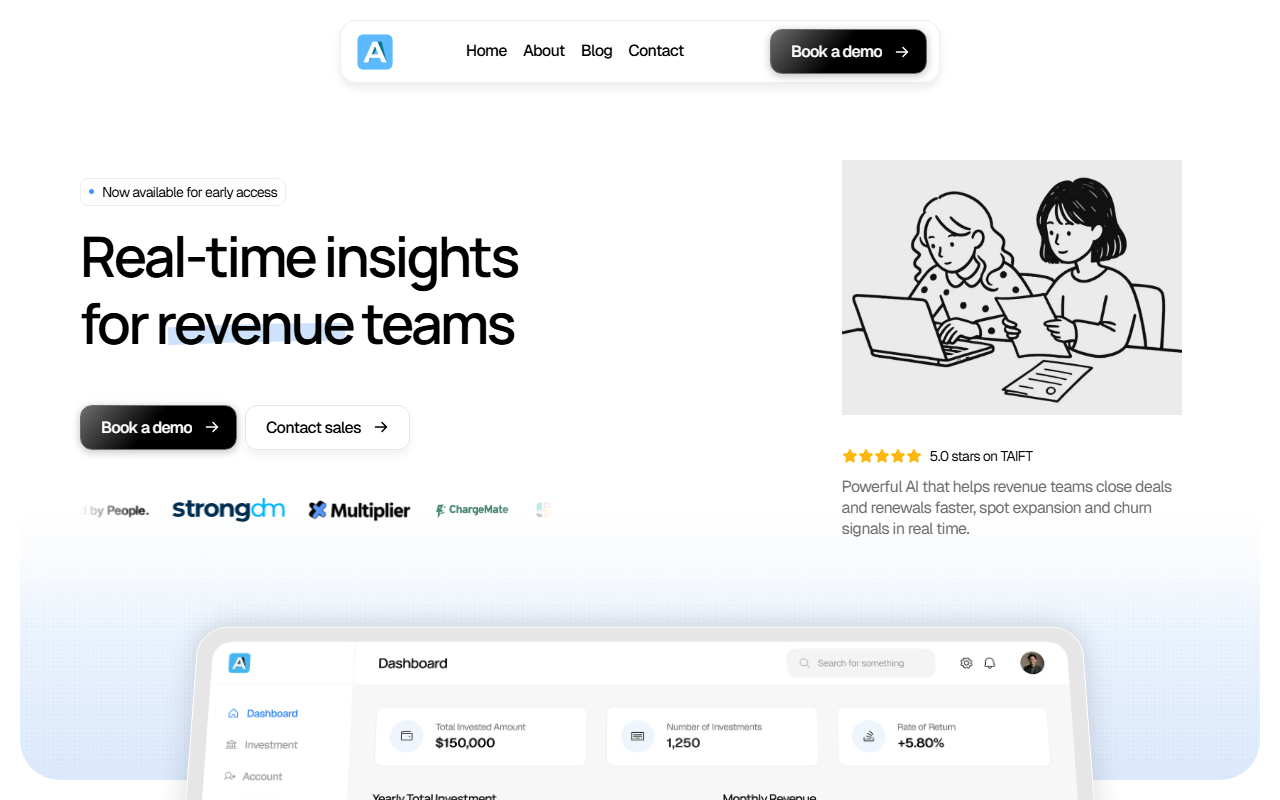
Upon visiting Arka's website, I was greeted by a clean, modern interface that immediately signals its focus on revenue teams. The tagline “Real-time insights for revenue teams” sets the tone, and the prominent “Book a demo” and “Contact sales” CTAs make it clear this is an enterprise-facing tool currently in early access. The onboarding flow is presented in three steps: connect your data, let AI analyze, then view insights. It sounds straightforward, but without a free tier or self-service trial, I couldn't fully test the workflow. The site also features a testimonial from a Head of Engineering, which adds credibility. However, the early-access status means that detailed user reviews are sparse, and some features may still be evolving.
Core Features and Technology
Arka claims to leverage advanced AI for several key functions. The dashboard promises AI-driven forecasting, unified dashboards, automated reporting, and risk detection. The risk detection feature is particularly interesting—it spots unusual patterns and potential customer churn by analyzing product usage, support conversations, and revenue data. Under the hood, the platform integrates with CRMs, Google Sheets, Slack, Redshift, and AWS, among others. This suggests a strong emphasis on unifying data from disparate sources. During my exploration, I noticed that the tool automatically surfaces renewal reminders and deal alerts, which could save teams hours of manual tracking. The AI engine appears to be proprietary, but no specific model names are mentioned. The platform also boasts SOC 2 Type II, GDPR, and CCPA compliance, which is reassuring for enterprise users.
Pricing and Market Positioning
Pricing is not publicly listed on the website. The only call-to-action is to book a demo, which hints at a custom enterprise pricing model. This places Arka in a competitive space alongside established revenue intelligence platforms like Clari and Gong. Unlike Clari, which has a broad user base and mature forecasting features, Arka is in early access and likely targets smaller revenue teams that need a more integrated, real-time solution. Another competitor, Chorus (now part of ZoomInfo), focuses more on conversation intelligence, whereas Arka emphasizes churn prediction and renewal automation. The lack of transparent pricing could be a hurdle for smaller teams, but the focus on compliance and integrations suggests Arka is serious about enterprise-grade security. Without public pricing, it's hard to assess value for money, but the early-access nature means early adopters might get favorable terms.
Verdict: Strengths and Limitations
Arka's genuine strength lies in its real-time intelligence and broad integration ecosystem. The ability to connect CRM, support tools, and product usage data into a single AI-powered dashboard could genuinely reduce manual work for revenue teams. The risk detection feature, which identifies churn signals early, stands out as a practical tool for customer success teams. On the downside, the tool is still in early access, which means limited user reviews, potential bugs, and missing self-service options. The absence of transparent pricing makes it difficult for teams to budget, and the requirement to book a demo before any hands-on experience could deter smaller businesses. Additionally, while the site claims “5.0 stars on TAIFT,” I couldn't verify this rating on a known review platform, which raised a minor trust concern. Overall, Arka is best suited for mid-to-large revenue teams that already use multiple data tools and need a unified layer of intelligence. For smaller teams or those needing immediate self-service access, alternatives like Clari might be more practical. I recommend booking a demo if you're serious about improving forecasting and churn detection, but proceed with healthy skepticism until public case studies and user reviews become available. Visit Arka at https://arka.so/ to explore it yourself.











Comments