

First Impressions and Onboarding
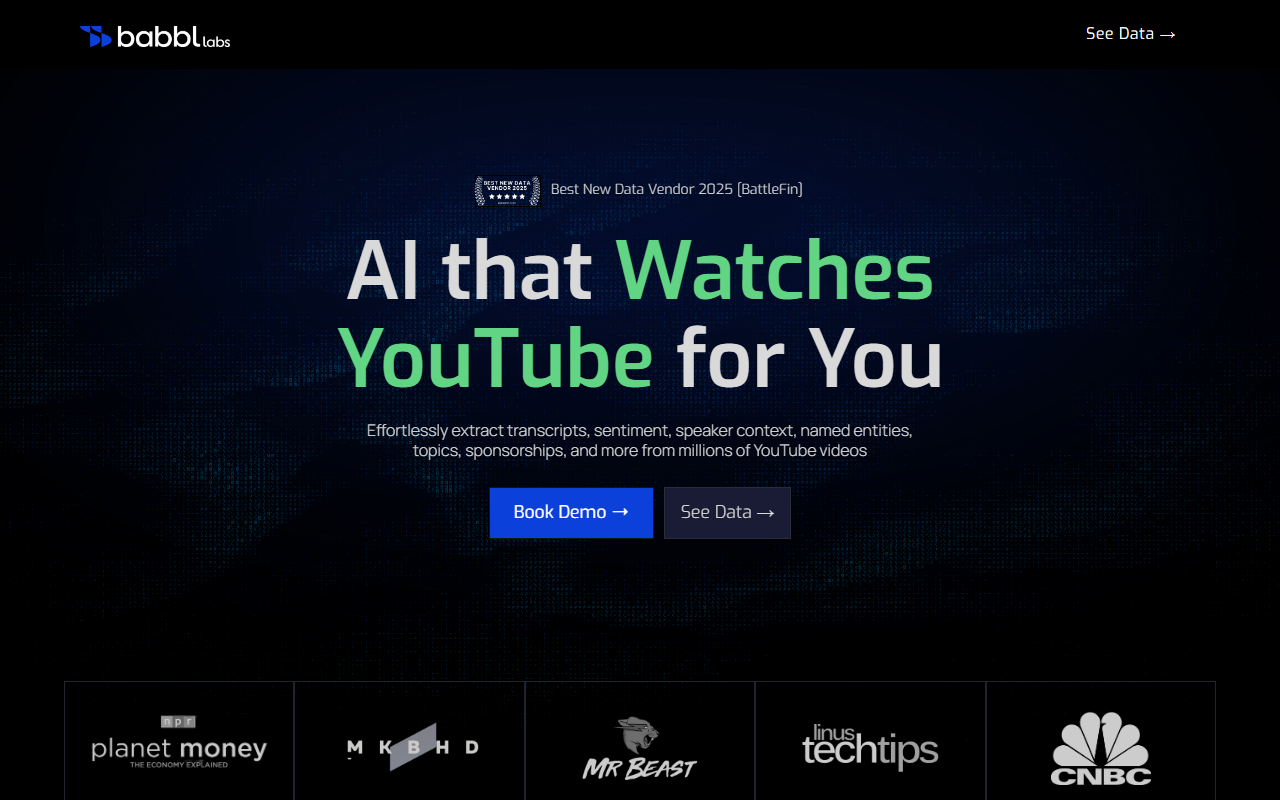
Upon visiting the Babbl Labs website at https://babbl.dev/, I encountered a clean, enterprise-focused landing page that wastes no time positioning its value. The headline — "AI that Watches YouTube for You" — immediately clarifies the core promise. The onboarding flow is not self-serve; instead, visitors are directed to a demo booking form. I submitted a test inquiry, and the form requires fields like company name, business type, and product interest. The response was a confirmation that the team will be in touch. This tells me Babbl Labs is targeting enterprise clients and structured workflows, not individuals. The site includes a "See Data" link that appears to lead to sample datasets, though it’s gated behind the demo process. Overall, the experience signals a mature B2B tool optimized for discovery through sales conversations.
Core Features and What It Does
Babbl Labs extracts structured intelligence from YouTube videos at scale. The platform identifies transcripts, speaker context, named entities, topics, sentiment, and sponsorship mentions. It organizes these into three primary product offerings: tracking executive and influencer appearances, monitoring brand and product sentiment, and mapping creator sponsorship activity. The data is delivered via REST API or S3, making it ready to plug into AI agents, RAG pipelines, or analytics dashboards. The website claims coverage of millions of videos, with "5M channels monitored" and "60M minutes analyzed." Historical data spans six years, and updates happen hourly. I was impressed by the specificity: for PR teams, they can track exactly when a CEO appears on a long-form podcast. For ad buyers, the sponsorship dataset includes payment estimates and performance metrics. The tech stack isn't detailed, but the emphasis on "structured metadata" suggests NLP and possibly computer vision models under the hood.
Pricing and Market Position
Pricing is not publicly listed on the website. The only call to action is "Book Demo," and the contact form asks for company size and product interest. This opacity is typical for enterprise data feeds, but it means smaller teams won't know upfront if they can afford it. Competitors in the social listening space include Brandwatch and Talkwalker, but those tools cover broader platforms. Babbl Labs focuses exclusively on YouTube, offering deeper video-specific signals like speaker diarization and sponsorship detection. Another alternative is YouTube Data API with custom scraping, but Babbl Labs saves engineering effort by cleaning and structuring the data. The company claims to have the "World's Largest YouTube Dataset," which, if true, gives it a defensible moat. Babbl Labs is best suited for investment funds, communications/PR agencies, enterprises doing social listening, and brand marketing teams. Casual users or solo creators seeking to analyze individual channels should look elsewhere, as the tool appears designed for bulk, automated ingestion at scale.
Strengths and Limitations
Strengths: The key selling point is the combination of scale and structure. Babbl Labs processes millions of videos and returns ready-to-use metadata — no data cleaning required. The hourly delivery threshold is impressive for time-sensitive monitoring (e.g., crisis comms). The sponsorship activity dataset is particularly novel; few competitors attempt to estimate payment amounts. The API and S3 delivery make integration with existing data stacks painless. The company also provides historical coverage going back six years, which is valuable for trend analysis. Finally, the site’s FAQ shows attention to compliance and data rights, important for regulated industries.
Limitations: The lack of transparent pricing is a barrier for smaller organizations. There is no free tier or self-service trial, so you cannot test the data quality without a sales call. The product is exclusively YouTube-focused; if you need TikTok, Instagram, or podcast audio analysis, you’ll need other tools. The interface itself is not shown in detail on the website — there are no screenshots of dashboards or sample outputs. This makes it hard to evaluate the user experience. Additionally, the claim of "world's largest YouTube dataset" is unverified; I would want to see third-party audits or case studies. For individual journalists or small creators, the cost and complexity likely outweigh the benefit.
For funds, agencies, and brand teams that need to monitor YouTube at scale, Babbl Labs appears to solve a real pain point. I recommend booking a demo if YouTube video intelligence is a critical part of your workflow. If you need broader social listening or a self-serve budget, consider alternatives.
Visit Babbl Labs at https://babbl.dev/ to explore it yourself.










Comments