

Overview and First Impressions
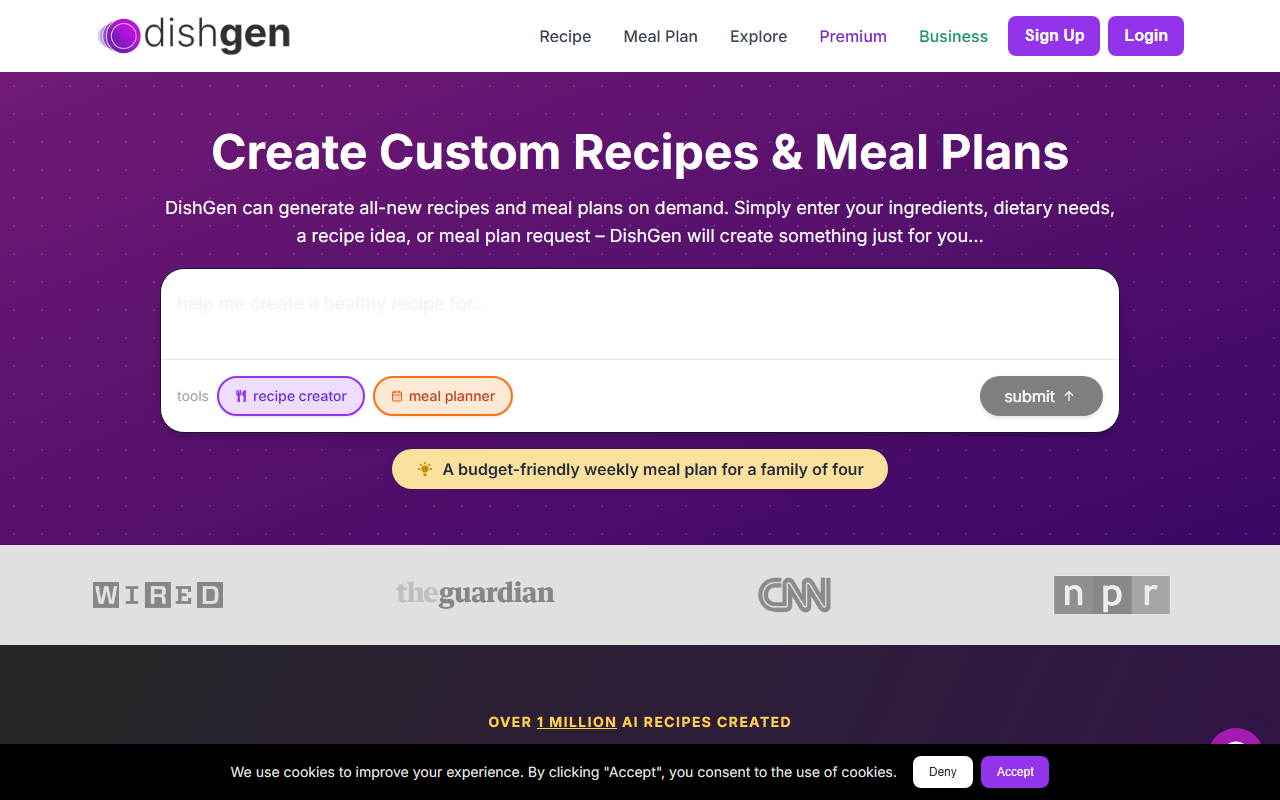
Upon visiting DishGen, the interface immediately greets you with two clear entry points: a recipe creator and a meal planner. The design is clean, with a chat-like input box labeled "help me create a healthy recipe for..." that invites immediate interaction. I started with the free Basic account, which gave me a handful of weekly credits. The dashboard shows your saved recipes, meal plans, and a history of past AI conversations. During my test, I typed "turn leftover chicken, rice, and bell peppers into a dinner" and within seconds DishGen returned a complete recipe with ingredients, step-by-step instructions, and estimated nutrition. The AI also offered substitution suggestions (e.g., swap rice for quinoa) and a "remix" button to regenerate variations.
Key Features and How It Works
DishGen positions itself as an "AI-powered kitchen coach" that goes beyond simple recipe retrieval. The core tools are the AI Recipe Generator and the AI Meal Planner. For the generator, you can input any combination of ingredients, dietary restrictions, or a vague meal idea, and the model produces a unique recipe. The meal planner lets you define goals (weight loss, muscle gain, budget) and receive a full week of meals, with the ability to edit or swap any dish. The new personalized profile feature remembers your tastes, allergies, and past feedback, so suggestions improve over time. Technically, DishGen likely uses a fine-tuned language model, but no specific model name is disclosed. There is an embeddable widget for websites, but no public API. Integrations are limited to saving and exporting recipes (text-based). The personalization is stored in your account and is a key differentiator from generic recipe search engines.
Pricing and Plans
DishGen offers three tiers. Basic is free forever but comes with limited usage credits that reset weekly—enough for a few recipes per week. Premium is $72 per year (with a 7-day free trial) and gives 25x more credits (resets daily), a personalized AI model, longer chat context, advanced meal planner (generate recipes within plans), and an ad-free experience. Pro costs $159 per year and adds commercial rights to redistribute recipes, even higher usage limits, AI-generated recipe images, and privacy mode. Notably, I could not find a monthly billing option; all plans are listed only with annual pricing. This may deter users who want to test before committing for a full year, though the free trial helps. Compared to competitors like Meallime (free with optional premium) or Yummly (ad-supported), DishGen’s annual-only model feels restrictive, but the personalized AI feature is a clear differentiator.
Who Should Use DishGen?
DishGen is best suited for home cooks who want to reduce meal planning time, minimize food waste, and receive highly personalized recommendations. It shines for people with specific dietary needs (vegan, keto, etc.) or those who frequently cook with whatever is in the fridge. The Pro plan also appeals to content creators, meal prep businesses, or nutrition coaches who need commercial rights. However, the free tier’s limited credits make it more of a trial than a long-term free tool. Power users who need large-scale recipe generation or API access should look elsewhere—neither is offered. Also, the AI’s output can sometimes be inconsistent for very obscure ingredient combinations; I tried "chocolate and sardines" and got a recipe that was edible but uninspired. Overall, if you value a conversational, adaptive kitchen assistant and don’t mind the annual subscription, DishGen delivers a genuinely useful experience.
Visit DishGen at https://dishgen.com/ to explore it yourself.











Comments