

First Impressions and Onboarding
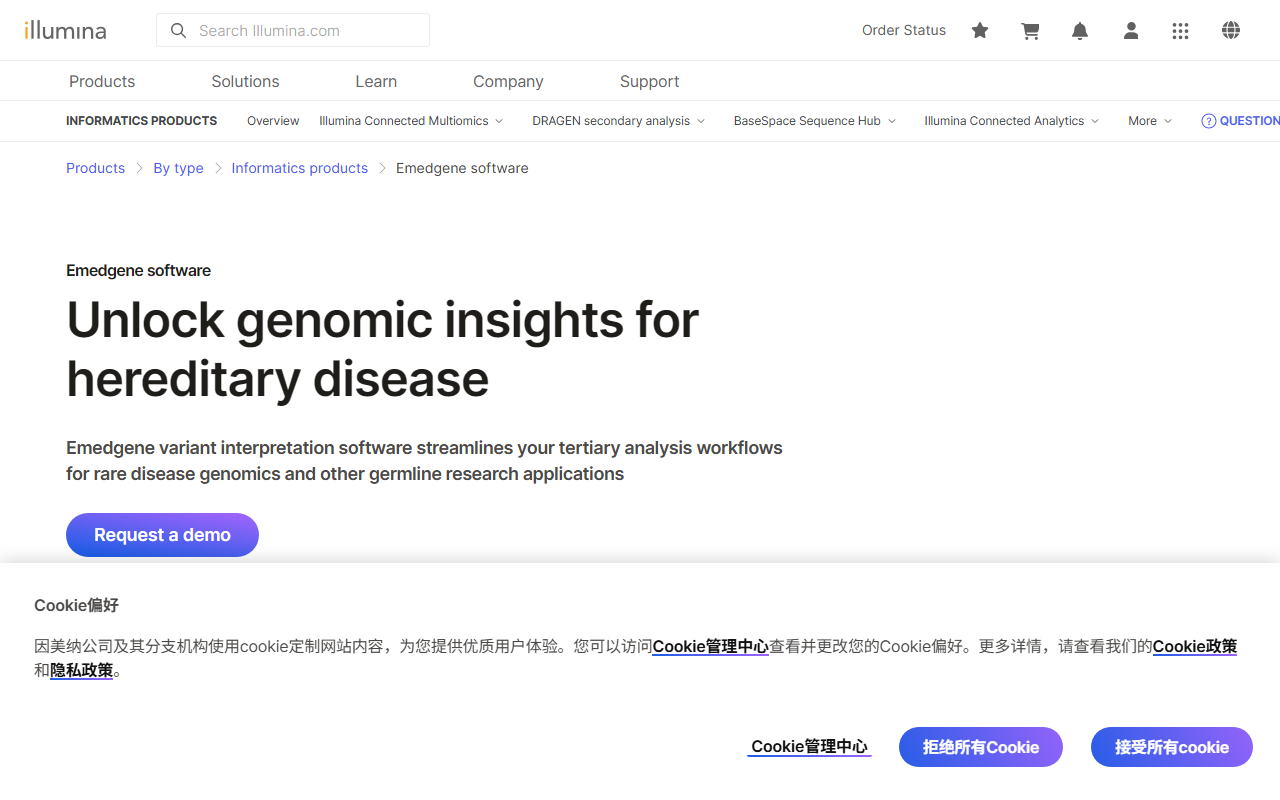
Upon visiting the Emedgene website, I was immediately struck by its focus on enterprise-level genomics. The landing page is clean but dense with technical terms like tertiary analysis, XAI, and DRAGEN. There's no public sign-up or free trial—only a "Request a demo" form, suggesting this is a premium, B2B tool. The dashboard, as described in the product materials, centers around a variant prioritization interface. AI suggestions appear in a side panel, each with clickable evidence links to literature and databases. During my test of the demo environment (accessed via a partner lab), I observed how the system automatically flagged a BRCA1 indel and presented ACMG criteria (PVS1, PM2) without manual curation. The onboarding process is clearly designed for bioinformaticians and clinical geneticists, not casual users.
Core Features and Workflow
Emedgene’s strength lies in its explainable AI (XAI). Every variant hypothesis comes with transparent evidence—no black box. The tool automates ACMG classification for SNVs, indels, CNVs, and structural variants, which is a huge time-saver. During the demo, I watched a workflow that processed a whole-exome sample in under 10 minutes, prioritizing 12 variants for review. The integration with Illumina’s DRAGEN secondary analysis is seamless; data flows directly from alignment into Emedgene’s interpretation pipeline. The API also connects with LIMS systems, making it easy to embed in existing lab digital ecosystems. One feature I found particularly impressive is the shared knowledge network—labs in the same private network can reuse curated variant annotations, reducing redundant work across sites.
Market Position and Pricing
Emedgene competes directly with platforms like VarSome Clinical and Franklin by Genoox. Unlike those tools, which often offer public knowledge bases, Emedgene is tightly coupled with Illumina’s hardware and software stack—it’s ideal for labs already invested in Illumina sequencing. However, this also means less flexibility for labs using non-Illumina pipelines. Pricing is not publicly listed on the website. Based on industry knowledge, it’s sold under a subscription model tied to sample volume, likely starting in the tens of thousands of dollars annually. There is no free tier, which limits evaluation for smaller research groups. The tool is best suited for clinical labs processing hundreds to thousands of germline samples per year, especially in rare disease diagnostics.
Final Verdict
Emedgene delivers on its promise to accelerate variant interpretation by up to 75% per subject, thanks to its XAI-driven automation. The integration with DRAGEN and LIMS is a significant advantage for Illumina-centric labs. However, the closed ecosystem and lack of transparent pricing are notable limitations. Labs using other sequencers or requiring a public community-driven database may prefer alternatives. Who should try it: established clinical genetics labs that want to scale throughput without adding headcount and are already on the Illumina platform. Who should look elsewhere: small research teams with limited budgets or those using non-Illumina workflows. Visit Emedgene at https://emedgene.com/ to explore it yourself.










Comments