

What Is Gauge and Why It Matters
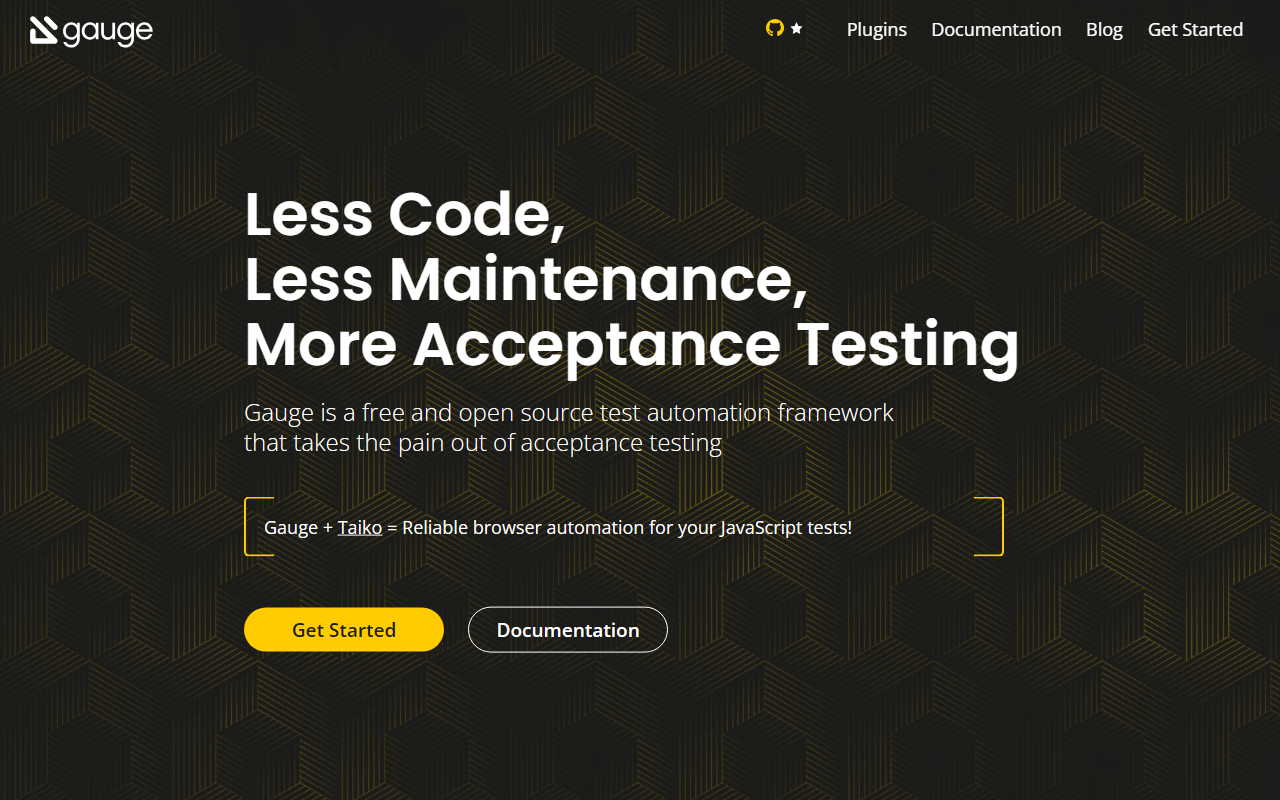
Upon visiting the Gauge website at gauge.org, I was immediately struck by the focus on simplicity. The tagline “Less Code, Less Maintenance, More Acceptance Testing” sets the tone. Gauge is an open-source test automation framework designed specifically for acceptance testing. It addresses a common pain point: tests that are hard to read, fragile, and expensive to maintain. By authoring tests in plain Markdown, Gauge separates the test logic from the underlying code, making specifications understandable for non-developers and developers alike. This approach aligns with behavior-driven development (BDD) principles but without requiring a special Gherkin syntax. The framework integrates with multiple programming languages—JavaScript (via Taiko), C#, Java, Python, and Ruby—and works with popular CI/CD tools and automation drivers.
Exploring Gauge's Key Strengths and Weaknesses
When testing the free tier (the entire framework is free and open source), I noticed the onboarding flow is straightforward. The “Get Started” button leads to clear documentation and a quick tutorial. The dashboard itself isn’t a visual app; Gauge is a command-line tool with plugins for IDEs like IntelliJ and VS Code. I created a sample specification in Markdown, reused a scenario across multiple data sets, and ran a parallel test on my local machine. The framework automatically took a screenshot upon failure, saving me from digging through stack traces.
Strengths: The Markdown-based tests are incredibly readable. I could hand a spec to a product manager and they would understand it without explanation. The plugin ecosystem is robust—drivers for Selenium, Appium, and Taiko are available, as are integrations for data sources like CSV and JSON. Parallelization works out of the box, which saves time on CI/CD pipelines. Data-driven testing is elegantly handled by keeping test parameters separate from scripts.
Limitations: Gauge is not an AI tool. It does not generate tests or self-heal flaky locators. Focused purely on acceptance testing, it is not suited for low-level unit tests. The learning curve for writing custom plugins can be steep, and Markdown-based tests, while readable, can become unwieldy with complex logic. Additionally, users familiar with Selenium or Cypress may find the paradigm shift to Markdown unfamiliar at first. The documentation is thorough but could be more structured for beginners.
Who Should Use Gauge?
Gauge is best suited for teams that prioritize collaboration between developers, testers, and business stakeholders. Its low-code, Markdown-first approach makes it ideal for projects where test maintainability and reusability are critical. If you already use BDD and want something lighter than Cucumber, Gauge is a strong candidate. It also excels in parallel test execution and data-driven scenarios.
Alternatives: Unlike Cypress, which is focused on JavaScript end-to-end testing, Gauge is language-agnostic and designed for acceptance testing. Compared to Selenium, Gauge provides a higher-level abstraction with Markdown, reducing boilerplate code. For teams wanting built-in screenshot-on-failure and data-driven support without heavy setup, Gauge is a compelling choice.
Final Verdict: Gauge delivers on its promise of less maintenance and more readable acceptance tests. It is a mature open-source tool with an active community and strong plugin ecosystem. The lack of AI features might disappoint those seeking automated test generation, but for its intended purpose, it is reliable and effective. I recommend trying it for your next acceptance test automation project if you value clarity and collaboration over flashy AI capabilities.
Visit Gauge at https://gauge.org/ to explore it yourself.










Comments