

First Impressions and the Onboarding Flow
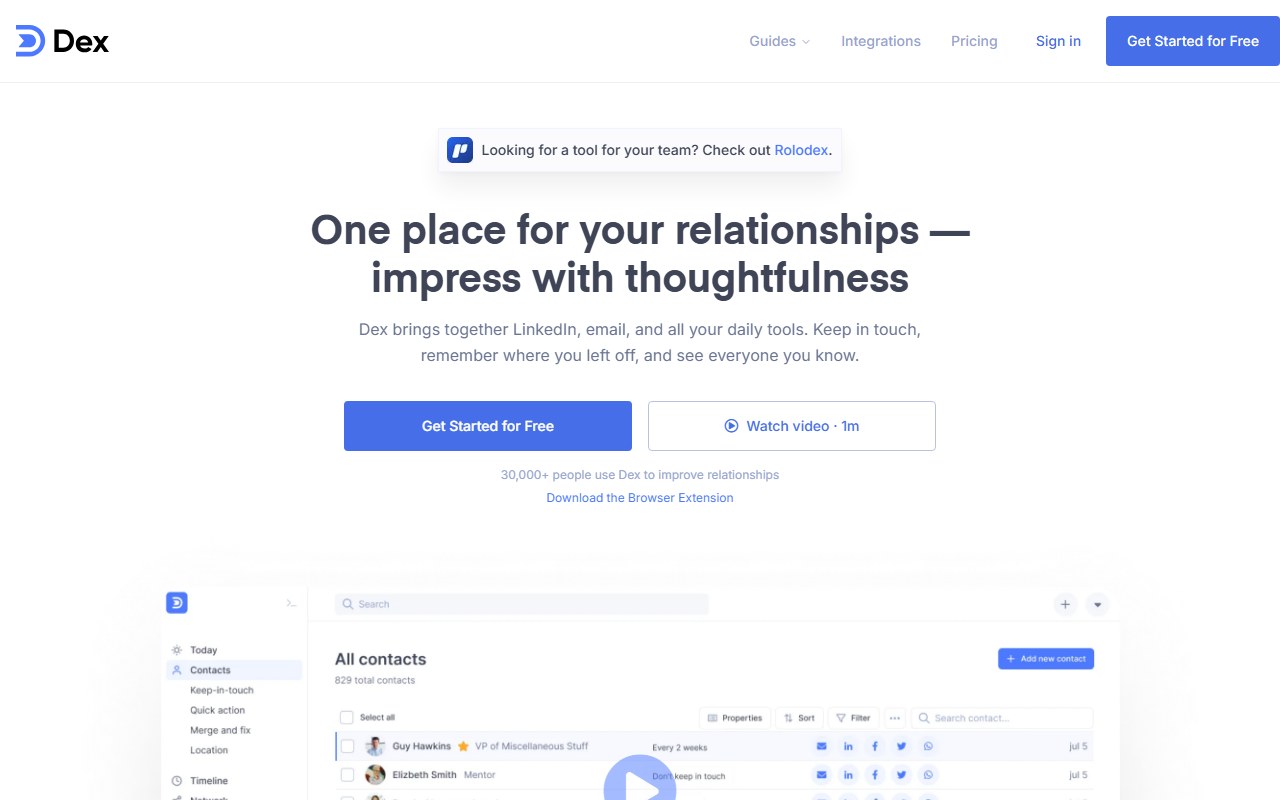
Upon visiting the Dex website, I was struck by its clean, relationship-first messaging. The tagline "one place for your relationships" immediately sets expectations: this is not another sales CRM. The homepage leads with a video testimonial and a clear call to action to get started for free. I clicked through and found the signup process straightforward—email or Google account, then an invitation to connect LinkedIn. Within minutes, Dex began pulling in my LinkedIn connections, automatically syncing job titles and profile updates. The browser extension installation was also seamless, integrating with Gmail and LinkedIn to surface contact details without leaving the page. This contrasts sharply with enterprise CRMs like Salesforce, which require heavy configuration and training. Dex’s onboarding is designed for the busy professional who wants to offload data entry.
Core Features and Workflow
Dex’s dashboard presents a clean, card-based view of your relationships. Each contact entry includes fields for how you met, education, work history, important dates, family details, gift ideas, and event history. I tested the "remember left off" feature by adding a note about a coffee chat with a former colleague. Later, Dex surfaced that note as a reminder to follow up—exactly the kind of intentionality the tool promises. The automatic sync with LinkedIn is a standout: when a connection changes their title, Dex flags it and suggests reaching out. This turns a passive feed into an actionable relationship strategy. The mobile app mirrors the web experience, making it easy to log interactions on the go. While tools like Pipedrive or Airtable can be hacked into personal CRMs, Dex’s dedicated focus eliminates the friction of manual tracking.
Pricing, Privacy, and Positioning
Pricing is not publicly listed on the website. The only mention is "Get started for free," suggesting a freemium model, but exact tiers are absent. This could be a deliberate move to encourage signups, but it may frustrate potential users who need budget visibility. Dex’s privacy stance is refreshing: supported by subscriptions (not ads), with a guarantee never to sell data. Users can export or delete their data at any time. This positions Dex as a trustworthy alternative to ad-funded networking tools. In the market, Dex competes directly with personal CRMs like Clayton (formerly Cloze?) and the now-defunct Contactually. Unlike heavy sales platforms, Dex is built for non-sales relationships—networking, mentoring, hiring, and staying in touch with friends and family. Professionals who manage large networks but hate spreadsheets are the ideal audience.
Verdict and Recommendations
Dex delivers on its promise: it consolidates relationship management from LinkedIn, email, and daily tools into one elegant interface. The automatic sync and reminder features genuinely reduce the mental load of keeping up with a large network. However, limitations exist. There is no explicit pricing structure, which may raise questions about long-term costs. Additionally, the tool lacks advanced sales pipeline features like deal stages or lead scoring—so it is not suitable for B2B sales teams who need a full CRM. For professionals, founders, job seekers, or anyone who values thoughtful relationship maintenance, Dex is an excellent choice. I recommend starting with the free tier to experience the workflow firsthand. Visit Dex at https://getdex.com/ to explore it yourself.










Comments