

First Impressions and Onboarding
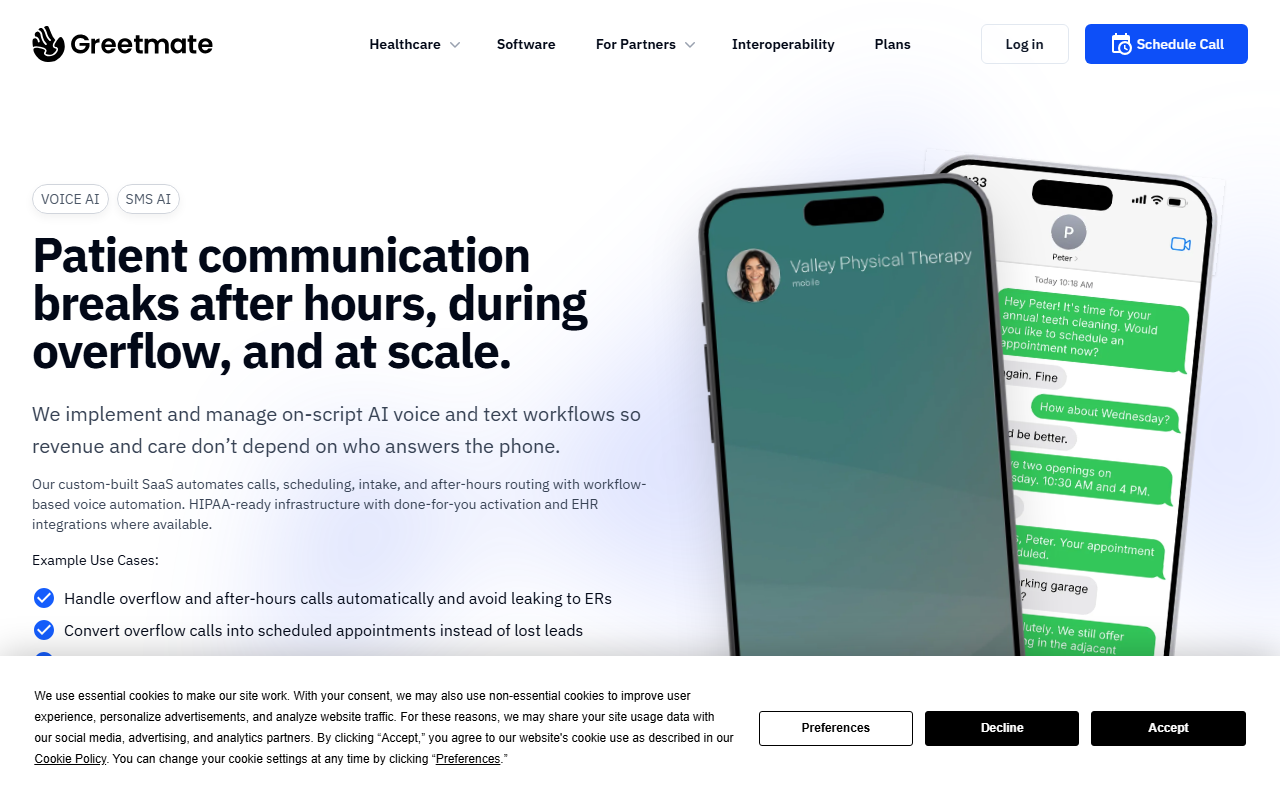
Upon visiting greetmate.ai, the landing page immediately emphasizes HIPAA-ready voice AI with a focus on healthcare operations. A prominent call-to-action invites you to book a 15-minute discovery call—there is no self-serve signup, which signals a consultative, enterprise-oriented approach. The site includes a sample call between a dental practice and a patient, letting you hear the voice quality directly. The audio showcases a warm, natural-sounding virtual receptionist handling appointment scheduling. The dashboard is not publicly accessible, but the website highlights that Greetmate acts as an implementation partner, not just a software vendor. This suggests a hands-on onboarding process where the team maps your workflows, configures telephony, and sets up EHR integrations before launch.
Core Capabilities and Workflow Automation
Greetmate’s core offering is workflow-based voice and SMS automation designed to reduce inbound call pressure. The platform automates calls, scheduling, intake, and after-hours routing using “hallucination-resistant” agents—a nod to common AI reliability issues. When testing the sample workflow, I noticed the system follows structured triage paths, escalation logic, and form capture without deviation. The SMS module handles confirmations, reminders, and follow-ups, further offloading routine patient communication. Greetmate claims a 70-80% reduction in front desk workload, and the managed deployment includes continuous tuning as call volume grows. Advanced reporting dashboards let you see caller needs, where calls break, and what information is shared—providing transparency into automation performance.
Pricing, Integrations, and Compliance
Pricing is not publicly listed on the website. Greetmate operates on a custom quote model, likely based on call volume, number of workflows, and level of managed support. The platform integrates with over 300 apps, including major EHRs like Athenahealth, DrChrono, ModMed, Epic Systems, and many others. It also supports Zapier, Keragon, and webhooks for custom data flows. On the compliance front, Greetmate provides HIPAA-ready configurations and signed BAAs. The infrastructure supports voice cloning in multiple languages and accents, which can be tailored to a practice’s patient population. Compared to competitors like Hyro or Orbita, Greetmate differentiates by offering a fully managed rollout—the team handles workflow discovery, setup, and optimization. This reduces internal IT burden but may limit flexibility for clinics wanting a purely self-service platform.
Who Should Use Greetmate?
Greetmate is best suited for mid-to-large healthcare practices with multiple locations that struggle with high call volumes, missed appointments, and inconsistent front desk operations. The managed implementation is ideal for organizations that lack dedicated automation teams but require robust, compliant voice AI. Solo practitioners or clinics on a tight budget may find the lack of transparent pricing and the required onboarding call a barrier—they might consider lighter tools like Dora or simple scheduling bots. Genuine strengths include the hallucination-resistant workflow engine, deep EHR integrations, and award-winning reliability (2025 Globee and Titan Awards). A real limitation is the limited self-service; without a free trial or published pricing, smaller practices cannot evaluate the tool independently. Overall, Greetmate is a strong choice for healthcare leaders ready to invest in a partner-led AI transformation. Visit Greetmate at https://greetmate.ai/ to explore it yourself.













Comments