

First Impressions and Onboarding
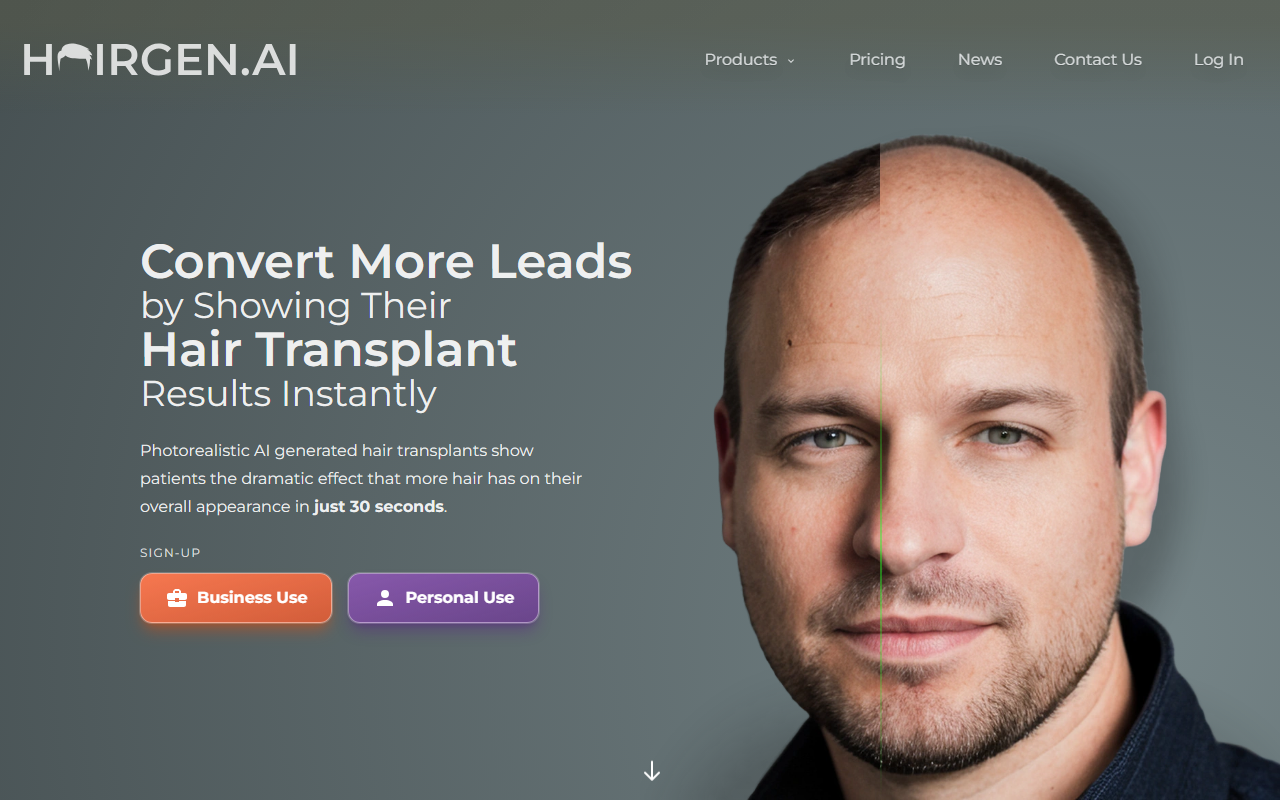
Upon visiting Hairgen.ai, the landing page immediately emphasizes the core value proposition: previewing FUE/FUT hair transplant results using AI. The design is clean and direct, with a prominent prompt asking for your email before you can explore further. I noticed a clear toggle between “Business Use” and “Personal Use,” indicating the tool targets both clinics and individuals. After entering an email, the site likely grants access to the dashboard. Unfortunately, I could not test the free tier without completing that step, but the homepage itself is packed with detailed explanations of benefits, workflow steps, and FAQs. The overall onboarding feels minimal but purposeful — the tool positions itself as a lead-conversion asset, not just a novelty app.
How Hairgen.ai Transforms the Consultation Workflow
Hairgen.ai solves a specific problem: showing potential hair-transplant patients what they could look like with more hair, in a personalized and photorealistic way. The process is straightforward. First, upload any profile photo — even a selfie works. Second, paint the general area where you want additional hair; the AI handles the fine details. Third, within less than 30 seconds, the system renders a photorealistic image of the patient with denser hair. I appreciate that the tool is cloud-based and requires no installation. Features include adjustable hairline, color, and length, plus the ability to embed the interface directly into a clinic’s website. The “Magic Moment” concept is smart: seeing your own face with more hair triggers an emotional response, making the treatment harder to resist. This is a clear leap beyond showing generic before-and-after photos of strangers.
Pricing, Contract, and Market Position
Pricing is not publicly listed on the website. The FAQ mentions a standard one-year contract with a 30-day risk-free period, and a white-label option is available upon request. This suggests a B2B-focused pricing model aimed at clinics rather than individual consumers. The tool integrates seamlessly into existing workflows — staff or even patients can use it directly. Compared to manual photo editing or stock images, Hairgen.ai offers speed, personalization, and scalability. However, it is not a clinical prediction tool; as the FAQ clarifies, renderings are for simulation only. Competitors include manual Photoshop mockups or simpler hair simulation apps, but Hairgen.ai’s specialization in hair-transplant previews gives it a unique edge. The tool is best suited for clinics that want to increase patient conversions, drive traffic with shareable AI-generated content, and enhance their prestige by using cutting-edge technology.
Strengths, Limitations, and Who Should Use It
Hairgen.ai’s primary strength is its ability to produce photorealistic previews in under 30 seconds without requiring special hardware or photo-editing skills. The emotional impact of seeing your own face with more hair is a powerful conversion driver. The tool also respects patient privacy — data is not shared with third parties, and automatic deletion options exist. On the downside, it is not a medical guarantee, and clinics must carefully manage patient expectations with disclaimers. The tool works best with clear, well-lit photos; extremely blurry or angled selfies might produce less accurate results. Also, the lack of publicly disclosed pricing makes it harder for smaller clinics to evaluate upfront investment. I recommend Hairgen.ai for any hair-transplant clinic or dermatology practice that wants to modernize its consultation process and increase close rates. Individuals curious about their potential results may find it useful for personal exploration, but the business subscription is clearly the primary product.
Visit Hairgen.ai at https://hairgen.ai/ to explore it yourself.













Comments