

First Impressions and Onboarding
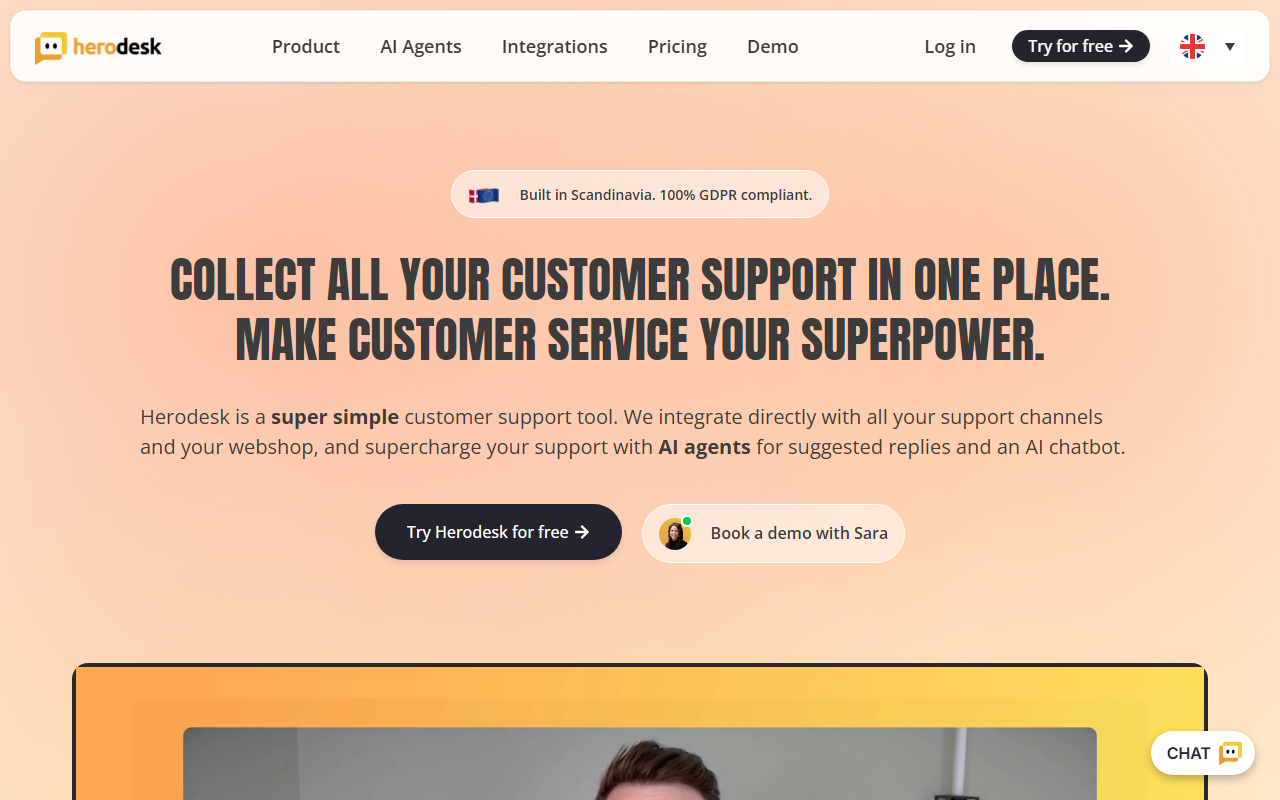
Upon visiting Herodesk’s website, I was struck by the clean, modern design and the clear focus on e-commerce. The homepage immediately explains the core value: collect all customer support in one place and supercharge it with AI. I clicked “Try for free” and was prompted to create an account with just an email and password—no credit card required. The onboarding flow walks you through connecting your first channel. I chose email and was guided to set up forwarding in under two minutes. The dashboard then opened to a “Shared Inbox” view, empty but with clear prompts to integrate Shopify, live chat, or social media. The simplicity here is deliberate: Herodesk removes friction for teams that want a single pane of glass.
Key Features and AI Integration
Herodesk’s standout feature is its AI Agent, which powers both a chatbot and suggested replies. During testing, I set up an AI chatbot on a test site. The bot responded to a sample query about return policies in fluent English, pulling from knowledge I had uploaded. The suggested replies feature appears inside the shared inbox: when a new email arrives, the AI drafts a response that agents can edit and send. This cuts response time significantly. The tool also offers auto-translations for both incoming and outgoing messages, which is essential for international e-commerce.
The rules engine (with AI capabilities) lets you automate tagging, routing, and assignments. For instance, I created a rule to tag any conversation containing “refund” and route it to a dedicated refund team inbox. The interface uses a simple if-this-then-that logic. Additionally, Herodesk integrates deeply with Shopify. When I connected a test Shopify store, customer order data (order number, tracking, status) appeared directly in the conversation sidebar. This avoids toggling between apps. Other integrations include custom widgets via API and webhooks for bespoke ERP or CRM data.
Herodesk is built in Scandinavia and is 100% GDPR compliant, which is a strong selling point for European businesses. The platform covers email, live chat, social media, and e-commerce platforms. I found the “Smart Views” feature particularly useful for creating custom filtered lists, such as “VIP customers” or “Pending returns.”
Pricing and Target Audience
Herodesk does not publicly list its pricing tiers on the website. The “See prices” button leads to a contact form or demo booking. This suggests a sales-led model for paid plans, though a free tier exists (likely limited in features or users). From the copy, it is clear the tool targets e-commerce businesses, especially those using Shopify or similar platforms. It competes with Zendesk and Freshdesk but focuses more on AI automation and simplicity. Herodesk is best for small to mid-sized e-commerce teams that want an all-in-one solution without complex setup. Larger enterprises needing advanced analytics or extensive customization may find it too streamlined.
One limitation: the AI chatbot and suggested replies rely on your uploaded knowledge base; if you have sparse documentation, the AI may produce generic responses. Also, while the free tier is generous for testing, serious users will likely need to negotiate pricing based on agents and conversations.
Verdict and Recommendations
Herodesk delivers on its promise: a simple, AI-powered helpdesk that unifies customer support channels specifically for e-commerce. During my trial, the onboarding was fast, the AI replies were accurate, and the Shopify integration saved time. The GDPR compliance is a major plus for EU merchants. If you run an online store and want to reduce manual support work, try the free tier—it gives you a real feel for the product. For teams that need deep CRM customization or enterprise-level reporting, competitors like Intercom might be a better fit. But for ease of use and focused AI features, Herodesk is a compelling choice.
Visit Herodesk at https://herodesk.io/ to explore it yourself.











Comments