

First Impressions and Onboarding
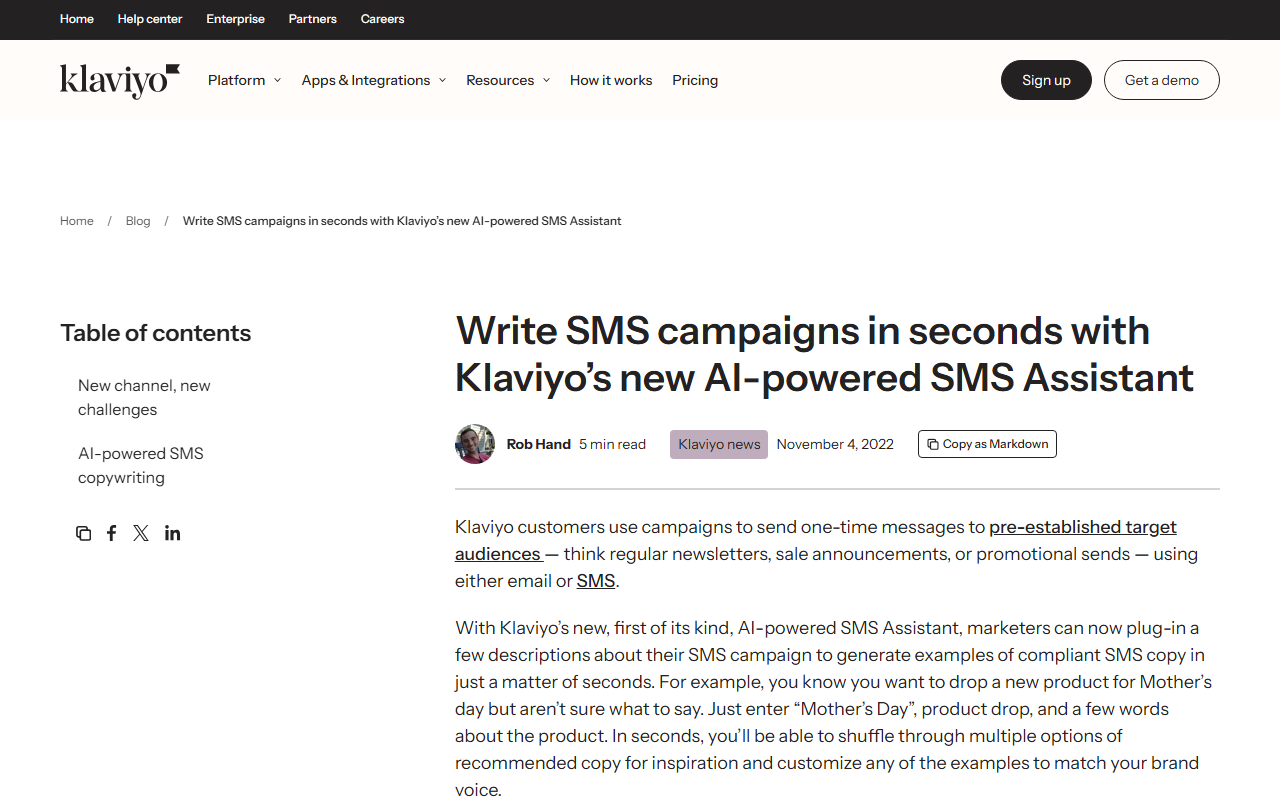
Upon visiting Klaviyo's website, I was immediately struck by the emphasis on AI-driven autonomy. The homepage highlights "Composer," an AI agent that creates complete on-brand campaigns from a simple prompt. The interface is clean and modern, with clear navigation toward "Marketing," "Service," "Analytics," and "Data Platform." Signing up for the free plan is straightforward — you only need to provide a few details and can start with just your website URL. The Marketing Agent then learns from your site and builds initial campaigns, flows, and forms. This onboarding flow is remarkably fast for a platform with such depth. I appreciated that the free tier includes core features, allowing you to test email and SMS capabilities before committing to a paid plan.
Core Features and AI Capabilities
Klaviyo positions itself as an autonomous B2C CRM, and the term is apt. The platform combines a customer data platform (CDP) with real-time signal processing and AI agents. The Marketing Agent can generate and personalize campaigns across email, SMS, WhatsApp, mobile push, and even RCS for Business. The Customer Agent resolves up to 65% of support queries autonomously while also recommending products. During my exploration, I noticed the AI tools are deeply integrated — Klaviyo offers a Remix feature (likely for A/B testing or content variation) and even an MCP Server for building custom agentic workflows. The platform processes an average of 1.6 billion API calls daily, which hints at the scale of real-time personalization it handles. For developers, there are 350+ pre‑built integrations with Shopify, payment gateways, and analytics tools, plus connectors for ChatGPT and Claude.
Pricing and Market Positioning
Pricing is not fully listed on the website, but the FAQ confirms a free plan exists, and paid plans scale based on the number of contacts and channel usage. Enterprise pricing is available for larger organizations. This model makes Klaviyo accessible to small ecommerce stores while scaling to major brands. In the competitive landscape, Klaviyo sits between all‑in‑one solutions like HubSpot and simpler email tools like Mailchimp. However, Klaviyo’s focus on ecommerce and real‑time customer data gives it an edge for product‑driven businesses. It claims a 20% YoY growth in ecommerce revenue for some customers. With 193,000+ customers across 100 countries, the platform has strong market validation. That said, the pricing can quickly escalate as contact lists grow, and the complexity of the platform may overwhelm absolute beginners who only need basic email blasts.
Who Should Use Klaviyo?
Klaviyo is best suited for B2C brands — especially ecommerce merchants — that want a unified CRM, CDP, and marketing automation platform with AI agents. The autonomous agents reduce manual work for campaign creation and customer support, which is a genuine strength. However, the platform’s richness comes with a learning curve; small service‑based businesses or non‑ecommerce entities may find better fit with simpler tools. Klaviyo offers impressive depth: AI that learns from your website, omnichannel orchestration, and real‑time analytics. I would recommend it to any growing brand that values data‑driven personalization and is prepared to invest time in setup. Start with the free plan, experiment with the Composer AI, and scale as your revenue grows. Visit Klaviyo at https://klaviyo.com/ to explore it yourself.













Comments