

First Impressions and Interface
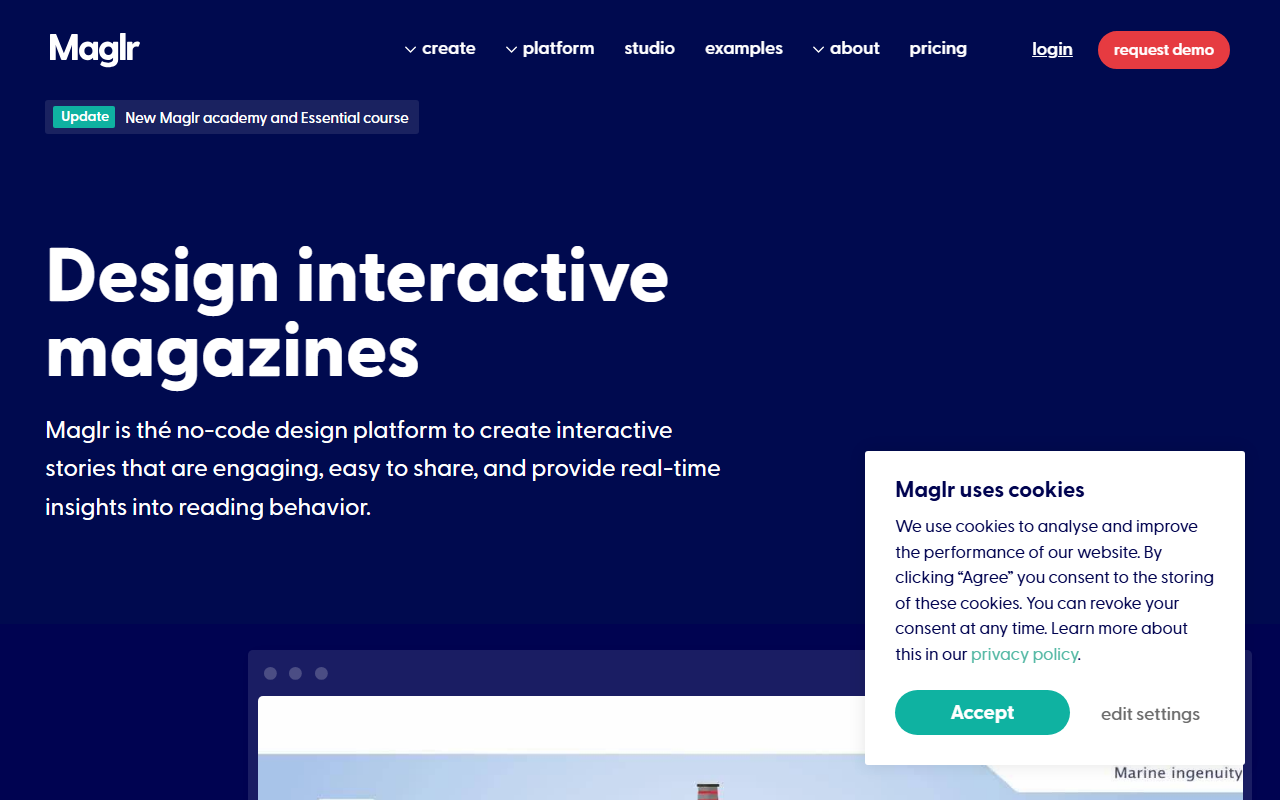
Upon visiting Maglr's site, I was greeted with a sparse landing page that simply states it helps you "Publish visual content your website can't." Below that, there's a placeholder title and subtitle, a "more info" button, and a section showing an example described as "Description of example" with a credit to an agency. The only interactive element I could test was the cookie consent banner, which offers options to accept, deny, or customize preferences. The dashboard or any deeper workflow is hidden behind a "request demo" link. This minimal presentation makes it difficult to assess the tool's actual capabilities without signing up or requesting a demo, which I did not complete due to the lack of upfront information.
What Maglr Does and the Problem It Solves
Maglr appears to be a platform for creating and publishing interactive, visually rich content that goes beyond what standard websites can deliver. The tagline suggests it specializes in immersive storytelling, perhaps through multimedia integration, animations, or data visualizations. In the context of Image AI and AI Design, the tool likely employs AI to assist in layout generation, asset selection, or responsive design optimization. However, no specific AI models or technology are mentioned on the site. If Maglr truly automates complex visual layouts, it could solve the problem of teams needing to produce engaging web-native content without deep coding or design skills. Without clear technical details, I must note that the AI component is inferred rather than confirmed.
Pricing and Market Position
Pricing is not publicly listed on the website. The only call-to-action is a "request demo" button, which suggests a B2B subscription model or enterprise licensing. This places Maglr in the premium tier of design tools, unlike competitors such as Canva (which offers a generous free tier) or Adobe Express (with clear pricing tiers). Another alternative is Foleon, which similarly focuses on interactive content creation. Maglr's lack of transparent pricing may deter individual creators or small teams. For context, Canva Pro costs around $12.99/month, while Foleon's entry plan is $1,250/month. Maglr likely falls somewhere in between, given its specialized focus.
Strengths, Limitations, and Recommendations
A genuine strength of Maglr is its potential to solve a niche problem: publishing content that standard CMS tools cannot render, such as interactive reports or rich media stories. If the AI truly streamlines this process, it could be a valuable asset for marketing teams and publishers. However, a major limitation is the lack of transparent information on the website. Without seeing any examples of AI-assisted features or a demo, it's impossible to verify the tool's actual functionality. I also noticed no user reviews or case studies on the site, which raises trust questions. This tool is best suited for enterprise teams that need a dedicated solution for interactive content and can afford to request a demo. Individual creators or freelancers who want instant access and clear pricing should look elsewhere, such as Canva or Figma.
Visit Maglr at https://maglr.com/ to explore it yourself.













Comments