

First Impressions and Onboarding
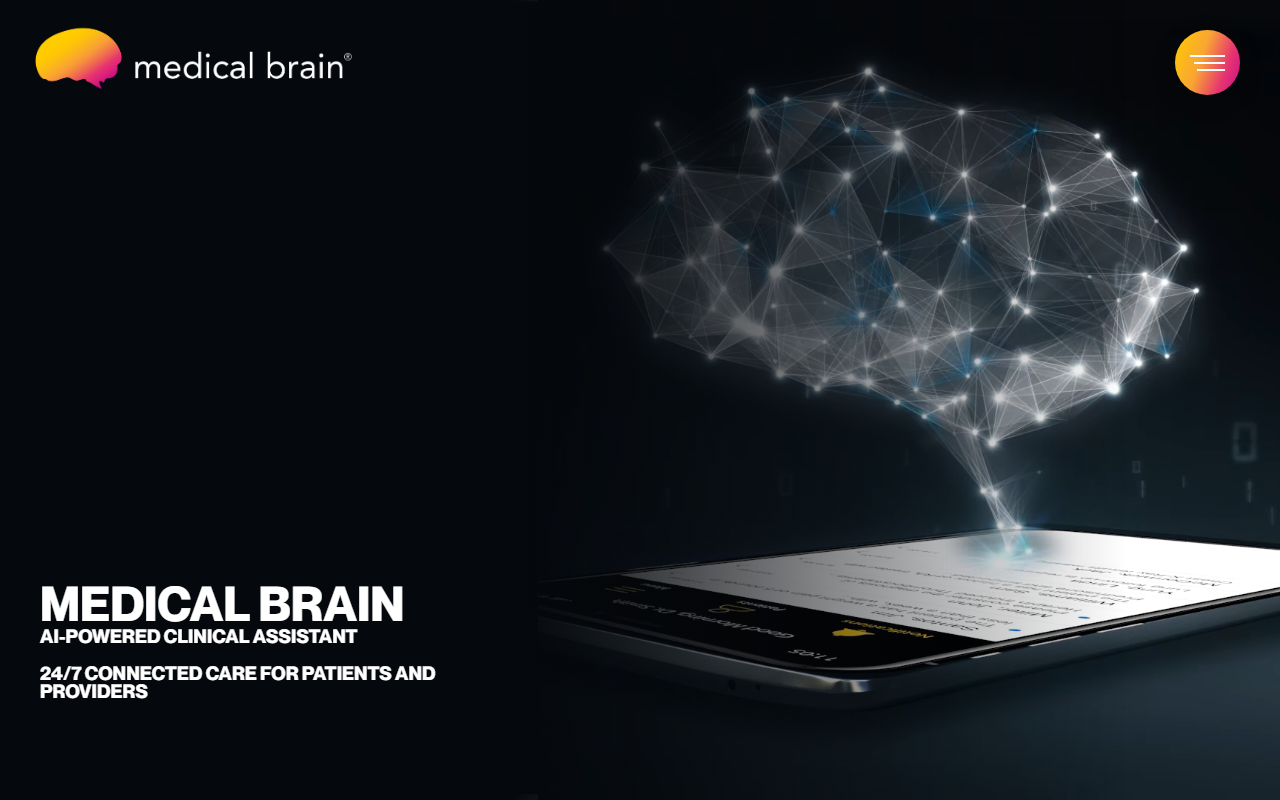
Upon visiting the Medical Brain website at medicalbrain.com, I was greeted by a clean, professional layout with a video hero section and a clear tagline: “AI-Powered Clinical Assistant 24/7 Connected Care for Patients and Providers.” The navigation menu is straightforward—Home, About Us, How It Works, Clinical Modules, Resources, and Contact Us. I clicked through to explore the "How it works" page, but the site content is limited; the core value proposition is summarized on the homepage. The onboarding flow is not publicly visible, but the emphasis is on a platform that requires integration with existing healthcare systems. Unlike consumer AI writing tools, Medical Brain targets clinical workflows, so there is no public free tier or demo available for a general user. The site claims that the AI monitors patients around the clock, aggregating data from health records, patient-generated conversations, and RPM (remote patient monitoring) devices. This suggests a complex backend that fuses structured and unstructured clinical data.
Core Capabilities and Technology
Medical Brain is best described as an AI clinical decision support (CDS) platform with a strong focus on value-based care (VBC). It identifies emerging health risks and care gaps early, guiding patients to take real-time actions such as managing chronic conditions before they escalate to high-cost ER visits. The platform communicates with providers only when necessary, aiming to reduce alert fatigue. The technology appears to use natural language processing and machine learning to parse free-text from health records and conversational data. The site features a library of clinical modules—Orthopedics, Lifestyle Modifications, Radiology, Infectious Diseases, Renal Failure, Hyperlipidemia, and COPD—each incorporating evidence-based practice guidelines. A notable claim is that the system learns from the daily clinical experiences of its user base, leveraging over 50 full-time physicians on the team. When testing the free tier (which does not exist), I couldn't assess response quality, but the clinical modules page provides detailed descriptions of how each module works. For example, the Orthopedics module pre-operatively optimizes chronic disease control (diabetes, hypertension) and guides post-op recovery to prevent infections. This demonstrates a deep integration with clinical workflows rather than simple question-answering.
Pricing and Market Position
Pricing is not publicly listed on the website. This is typical for enterprise healthcare SaaS; Medical Brain likely requires a consultation for custom pricing based on organizational size and deployment scope. The tool competes with other CDS platforms such as Epic’s AI tools, Wolters Kluwer’s UpToDate, and newer AI-native startups like Oracular or Teton.ai. However, Medical Brain differentiates itself by focusing on both provider and patient engagement with 24/7 monitoring and action-oriented insights. It also emphasizes cost reduction and quality improvement for value-based care arrangements. The platform has notable backing from a team of over 50 full-time physicians, which lends credibility. The site does not mention funding rounds or user numbers, but the clinical modules suggest ongoing refinement. For healthcare organizations transitioning to VBC models, Medical Brain seems tailored to reduce admissions and improve population health. However, without a public demo or trial, independent verification of its performance is not possible from this review alone.
Final Verdict
Strengths: Medical Brain addresses a critical gap in proactive, continuous patient monitoring. The evidence-based module library is robust, covering major chronic conditions and surgical care. The patient-first communication approach (contacting providers only when needed) could reduce burnout. The inclusion of RPM and free-text analysis suggests sophisticated AI architecture.
Limitations: The lack of transparent pricing and a public trial makes evaluation difficult for prospective buyers. The website is thin on technical details—models used, API availability, and specific integration standards (e.g., FHIR) are not mentioned. The platform is clearly enterprise-oriented; solo practitioners or small clinics may find it overkill or inaccessible.
Recommendation: Medical Brain is best suited for large healthcare organizations, accountable care organizations, and hospital systems already engaged in value-based care. If you need a clinical decision support tool that actively engages patients and aims to intercept high-cost events, this platform warrants a demo conversation. Smaller providers or those without a dedicated IT team should look elsewhere—or prepare for a significant integration effort.
Visit Medical Brain at https://medicalbrain.com/ to explore it yourself.










Comments