

What Is Ohapotato and What Problem Does It Solve?
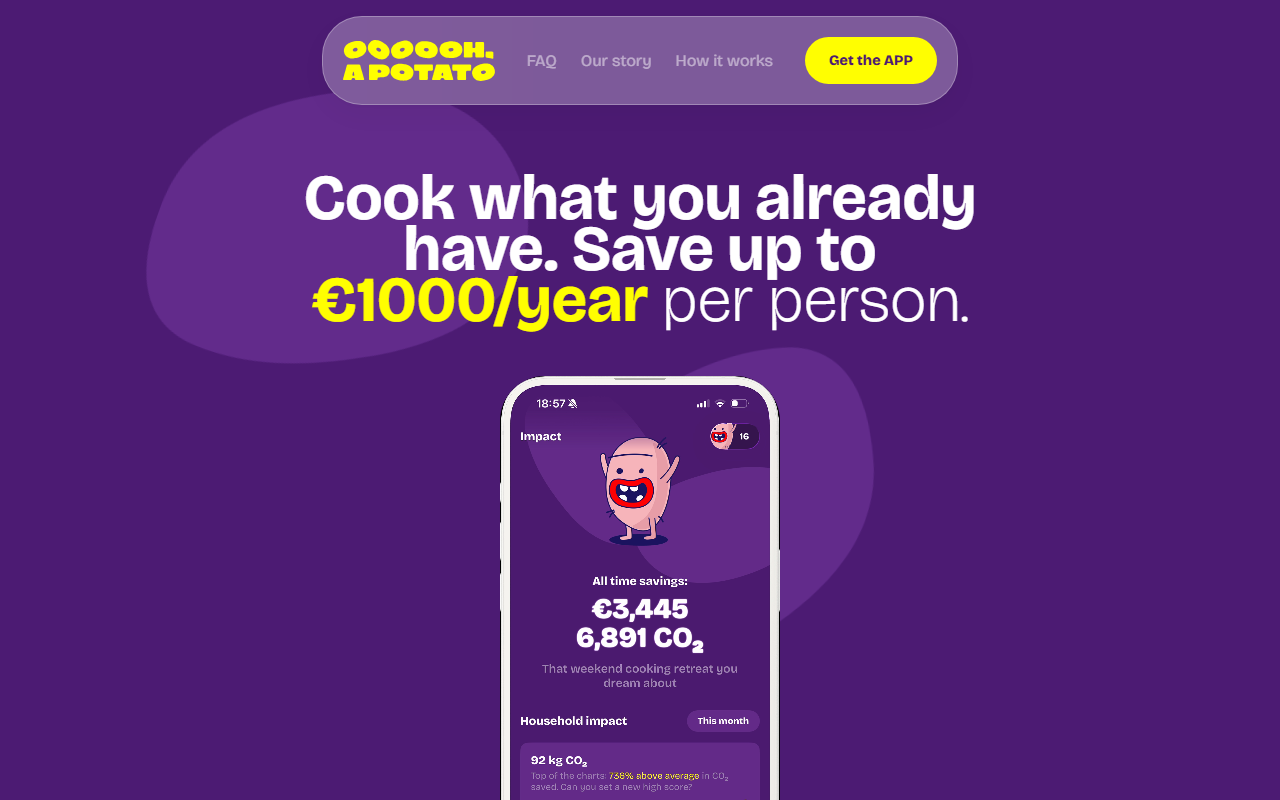
Ohapotato is a meal-planning app designed to fight household food waste by flipping the traditional approach. Instead of starting with recipes and building a shopping list—which often leads to half-used ingredients—it begins with what you already have in your fridge and pantry. The app then suggests meals around those items, optimises leftovers, and learns from your cooking and shopping habits to minimise waste over time. Upon visiting the site at ohapotato.app, I immediately saw a bold claim: "Save up to €1000/year per person." That caught my attention, as does the environmental angle—households generate 50-60% of global food waste, and this tool aims to close the gap between intention and action. The problem it solves is real: most people care about waste but lack a system that adapts to their actual, messy lives.
First Impressions and Onboarding Flow
The landing page is clean and narrative-driven, walking through the mission, then listing features like fridge and receipt scans, real-time spoilage warnings, and leftover-optimised plans. I explored the "How it works" section and found a clear explanation of the inverted process. The website also includes a FAQ and a blog with tips, but the app itself is only available on iOS—no web or Android version was mentioned. When testing the free tier (the site says "Try for free on iOS"), I couldn't actually download it from my desktop, but the description promises a dashboard that tracks money and CO₂ saved. The phrase "Your personal cash & climate dashboard" suggests a motivational UI with milestones. The onboarding likely involves scanning your fridge or entering what you have, then receiving meal suggestions that adapt to your schedule and taste. The app claims to learn from your cooking patterns, adjusting plans when things change—a feature I appreciate because rigidity is a common flaw in meal planners.
Pricing, Technology, and Market Positioning
Pricing is not publicly listed on the website beyond a free trial. The site states that 30,000+ households have rescued over 580,000 ingredients, which gives some social proof. Regarding technology, the app uses AI for image recognition (fridge scans) and machine learning to personalise meal plans. There is no mention of underlying models, but the adaptive recommendation system is clearly core. Integrations appear limited to iOS—no Android, web, or API mentioned. Compared to alternatives like Mealime (which focuses on recipe-based meal prep) or Too Good To Go (which fights retail food waste), Ohapotato uniquely targets home waste by starting with existing ingredients. It also competes with apps like Yummly, but its waste-specific focus is a differentiator. The tool is best suited for individuals or households who cook regularly, want to save money, and feel guilty about throwing food away. It is not for people who rarely cook, prefer takeout, or dislike scanning/photographing their groceries.
Strengths, Limitations, and Final Verdict
Ohapotato has genuine strengths: its waste-first design, real-time spoilage alerts, leftover optimisation, and shared planning for families. The cash and climate dashboard is a nice motivational feature. However, there are limitations. The app is currently iOS-only, which excludes Android users. The pricing model is unclear—there is no mention of a paid tier beyond the free trial, which could mean a subscription later. Also, the effectiveness depends on user consistency: you must actually scan your fridge and follow the plans. For someone who doesn't want to commit, it might feel like extra work. Overall, I recommend Ohapotato for eco-conscious cooks who want structure without rigidity. If you're tired of wasting food and money, and you own an iPhone, try the free trial. For Android users or those who want a web-based planner, look elsewhere for now.
Visit Ohapotato at https://ohapotato.app/ to explore it yourself.










Comments