

First Impressions and Onboarding
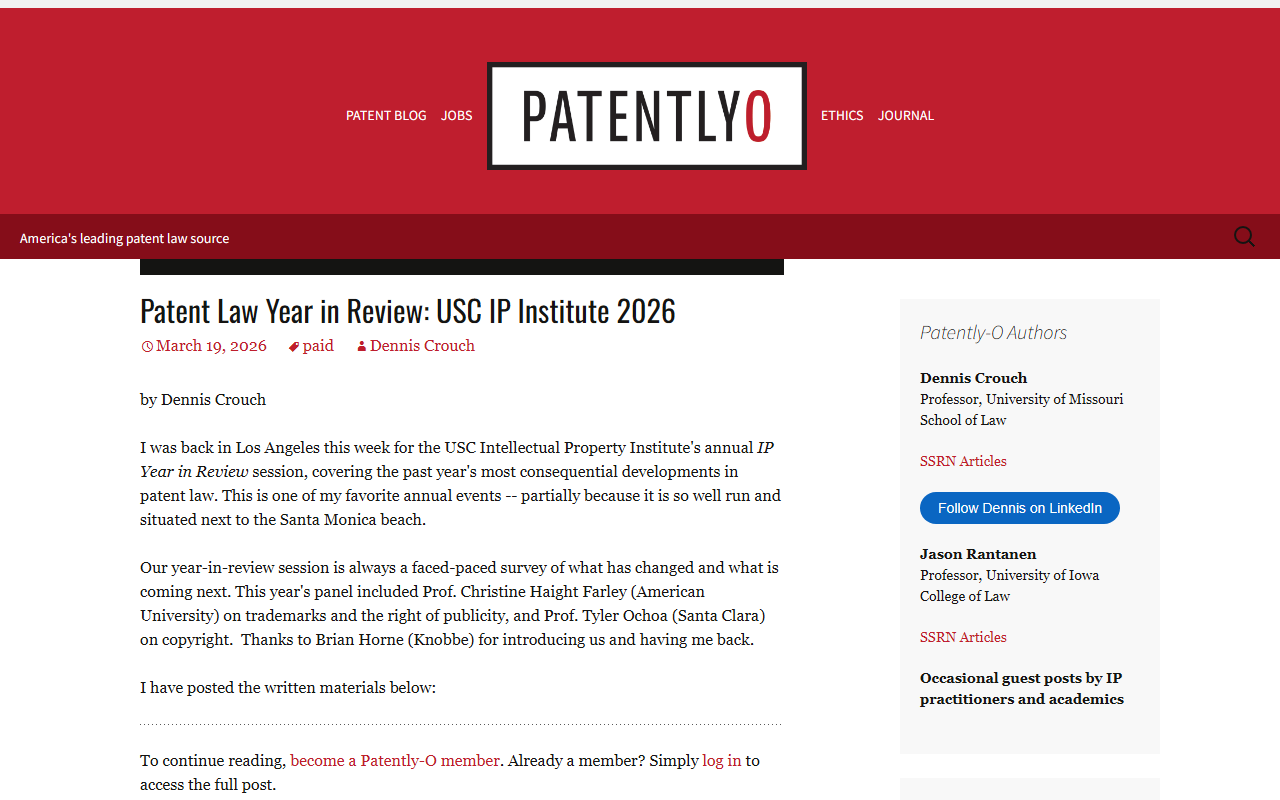
Upon visiting Patently-O, I was greeted by a clean, text-heavy interface that prioritizes substance over flash. The homepage displays recent posts with clear headlines, author bylines, and publication dates. The search bar is prominently placed, making it easy to find specific topics. I noticed the blog does not offer a typical AI chatbot or interactive tool — instead, the AI element appears subtly. For example, in one post, Dennis Crouch mentions an AI-generated version of an accused device, linking to a separate visualization. The onboarding is straightforward: no account needed to read free posts, though a membership paywall restricts some full articles.
Content Quality and AI Integration
The core value of Patently-O lies in its deep, expert-written analysis of patent law cases and USPTO policies. As a senior journalist, I found the posts meticulously researched, with citations to legal opinions and academic articles. The AI reading component is minimal but notable — the blog occasionally uses AI to generate visual aids or mockups, as seen in the Range of Motion post. However, the blog does not appear to offer machine-powered summarization or interactive reading tools. The strength here is the human expertise: Dennis Crouch and Jason Rantanen provide nuanced commentary that AI alone cannot replicate. For AI reading, Patently-O serves as a curated feed of high-signal content, but it lacks the automated analysis features of dedicated legal AI tools like Casetext or ROSS.
Pricing and Accessibility
Patently-O operates on a freemium model. Most posts are publicly accessible, but some premium content (like the in-depth Judge Albright article) requires a membership. Pricing is not publicly listed on the website — you must click through to join. Based on industry norms for legal blogs, I estimate an annual fee in the range of $100–$200. The free tier gives you access to the majority of posts, though key analyses may be locked. This is a reasonable trade-off for a niche publication, especially when compared to expensive legal databases like Westlaw or LexisNexis. For casual readers, the free content is sufficient to stay updated on major patent developments.
Verdict and Recommendations
Patently-O excels as a daily briefing for patent attorneys, law professors, and IP students. Its authoritative voices and timely case coverage make it indispensable for anyone practicing patent law. However, the AI reading feature is underdeveloped — it is not a tool for automated research or document analysis. If you need AI-powered patent analysis, look to tools like PatentPal or Google Patents. Who should use Patently-O? Legal professionals who want expert context on Federal Circuit decisions and PTAB stats. Who should skip it? Anyone seeking a generative AI assistant for reading dense legal texts — this blog is a human-led publication, not an AI tool. Overall, Patently-O is a trusted resource, best used as a complement to dedicated AI legal research platforms. Visit Patently-O at https://patentlyo.com/ to explore it yourself.










Comments