
First Impressions and Platform Overview
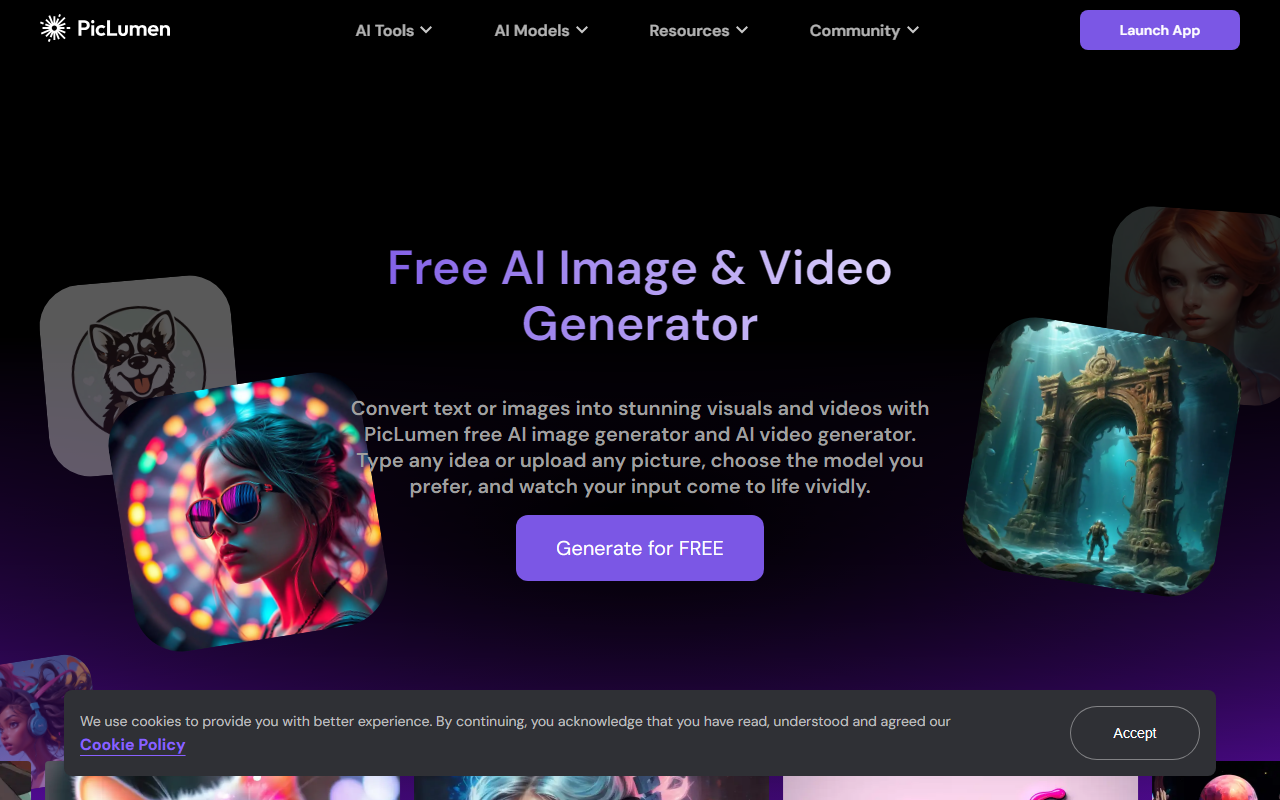
Upon visiting PicLumen, the first thing that struck me was the sheer breadth of options. The homepage is a gallery of models and effects, each with a "Try" button. The layout is clean but dense, showcasing featured models like Nano Banana 2, GPT Image 2, Seedance 2.0, Kling 3.0, and Seedream 5.0 Lite. There's a clear emphasis on both image and video generation, with separate spotlights for each. The "Hot Video Effects" section offers pre-set animations like "Big Guy Dance" and "Orbit Shot," which suggests a strong focus on creative, viral-style content. The platform also includes a community aspect, with top creators and a monthly leaderboard based on featured posts and likes. This immediately tells me PicLumen is not just a tool but an ecosystem.
Models, Technology, and Capabilities
PicLumen acts as a hub for multiple generative models. During my exploration, I noticed that each model has a distinct specialization. For example, Nano Banana 2 is highlighted for "advanced reasoning and subject consistency," while GPT Image 2 promises "4K images with near-perfect text rendering." Seedance 2.0 offers multi-shot video with native audio, and Kling 3.0 focuses on realistic physics. This model aggregation approach means users can switch between different engines without leaving the platform. The technology behind these models is not explicitly detailed on the landing page, but the names suggest partnerships or integrations with popular AI research outputs. There is also an "Inspiration Hub" with tutorials covering prompt engineering, advertising, and brand visuals, which indicates an effort to educate users. Notably, there is no mention of API access or enterprise integrations in the visible content, so the platform seems consumer-oriented.
Community, Pricing, and Differentiation
PicLumen's community features are robust. The "Top Creators of the Month" tab shows users with hundreds of featured posts and thousands of likes. This social layer encourages sharing and discovery, similar to platforms like Civitai or Leonardo AI's community. However, unlike those competitors which often have free tiers with daily credits, PicLumen's pricing is not transparently listed on the homepage. There is a "Lumen Exclusive Offer" promising a +15% bonus on first purchase, suggesting a credit-based system, but I could not find specific dollar amounts or tier pages without deeper navigation. This lack of upfront pricing is a limitation. For context, alternatives like Midjourney offer clear subscription tiers ($10-$60/month), while Stable Diffusion is open-source. PicLumen positions itself as an all-in-one creation hub with social features, which could appeal to content creators seeking variety and community feedback.
Strengths, Limitations, and Recommendation
A genuine strength is the model diversity — having GPT Image 2, Kling 3.0, and Seedance under one roof saves time. The video effects presets are also a standout, enabling quick TikTok-style animations. However, the lack of transparent pricing is a real limitation. Users must presumably sign up or purchase credits before knowing costs, which can be a barrier. Additionally, the reliance on third-party models means quality varies; not all models may perform equally well. PicLumen is best suited for hobbyists or social media creators who want a one-stop shop for generating short-form video and images with trending effects. Professionals needing consistent, high-volume output or API integration should look elsewhere. Overall, PicLumen impresses with its range and community, but pricing clarity would strengthen trust.
Visit PicLumen at https://piclumen.com/ to explore it yourself.










Comments