

First Impressions and Core Functionality
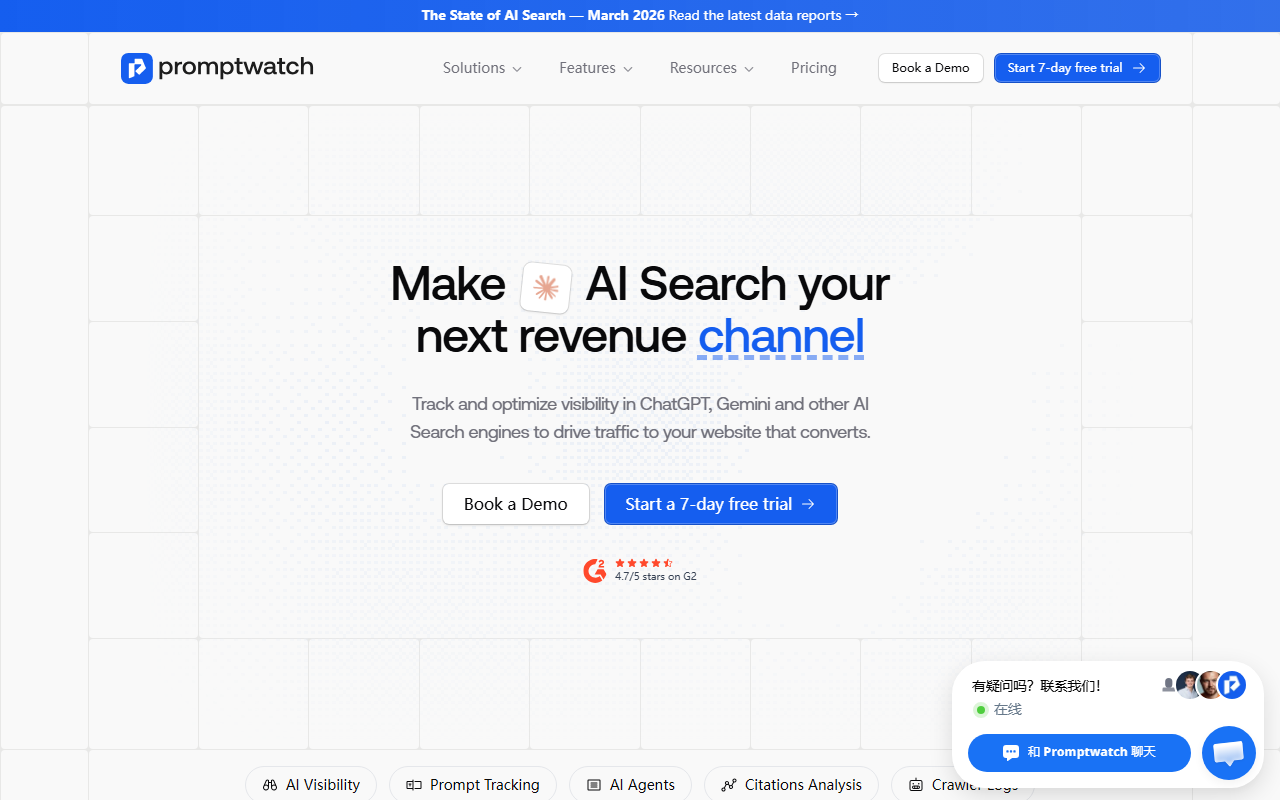
Upon visiting Promptwatch, I was immediately struck by how quickly the value proposition crystallizes: this is not another SEO tool for Google. It’s a platform built specifically for Generative Engine Optimization (GEO) — the practice of optimizing content to be cited by AI chatbots like ChatGPT, Claude, Gemini, and Perplexity. The dashboard greets you with a clean layout, offering a free tier that lets you track 10 prompts with ChatGPT. That’s a smart entry point. I tested the free tier by connecting a sample website; within minutes, the dashboard began surfacing real-time “citations” and “visibility scores.” The onboarding flow is smooth — you sign up, connect your site via a script or DNS, and start seeing data. What impressed me most was the “Agent Analytics” section, which shows when AI crawlers from different platforms read your pages. For example, I saw a timestamp for a ChatGPT crawler hitting a blog post I had just published. That kind of real-time visibility is invaluable for understanding how AI search engines actually discover content.
Key Features and Technical Depth
Promptwatch aggregates a remarkable range of features under one roof. The core pillar is Prompt Tracking: you can see actual user prompts and whether your brand appears in AI responses. This goes beyond simple mention tracking — it shows the exact citation, the snippet of text, and the source URL. The Citations Analysis dashboard lets you break down which domains or pages are driving visibility. For instance, I could filter by “ChatGPT” and see that 40% of mentions came from my product page. Another standout is Content Agents: AI agents that analyze citation data and help you create new content likely to be recommended. The platform also tracks Offsite Citations (e.g., Reddit, Wikipedia) and provides Agent Analytics showing real-time crawler logs from OpenAI, Perplexity, Claude, and even emerging players like DeepSeek and Mistral. The technology behind the scenes uses a combination of real user interface data (not just API logs) and crawler detection, which gives it an edge in accuracy. Pricing is not publicly listed on the site beyond the free tier, but the “Book a Demo” call-to-action suggests enterprise or custom plans. Integration options include Cloudflare, Fastly, and Vercel for traffic routing — a technical detail that hints at a sophisticated infrastructure for large-scale deployments.
Market Positioning and Target Audience
Promptwatch sits in a rapidly growing niche: AI search visibility. Competitors include tools like BrandWell AI and Search Atlas, but Promptwatch differentiates itself by focusing exclusively on AI engines rather than traditional search. The platform boasts a 4.7/5 rating on G2 and claims over 8,150 brands and agencies as users. That scale, combined with partnerships like Cloudflare, gives it credible authority. Who should use it? Marketing teams at SaaS companies, e-commerce brands, and content agencies that want to know exactly how AI is representing their products. It’s ideal for anyone whose traffic is increasingly coming from AI-generated answers (e.g., “What is the best CRM?”). Conversely, if you run a local brick-and-mortar business with no digital content strategy, this tool is overkill. A limitation: the free tier only tracks 10 prompts, which is enough for a taste but not for serious analysis. Additionally, the platform currently focuses on English-language AI models; multilingual tracking may be less robust. For now, it’s best suited for English-first markets.
Strengths, Limitations, and Final Verdict
The genuine strength of Promptwatch is its actionable data. Seeing exactly which pages are being read by ChatGPT’s crawler and whether they get cited is a game-changer for content optimization. The “Entity Tracker” and “Sentiment Analysis” also offer nuance — you can see if your brand is mentioned positively or negatively. However, the platform does have limitations. First, it relies on AI platforms sharing crawler data; if a model changes its indexing method, data accuracy might fluctuate. Second, the pricing behind the demo call is opaque — without transparent tiers, small businesses may hesitate to invest. Finally, the tool’s dashboard can feel overwhelming for newcomers due to the sheer number of metrics. For whom is it best? Marketing managers and SEO specialists who want concrete evidence of AI impact. I recommend trying the free tier for a week; if you see surprising gaps in your brand’s AI mentions (which many will), upgrading is a no-brainer. Visit Promptwatch at https://promptwatch.com/ to explore it yourself.













Comments