

First Impressions and Interface
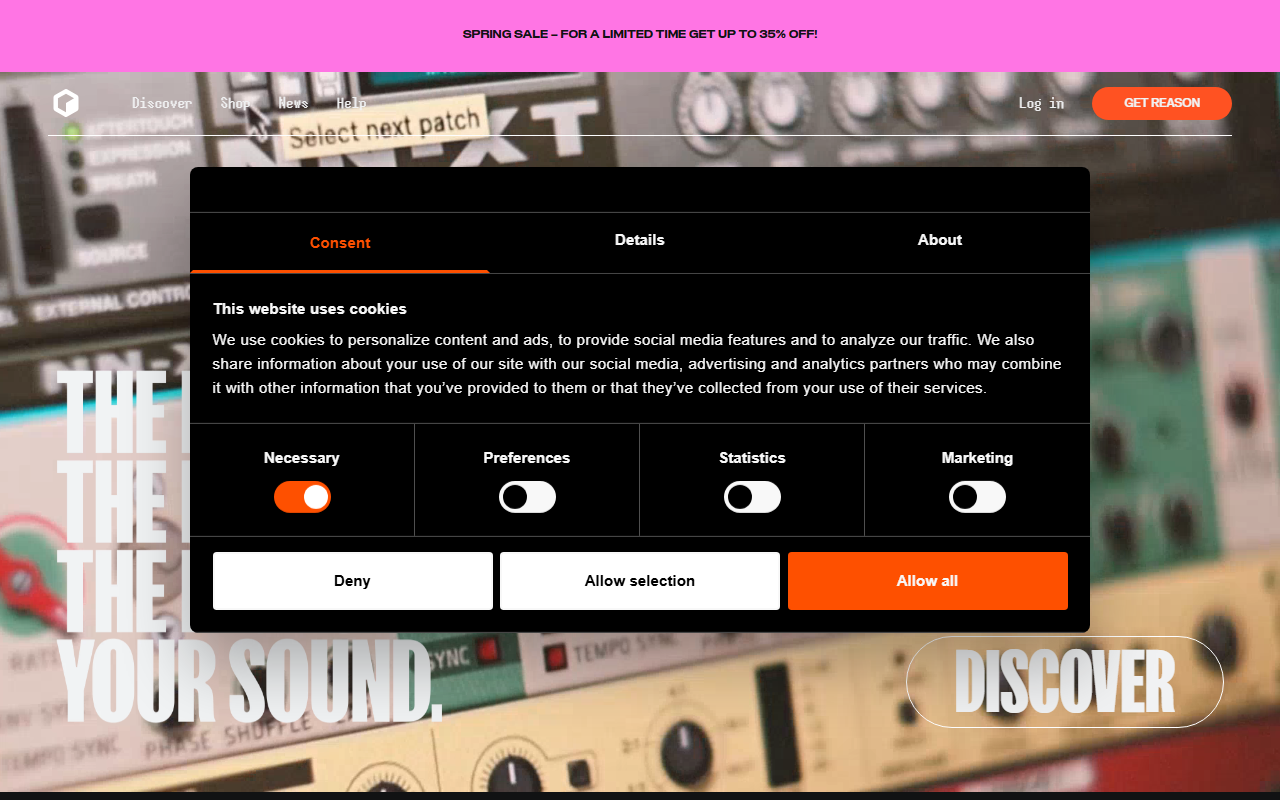
Upon visiting the Reason Studios website, I immediately noticed a clear shift in messaging: Reason 14 is being pitched as being redesigned around your tracks. The site highlights a transformative track-centric workflow, major sequencer improvements, and the brand new RV-9 Reverb Station device. When I tested the free trial, the first thing that struck me was the familiar virtual rack — a shelf of instruments and effects that you patch together like real hardware. The dashboard now feels cleaner, with a side-panel browser (introduced in 13.3) that reduces clutter. The overall aesthetic remains dark and gear-oriented, appealing to producers who enjoy tactile, modular signal chains. However, there is no mention of AI or machine learning on the site or in the trial; this is strictly a traditional DAW with a strong analog-modelling heritage.
Workflow and Features
Reason 14 offers a complete music production environment. You can use it as a standalone DAW or as a plugin (Reason Rack VST3/AU/AAX) inside another host. During testing, I found the new track-centric workflow genuinely improved navigation — each track now has a dedicated lane with inline editing, making comping and arrangement faster. The sequencer has been updated with better zoom, snap, and automation handling. The RV-9 Reverb Station device is a highlight: it emulates classic hardware reverb tanks and plates, with modulation options that let you sculpt space from subtle ambience to cavernous washes. Reason still includes a massive library of devices — from subtractive synths (Subtractor, Thor) to samplers (NN-XT) and effects. The ability to wire devices arbitrarily remains its killer feature, but this also means a steeper learning curve compared to more linear DAWs. I noticed no cloud collaboration or AI-assisted features; the tool relies entirely on user creativity.
Market Position, Pricing, and Target Audience
Reason 14 competes with the likes of Ableton Live, FL Studio, and Cubase. Unlike those DAWs, Reason focuses on a hardware-rack paradigm that works best for sound designers and electronic music producers who love patching cables. Pricing is not fully detailed on the website, but the press notes confirm Reason 14 has reduced pricing compared to previous versions, and that the Reason Rack is now available separately (likely around $99-199 based on industry chatter). There is also Reason+, a subscription service that adds new devices and sound packs monthly. The target audience is clear: intermediate to advanced producers who want deep synthesis and effect routing without leaving the box. Beginners may find the modular approach overwhelming unless they have some background in hardware synths. For producers already invested in Ableton or FL Studio, Reason makes sense as a plugin for sound design, but as a primary DAW it lacks some modern conveniences like integrated pitch correction or advanced vocal comping.
Strengths, Limitations, and Verdict
The greatest strength of Reason remains its virtual rack ecosystem. No other DAW gives you such an authentic hardware-patching experience, and the sound quality of its devices is top-notch. The track-centric workflow in version 14 is a meaningful improvement for arranging. However, the most significant limitation is the lack of AI or intelligent features. In 2024, tools like LANDR and Izotope Ozone offer AI-driven mastering and mixing, while Reason offers none — it's purely manual. Also, the market is saturated with excellent DAWs at lower price points (e.g., Studio One Artist, Logic Pro). Reason's pricing is more premium, though now slightly reduced. Who should buy this? If you love modular synthesis, hardware-style sound design, or want a unique creative spark, Reason 14 is a joy. Who should skip? If you rely on AI helpers or want the fastest workflow for pop/rock recording, look elsewhere. Overall, Reason 14 reinforces its niche: it's not for everyone, but those who love it will love it even more.
Visit Reason Studios at https://propellerheads.se/ to explore it yourself.











Comments