

First Impressions: Exploring the Rayyan Platform
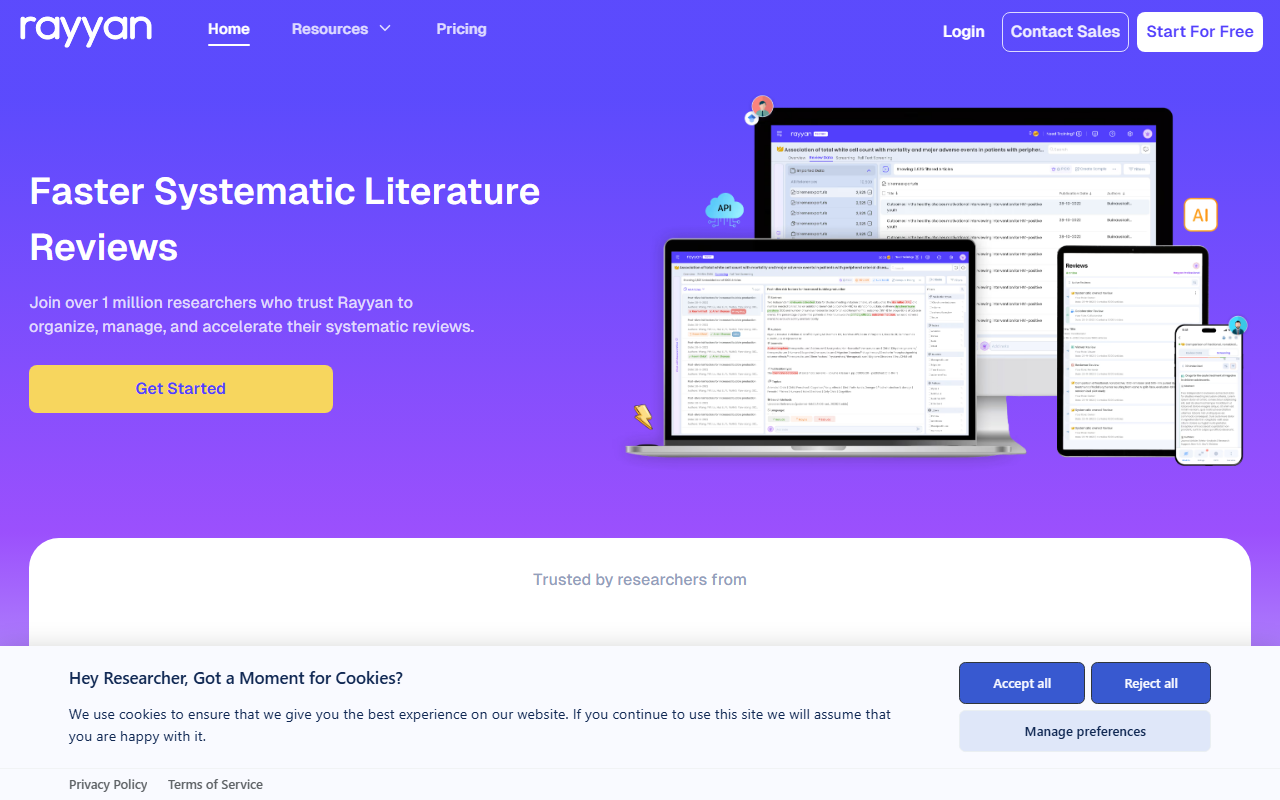
Upon visiting rayyan.ai, I was greeted by a clean, modern interface that immediately conveys its purpose: systematic review management. The homepage prominently boasts "over 1 million researchers" as users, a statistic that suggests strong adoption in academia. I signed up for the free tier and started a new review project. The onboarding flow asks you to name the review, then offers to import references from common tools like PubMed, Zotero, and Mendeley—I tested a sample PubMed export, and the import was seamless. Within minutes, I saw a dashboard showing uploaded articles, with options to start screening.
Key Features and Workflow Efficiency
The standout feature is AI-powered screening, which uses machine learning to prioritize relevant studies—the site claims it reduces screening time by up to 90%. In my test, the AI quickly ranked articles based on my initial inclusion/exclusion decisions. The deduplication tool automatically identified duplicates across imported datasets, a real time-saver. I also explored the PICO (Population, Intervention, Comparison, Outcome) framework, which lets you structure research questions and filter studies accordingly. The mobile app (iOS and Android) syncs with the web platform, a clever way to turn commute time into productive screening. Additionally, the platform supports PRISMA flow diagrams, bulk actions, customizable keyboard shortcuts, and team collaboration with role-based access.
Pricing and Market Positioning
Pricing is not publicly listed on the website, which is a minor inconvenience. Based on user forums, Rayyan offers a free tier with limited features (e.g., maximum of 100 articles per review) and paid plans for larger projects and advanced AI features. Competitors in this space include Covidence and DistillerSR, but Rayyan differentiates itself with a strong free offering and mobile-first design. It is best suited for students, researchers, and systematic review teams who need a collaborative, AI-enhanced workflow. Those conducting simple literature reviews might find Rayyan overkill, but for systematic reviews, it is a powerful ally.
Strengths, Limitations, and Final Verdict
Strengths are clear: the AI dramatically speeds up screening, the mobile app enables work anywhere, and the deduplication and collaboration features are robust. However, the free tier’s article limit may frustrate large-scale reviews. Also, the interface has a learning curve—new users may need a few hours to master all features (labels, filters, and team management). Overall, Rayyan is a must-try for anyone conducting systematic reviews. The combination of AI, mobile access, and intuitive design makes it a standout tool. I recommend starting with the free tier to test its fit for your workflow. Visit Rayyan at https://rayyan.ai/ to explore it yourself.











Comments