

First Impressions: Purpose and Onboarding
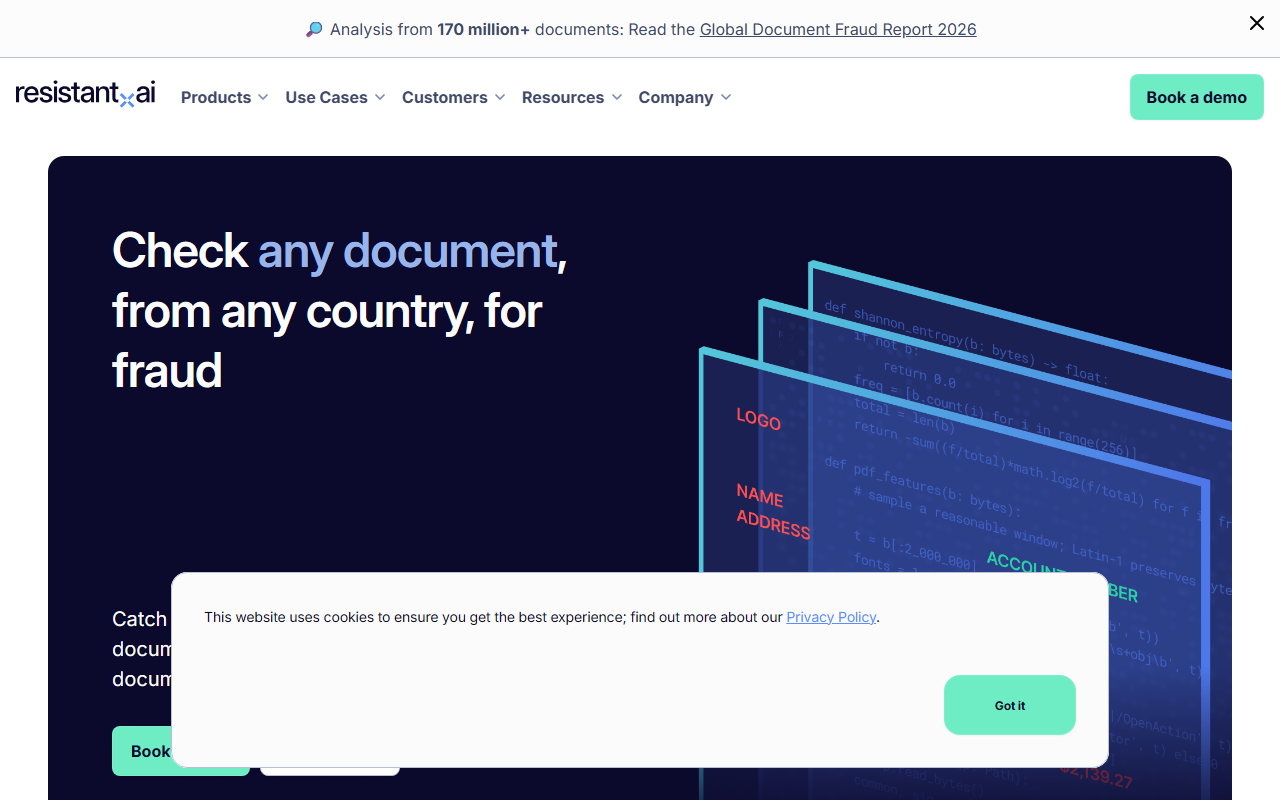
Upon visiting Resistant AI, I was struck by how clearly the site positions itself as an enterprise-grade fraud detection platform. It’s not a simple "AI detector" for generic images; it focuses specifically on document forgery and transaction anomalies. The dashboard demo is unavailable without booking a demo, which is typical for B2B security tools. The homepage immediately sells itself with quantified claims: 3x more fraud detected, 90% fewer manual reviews, and sub-20-second document checks. The messaging is aimed squarely at compliance analysts, fraud teams, and fintech risk officers. The navigation is clean, with clear sections for Documents, Transactions, and Defence in Depth—indicating a modular product that covers the full customer lifecycle. I noted a prominent "Book a demo" button rather than a self-service signup, reinforcing that this is a high-touch, customized solution.
Core Technology and Detection Capabilities
Resistant AI uses AI to detect fake, tampered, or AI-generated documents in PDFs and images. The company claims to check "any document, from any country," which is critical for global businesses. The Documents module appears to work by analyzing metadata, pixel-level anomalies, and document structure to spot forgeries that human eyes miss. I was impressed by the mention of 80+ off-the-shelf models for transaction monitoring, designed in collaboration with AI and fincrime experts. The platform integrates via API, allowing it to sit alongside existing transaction monitoring systems without replacing them—a smart "augment, not rip-and-replace" approach. The technology seems to combine computer vision for document fraud with behavioral AI for transaction patterns. While the site doesn't name specific base models, it emphasizes explainability, which is crucial for regulated industries. From a technical perspective, the models are trained on fraud patterns observed across the company's customer base, suggesting a continuously updated threat intel loop.
Use Cases, Pricing, and Market Positioning
The website details multiple use cases: merchant onboarding, loan underwriting, tenant screening, claims processing, AML transaction monitoring, and APP fraud detection. Case studies from Payoneer, Habito, Finom, and Close Brothers lend credibility. For example, Close Brothers saw a 22x ROI in motor finance fraud prevention. That specific metric gives a concrete sense of value. Pricing is not publicly listed—you must book a demo. This is common for enterprise fraud solutions. Resistant AI competes with tools like Onfido (now Entrust), Jumio, and dedicated AML platforms like ComplyAdvantage. Where Resistant AI differentiates is its dual focus on both document forgery and transaction anomalies within a single defense-in-depth approach. It also claims to detect AI-generated documents, which newer deepfake attacks require. The platform claims










Comments