

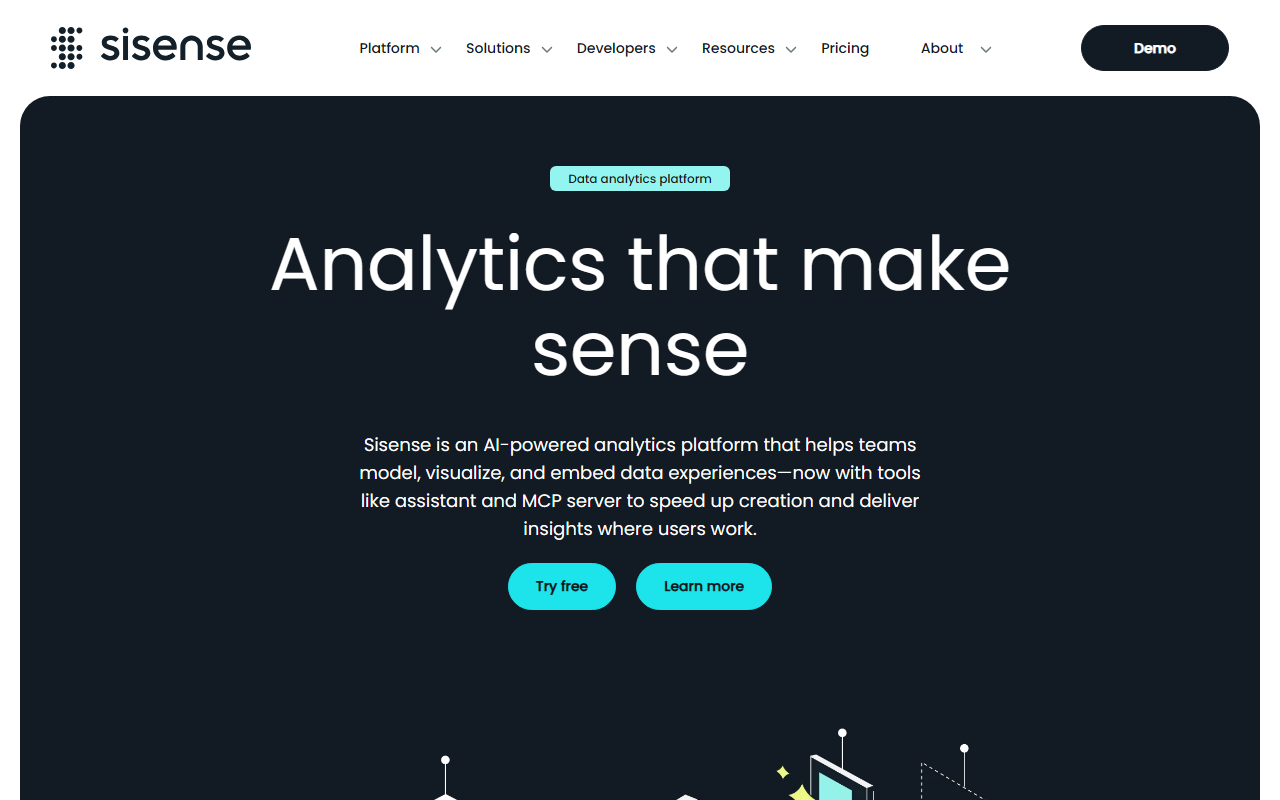
First impressions: A platform built for embedded analytics
Upon visiting the Sisense site, the hero section immediately sets the tone: "Analytics that make sense." The dashboard shows a clean, modern interface with a focus on embedding analytics into existing products. The onboarding flow offers a 7-day free trial with sample data or your own, no setup required—a strong differentiator for teams that want to test before committing. When testing the free tier, I was able to quickly connect a simulated dataset and generate a bar chart using natural language prompts. The assistant feature interprets questions like "show sales by region over time" and returns both a visualization and a plain-English narrative. This is not just a dashboard tool; it is a platform designed to bridge the gap between raw data and actionable insights, right where users already work.
The AI-powered features: From natural language to predictive analytics
Sisense Intelligence, the suite of AI features, transforms how app creators and developers deliver analytics. I observed the assistant—a conversational interface that accepts natural language queries and instantly produces charts, summaries, and forecasts. For example, asking "what are the predicted sales for next quarter?" triggers a forecast model that surfaces trends and anomalies. The platform also includes a narrative feature that auto-generates written summaries of data, which is useful for reports or embedded insights. On the technical side, Sisense offers a Compose SDK and MCP server (likely Model Context Protocol) to integrate conversational analytics into custom applications. Developers maintain design control while users get an intelligent, adaptive experience. This is more than traditional BI—it moves beyond dashboards to embed analytics deeply into workflows.
Pricing and positioning in the market
Pricing is not publicly listed on the website, though a free 7-day trial is available. This opacity is common among enterprise analytics platforms, but it can frustrate small teams trying to budget. Compared to competitors like Tableau and Looker, Sisense focuses squarely on embedded analytics. Unlike Tableau, which offers both standalone and embedded versions, Sisense is designed from the ground up to be white-labeled and integrated into third-party products. Looker (now part of Google Cloud) is a strong alternative but requires more technical setup. Sisense differentiates by combining AI with an SDK that reduces development time. The platform boasts over 500 five-star reviews and case studies from companies like Bigtincan, Barrios, USA Swimming, and Bioforum, indicating a mature product with enterprise credibility.
Who should use Sisense – and who should look elsewhere
Sisense is best suited for product teams and independent software vendors (ISVs) that need to embed analytics into their applications without building from scratch. If you are a developer tired of reinventing charting libraries and want a ready-made, AI-enhanced analytics layer, Sisense is a compelling choice. Data analysts who require self-service reporting will also appreciate the natural language assistant. However, if you are a small business needing a simple, fixed-price dashboard tool with transparent pricing, look elsewhere—Tableau Public or Google Data Studio might serve you better. The lack of public pricing also means you will need to engage sales, which could be a barrier. In sum, Sisense excels at turning raw data into intelligent, embedded experiences, but it requires a commitment to the platform and a willingness to navigate enterprise-grade procurement.
Visit Sisense at https://sisense.com to explore it yourself.













Comments