

First Impressions and Interface
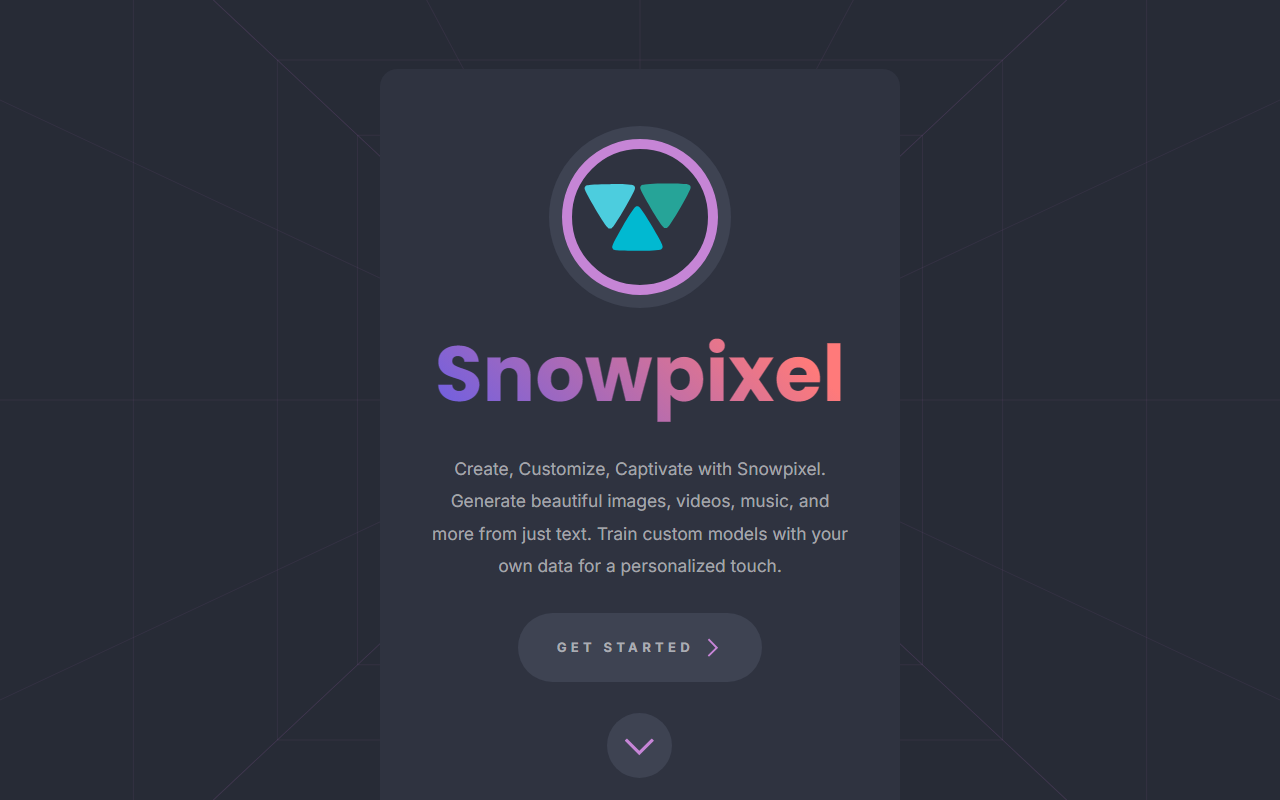
Upon visiting Snowpixel, I was greeted by a clean, dark-themed landing page that immediately showcases its four core features: image generation, video creation, music composition, and 3D object synthesis. The homepage includes prompt examples like “pirate ships inside coffee cup” and a “cartoon kangaroo,” which give newcomers a sense of the tool’s stylistic range. The onboarding flow is intuitive — users simply pick a modality, type a text prompt, and hit generate. No account is required to try the free tier, though you do need to sign up to claim your initial credits. The dashboard is minimal, with a straightforward credit counter and a history tab for past generations.
Capabilities and Performance
Snowpixel is not just another text-to-image tool. It covers four distinct creative domains: images, videos, music, and 3D objects. When testing the free tier, I generated a text-to-image of a “steampunk owl” and was pleased with the stylistic variety — it offered multiple outputs with different artistic filters. The video generation from text worked similarly, producing short animations that were somewhat basic but still impressive for a single-model platform. Music generation from text or images is a standout feature; I described “an upbeat electronic track for a sci-fi game” and received a 30-second loop that fit the brief. The 3D object generation, however, produced low-poly models that need further refinement. Snowpixel also allows you to train custom models with your own data, a feature typically reserved for higher-end platforms. This is ideal for users who want consistent styles or branded visuals. The underlying AI model is not explicitly named, but the outputs suggest a diffusion-based architecture fine-tuned for multiple modalities.
Pricing and Value Proposition
Snowpixel breaks away from the monthly subscription model common among AI art tools. Instead, it offers straightforward credit packs: $10 for 50 credits and $45 for 250 credits. There are no recurring fees — once you purchase credits, they never expire. Each generation (image, video, music, or 3D) consumes a certain number of credits, though the exact cost per generation is not publicly listed on the website. This lack of transparency is a downside. For context, a single image generation on Midjourney or DALL·E 3 costs roughly $0.002–0.04 per image depending on the plan, whereas Snowpixel’s credit pricing seems aimed at heavier users. The custom model training likely requires a separate credit cost. Compared to competitors like RunwayML (for video) and AIVA (for music), Snowpixel’s all-in-one approach is appealing for creators who want to experiment across media without juggling multiple subscriptions.
Final Verdict
Snowpixel’s greatest strength is its versatility — generating images, videos, music, and 3D objects from a single interface is genuinely convenient. The ability to train custom models adds serious value for creators who need consistent visual identity. However, the lack of transparent per-generation pricing is a real limitation; you won’t know exactly how many credits each action costs until you try. Also, the 3D output quality is currently below dedicated tools like Spline or Blender. This tool is best suited for indie creators, small businesses, or hobbyists who want to quickly prototype ideas across multiple formats without committing to a subscription. If you need professional-grade 3D or advanced video editing, look elsewhere. For most other creative tasks, Snowpixel offers a solid, pay-as-you-go alternative. Visit Snowpixel at https://snowpixel.app/ to explore it yourself.










Comments