

First Impressions: A Server-Side Agent Ecosystem
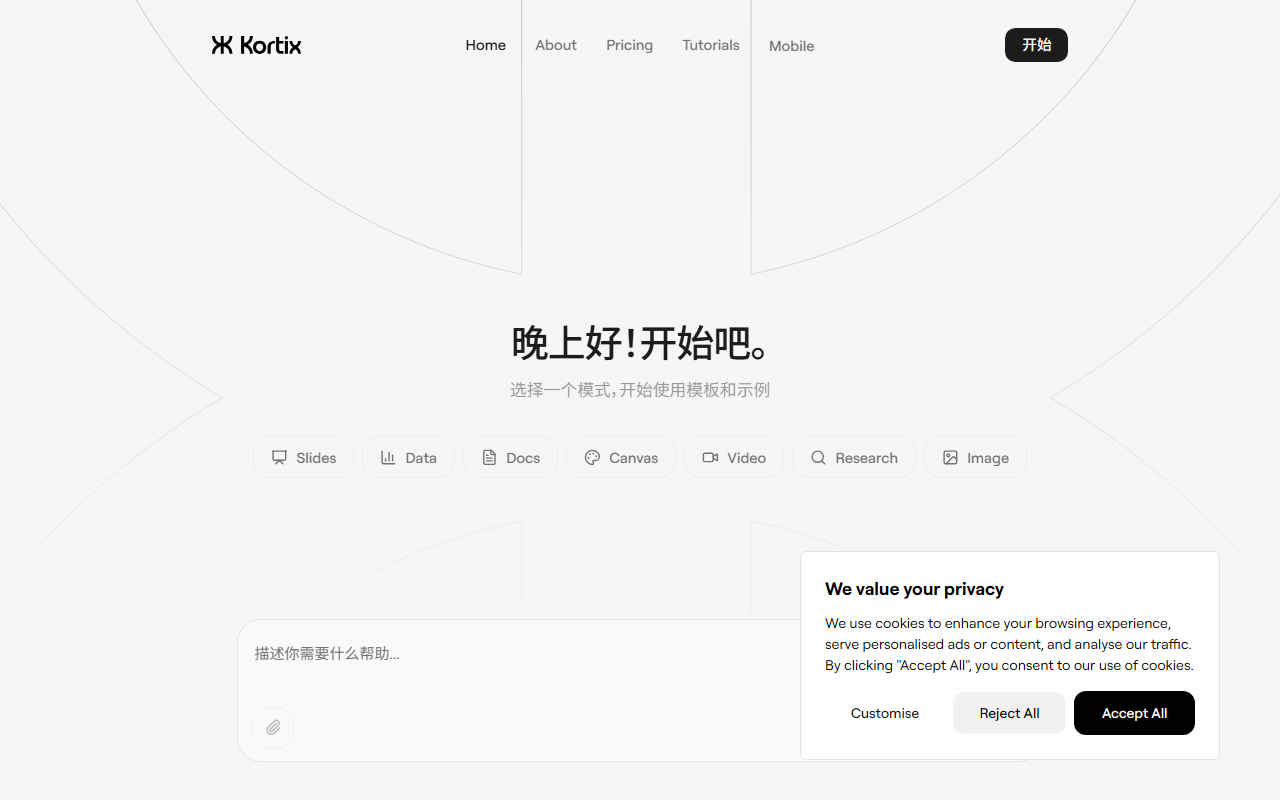
Upon visiting suna.so, the first thing you see is a terminal command: $curl -fsSL https://kortix.com/install | bash. This isn't a polished SaaS dashboard—it's a declaration that Suna expects you to run your own machine. The homepage introduces Kortix as an “Autonomous Company Operating System” built on a single Ubuntu Linux server. Agents don't chat in a window; they share a real filesystem, databases, credentials, and every piece of institutional knowledge. The interface is minimal, with clear sections for agents, skills, triggers, and orchestration. No sign‑up flow or demo—just an invitation to install and launch.
When testing the conceptual workflow described on the site, I imagined connecting Gmail, Slack, and Stripe via OAuth or MCP, then defining a support agent as a markdown file. The agent would have its own identity, skills (e.g., “browser automation” or “legal writing”), and scheduled triggers. The system promises that autowork continues until the agent self‑verifies success. This is a radically different approach from typical AI assistants that operate inside a chat window or limited API scope.
Deep Dive: How Suna’s Kortix Works
Suna’s core innovation is the “one machine” concept. All agents—engineering, sales, finance, ops, legal—operate inside the same Linux environment. They share a persistent filesystem, so memory and context compound over time. Each agent is a markdown file with its own identity, permissions, tools, and triggers. Skills are reusable knowledge packs (60+ built‑in) that teach agents to code, browse, research, or analyze data. The system uses OpenCode as an open standard for these skills and commands.
Orchestration is hierarchical: a primary agent can decompose work and spawn sub‑agents, similar to departments in a company. Triggers can be cron schedules or webhooks, enabling morning briefings or event‑driven reactions. The Autowork loop keeps an agent running until it can prove the result is correct. All of this runs inside a full Ubuntu environment, meaning any command‑line tool or package manager is available. Integrations span 3,000+ via OAuth, MCP, REST, CLI, and environment variables—Gmail, Slack, GitHub, Stripe, Notion, HubSpot, and more.
Compared to other autonomous agent platforms like Auto‑GPT or CrewAI, Suna’s approach is more infrastructure‑heavy but offers full context access and unlimited capabilities. Unlike Microsoft Copilot which is tightly integrated into Office 365, Suna provides a blank‑slate Linux machine where you define every agent and permission. This makes it vastly more powerful for technical teams but also far more complex to set up.
Pricing and Target Audience
Pricing is not publicly listed on the website. The installation command and open‑source hints suggest that Suna (Kortix) is self‑hosted and likely free for individual use, with potential paid plans for managed hosting or premium integrations. There is no mention of a cloud version or tiered subscriptions. The lack of transparent pricing may be a barrier for enterprise buyers who need cost predictability.
This tool is best suited for engineering‑heavy companies that already run their own infrastructure and want to automate cross‑departmental workflows with full context sharing. Developers comfortable with bash, Linux administration, and agent configuration will feel at home. Non‑technical users, freelancers, or teams without DevOps support should look elsewhere—the learning curve is steep, and there’s no visual builder or guided onboarding.
One genuine strength is the power of shared context: agents see every file, credential, and history, which can dramatically improve decision‑making over siloed solutions. A real limitation is the operational overhead. You need a machine running 24/7, manage security for shared credentials, and debug agent behavior in a full Linux environment. The system also assumes high trust among all agents, which may not suit organizations with strict data access controls.
Final Verdict and Recommendation
Suna’s Kortix is a visionary take on autonomous company operations. It addresses the fragmentation of modern AI tools by putting everything on one machine. For a startup or tech team willing to invest in setup and maintenance, it can become the central nervous system for sales, support, engineering, and more. However, it is not a plug‑and‑play product; it demands technical sophistication and a willingness to embrace open‑source, self‑hosted software. If you’re a developer who wants to build an AI workforce with no guardrails and maximum potential, give it a try. If you just need a quick chatbot or task assistant, you’ll be frustrated.
Visit Suna at https://suna.so/ to explore it yourself.










Comments