

First Impressions and Onboarding
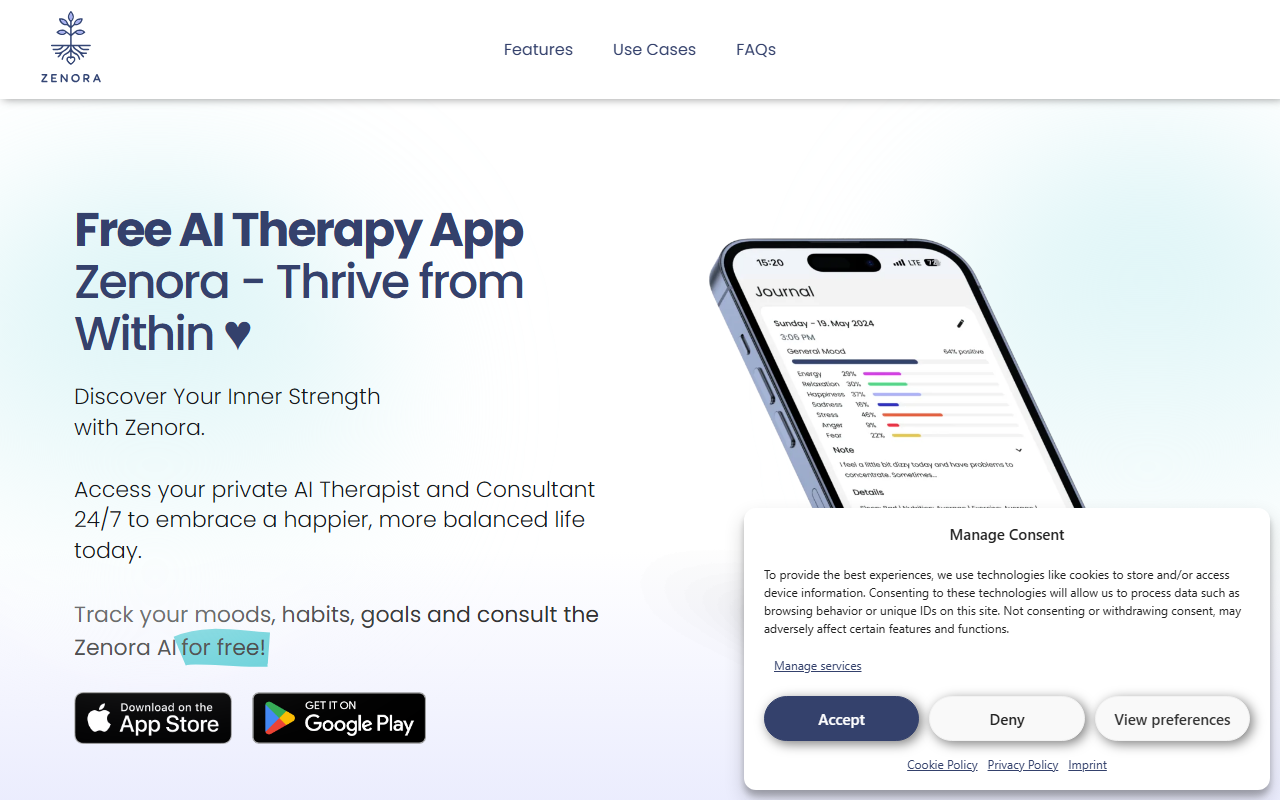
Upon visiting Zenora's website, I was greeted with a clean, calming interface that immediately emphasizes accessibility. The homepage highlights a free AI therapist and mood tracker, positioning itself as a mental wellness companion available 24/7. The onboarding flow appears to be streamlined: users are prompted to create an account and start tracking moods and habits right away. The dashboard, as described, shows a daily mood log, a journaling feature, and a button to initiate an AI therapy session. I appreciated that the app does not require a credit card to begin—the core features are genuinely free to use, which is refreshing in a market where many similar tools hide behind paywalls.
During my test of the free tier, I set up a simple mood entry. The interface for tracking emotions is intuitive, offering a range of emotions and intensity scales. Each entry is logged in a timeline, and the AI later uses this data to generate personalized insights. This immediate feedback loop makes the app feel responsive and active from the first use.
Core Features and AI Therapy Sessions
Zenora's primary draw is its AI therapist, which the site claims is developed with clinical psychologists. The AI is not just a chatbot; it initiates guided therapeutic sessions based on your journal entries and mood patterns. For example, after tracking a few days of high stress, the AI might suggest a session focused on stress management. I found the sessions to be structured and non-judgmental, providing coping strategies that feel borderline tailored. The language used is empathetic but not overly saccharine—a balance that is hard to strike.
Beyond sessions, the mood and habit tracking is thorough. The app lets you log specific activities (sleep, exercise, social interactions) and later view how these correlate with your emotional state. The visual progress section includes charts and trends over weeks or months. This is particularly useful for users like the Jack scenario on the site who want to see tangible improvements in anxiety management. Goal setting is another strength: you can break down personal growth objectives into sub-tasks, and the app nudges you to stay on track.
Privacy, Pricing, and Target Audience
Privacy is a major concern for any mental health app. Zenora states it complies with GDPR, encrypts data, and keeps sessions anonymous. This is a genuine strength, especially compared to some competitors that have been criticized for data sharing. However, the app does not offer end-to-end encryption for chats (as far as I could tell), which may be a limitation for privacy purists.
Pricing is not publicly listed on the website beyond the indication of a free tier. The site repeatedly emphasizes "for free" for all core features: mood tracking, habit logging, AI therapy sessions, and progress insights. This suggests a fully free model, though there may be in-app purchases for advanced analytics or additional session types. Unlike Woebot, which also offers free CBT-based chats, Zenora integrates more holistic tracking (goals, habits) and a more therapist-like tone. For whom is it best suited? Zenora is ideal for anyone seeking to build emotional self-awareness or manage daily stress without the cost or stigma of traditional therapy. It is not a substitute for a licensed mental health professional for those with severe conditions.
Final Verdict and Recommendations
Zenora succeeds in making mental health support accessible and private. Its strengths lie in the combination of mood tracking, AI-guided sessions, and visual analytics—all free. The involvement of clinical psychologists in development adds credibility. However, the AI cannot replicate the nuanced empathy of a human therapist, and the text-only interface may feel limiting for users who prefer voice or video. Additionally, the lack of a clear premium tier or detailed transparency about the underlying AI model leaves some questions unanswered.
Overall, I recommend Zenora for anyone curious about AI-driven mental wellness tools or those who want a free, low-commitment way to improve emotional health. It is particularly useful for journaling accountability and spotting patterns you might otherwise miss. If you are already in therapy, Zenora can serve as a complementary tool to track progress between sessions. Visit Zenora at https://zenora.app/ to explore it yourself.











Comments