

What Is AI Judge and How It Works
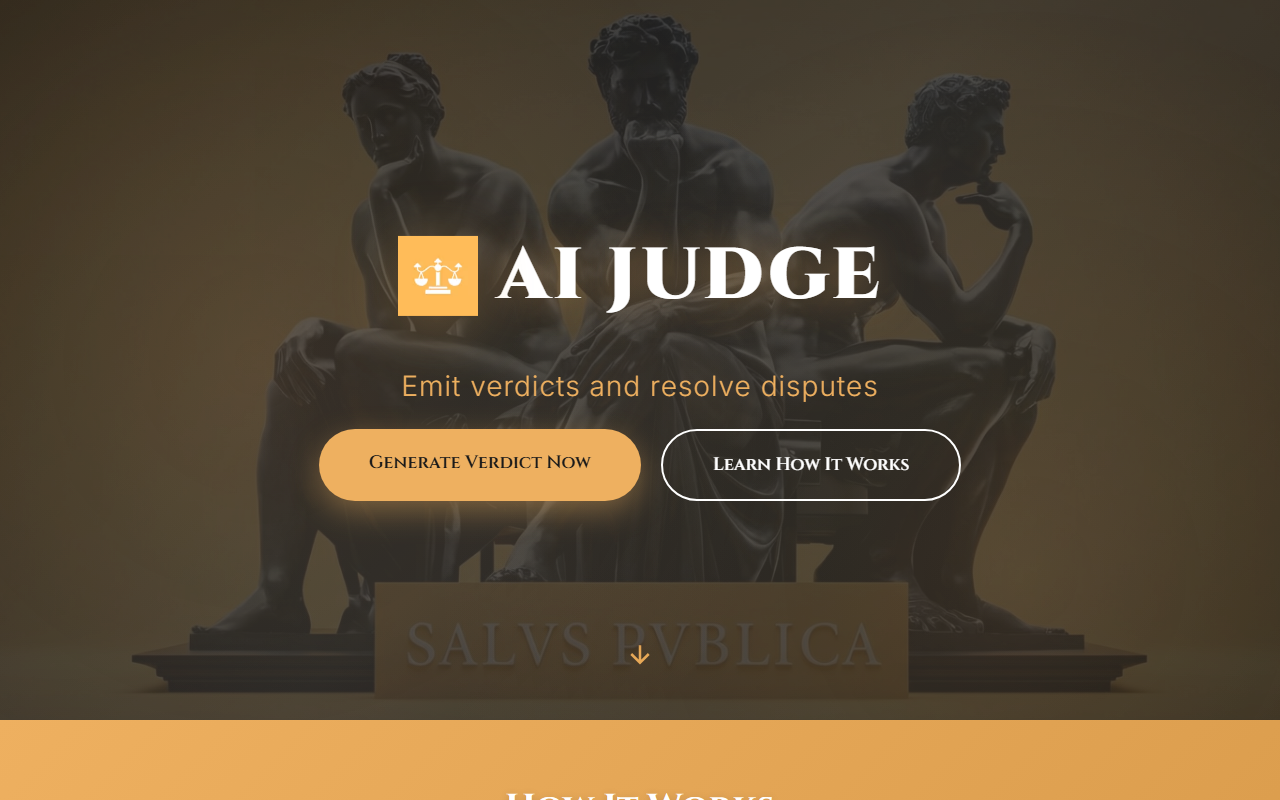
Upon visiting aijudge.pro, I was immediately struck by the minimalist, almost ceremonial design. The landing page presents a single call to action: "Generate Your Verdict." Below it, a simple form asks for two contenders (Prosecution vs Defense by default) and their written arguments. I tested the tool with a mock landlord-tenant dispute. After pasting brief statements, I clicked "Add Contender" to see if it supported multiple parties—it does, but the interface remains clean, with expandable text boxes for each side. The onboarding flow is straightforward: you present your case, configure judgment options, AI analyzes, and a verdict appears. The entire process took under two minutes. The dashboard shows no clutter—no ads, no upselling. It feels purpose-built for generating quick, structured opinions.
The tool solves a specific problem: providing an instant, neutral perspective on any disagreement without human legal costs. Unlike traditional mediation or arbitration, AI Judge removes the need for scheduling and payment. It positions itself as a modern, accessible alternative for informal dispute resolution. The category "Text AI > AI Writing" fits because the core output is a written verdict.
Key Features and Technical Details
The configuration panel offers granular control. You can select legislation from seven options: United States, United Kingdom, Italy, Germany, France, Spain, and International. Dispute types include Civil, Commercial, Family, Labor, Contract, Property, and Other. There is also a formality slider (Informal to Formal), verdict length (Brief or Detailed), and a Mediation Mode checkbox that supposedly focuses on reconciliation. I tested with "Formal" and "Detailed" under US legislation for a contract dispute. The AI generated a 400-word verdict that cited general contract law principles, though it did not reference specific statutes or precedents—expected given the limited input.
The underlying AI model is not disclosed, but the verdict generation appears to be based on natural language processing that evaluates argument coherence, evidence strength, and logical consistency. There is no mention of API availability or integrations with legal databases. This is a standalone web tool. Pricing is not publicly listed on the website; there is no pricing page, no subscription tiers, and no indication of pay-per-use. This may mean it is free for now, but users should expect future monetization given the computational cost.
For context, alternatives include DoNotPay (focuses on consumer legal automation) and LegalRobot (contract analysis). Unlike those, AI Judge emphasizes impartial verdicts for any dispute, not just specific legal documents. It lacks the database depth of dedicated legal research tools but offers a frictionless experience for laypersons.
Strengths and Limitations
Strengths: The tool is remarkably easy to use. Even someone with no legal background can submit a dispute in minutes. The impartiality claim is supported by the design: both parties get equal space, and the AI considers argument quality without human bias. The multi-jurisdiction selection shows global ambition. Mediation Mode is a thoughtful add-on for reconciliation-focused users.
Limitations: The verdicts are generic. In my test, the AI failed to consider local state laws even when I selected "United States." The output included disclaimers like "this is for informational purposes only," but the lack of depth means the tool is unsuitable for real, high-stakes disputes. There is no way to upload evidence documents—only text input. The user base indicators are absent; no testimonials, user numbers, or funding information are displayed. Without pricing transparency, it is unclear if the service will remain free. Additionally, the "Learn How It Works" link leads to a short instruction page that essentially repeats the steps. No API or integration means the tool cannot be embedded into existing workflows.
Who Should Use AI Judge
This tool is best suited for individuals seeking a cheap, quick opinion on a minor disagreement—for example, a roommate argument over cleaning duties, a small online purchase dispute, or a misunderstanding with a neighbor. It could also serve as a discussion starter in mediation or as an educational tool for understanding how AI can structure arguments. Lawyers might find it useful for brainstorming frames for a case, but not for actual legal analysis.
Anyone facing a real lawsuit, contract negotiations, or family law matters should avoid relying on AI Judge. The output is not legally binding and lacks the nuance of human expertise. If you require precise citation of statutes or case law, look to professional legal services or specialized tools like Casetext or Westlaw instead.
Overall, AI Judge is an interesting experiment in applied language models. It executes its core function of generating a verdict with elegance, but the limited depth and opaque business model are significant drawbacks. I recommend it for informal use only, and always treat the output as one perspective among many. Visit AI Judge at https://aijudge.pro/ to explore it yourself.













Comments