

First Impressions and Onboarding
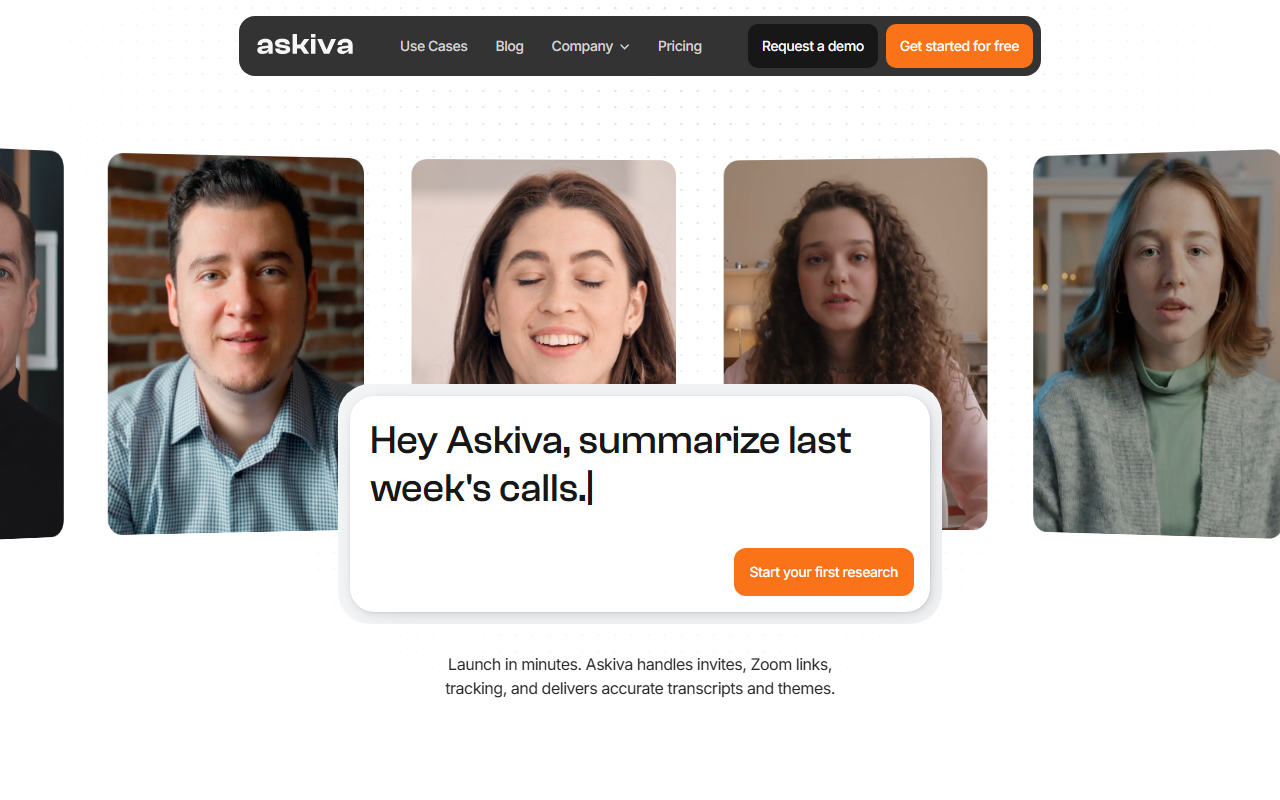
Upon visiting the Askiva website, I was immediately struck by the streamlined, no-fluff design. The landing page clearly positions the tool as a solution for eliminating the grunt work of user research. I clicked the “Get started for free” button and was taken to a simple onboarding flow that asked for my email and study purpose. Within minutes, I was inside the dashboard — a clean, left-nav interface with a prominent “Start your first research” button. The tool guided me through setting up a study: pick a topic, language, and upload a participant list via XLSX. I tested the free tier, which allows a small number of interviews (exact limit not specified on the public site, but the demo request suggests more robust plans are paid). The AI-generated question set appeared quickly, and I could preview both the email invite and the interview script. The whole experience felt well-orchestrated, as if Askiva had anticipated every step a researcher might need to automate.
Core Features and Workflow
Askiva calls itself “automated interview software,” and the tagline holds up. The tool handles every phase of a research interview: participant outreach, scheduling (including time zone detection and resending reminders), joining a Zoom meeting automatically, conducting the interview with a scripted AI interviewer, and then transcribing and summarizing the conversation. The dashboard displays themes, key quotes, and sentiment analysis after each completed interview. I was particularly impressed by the multilingual support — the system detects locale and working hours, and it can adapt the AI interviewer’s tone, speaking rate, and even handle backchannels and silence. The platform also generates instant transcripts with speaker labels and timestamps. For teams conducting frequent user studies, this could reduce manual work by up to 90%, as the site claims. The workflow is linear: you set a research topic, upload participants (just names and emails), define targets (like number of completes and study duration), preview invites and script, then launch. Askiva executes the rest: it sends invites, books slots, joins the Zoom call, conducts the interview, and delivers a dashboard of insights.
Pricing and Market Positioning
Pricing is not publicly listed on the website. The only call-to-action for paid access is a “Request a demo” button. This suggests Askiva targets enterprise or agency teams with variable needs, likely charging based on interview volume or number of users. For context, competitors like Dovetail and Condens offer similar transcription and analysis features but lack the automated interviewer component. UserTesting and UserZoom provide moderated remote testing but at higher costs and with less scheduling automation. Askiva’s niche is the full-cycle automation — from outreach to analysis — which gives it a unique edge. The site notes it is “BACKED BY” an unspecified entity, which adds some credibility but not enough for a full trust evaluation. The tool is best suited for product teams, UX researchers, and market research agencies that run high volumes of structured interviews and want to eliminate administrative overhead. It is less ideal for exploratory or ethnographic research where a human interviewer’s improvisation is critical.
Strengths and Limitations
The biggest strength of Askiva is its end-to-end automation. The AI interviewer follows the script consistently, which reduces bias from human interviewers and keeps records audit-ready. The multilingual and persona adaptation features are genuinely impressive — few tools offer that level of cultural tuning. On the downside, the lack of transparent pricing makes it hard to evaluate cost-effectiveness. Also, the AI interviewer is best for structured, semi-structured interviews; if your research requires deep probing or off-script follow-ups, the rigid script may miss valuable insights. During my test, I noticed the AI occasionally failed to recognize when a participant went off-topic, sticking instead to the next question. The tool also requires participants to use Zoom, which might not suit all audiences. Finally, while the dashboard groups themes well, the sentiment analysis felt somewhat basic compared to dedicated text analytics tools. Overall, Askiva is a powerful time-saver for teams that run standardized interviews repeatedly. I recommend trying the free tier to see if the automation fits your research style. Visit askiva at https://askiva.io/ to explore it yourself.













Comments