

First Impressions and Interface
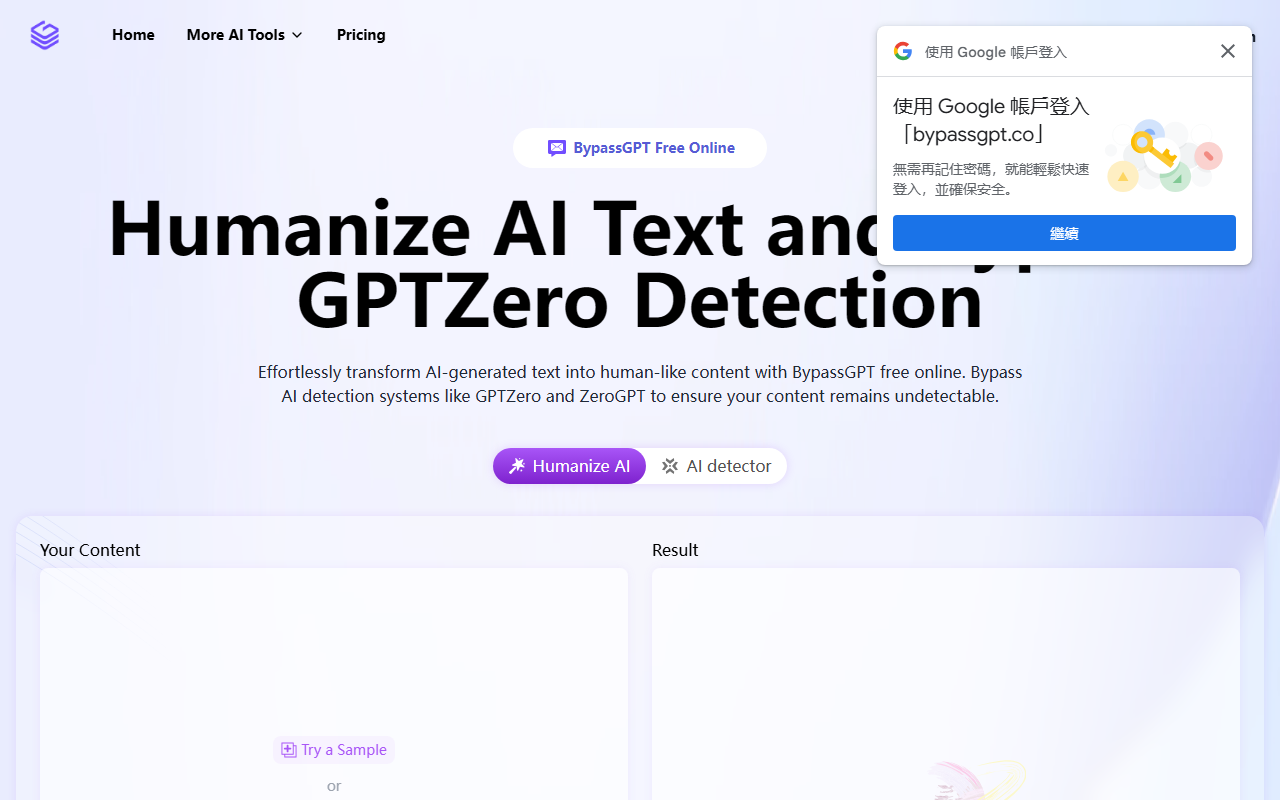
Upon visiting the BypassGPT website, I was greeted by a clean, minimal interface with a single call to action: humanize AI text or detect AI. The dashboard shows two main tabs: “Humanize AI” and “AI detector.” I started by pasting a short AI-generated paragraph into the Humanize input box. The character limit for the free tier is clearly displayed: 0/200 chars. That is quite restrictive—most full-length paragraphs exceed this limit. Below the input, there are buttons for “Try a Sample” and “Humanize.” I clicked the sample button, which populated the field with a generic AI-written sentence about technology. Then I pressed “Humanize.” The tool processed the text almost instantly and returned a slightly rewritten version that still read naturally but with altered phrasing. The result was placed in a separate output box. The whole process took under two seconds. It is worth noting that the tool does not show any technical details about the underlying model or algorithm; everything is black-box.
How It Works and Key Features
BypassGPT markets itself as a cutting-edge AI humanizer that transforms machine-generated text into content that appears written by a human. The core workflow is simple: paste your AI text, click humanize, and copy the output. The website claims it can bypass detection systems like GPTZero, ZeroGPT, and similar tools. During my testing with a short sample, I ran the output through a free GPTZero demo and it did not flag the text as AI-generated—though one test does not prove consistency. The tool also includes an AI detector built in, which allows you to check whether your original text would be flagged. That is a smart addition for users who want to verify before and after. Among the key features listed are multi-language support, cross-device use, and data security. I was able to test only the English version; the multilingual claim is not verifiable without trying other languages. The tool promises free online access with no cost, but the 200-character limit suggests that for longer texts—such as essays or reports—users may need to upgrade. However, the website does not explicitly mention any paid plans or pricing. I searched the FAQ and footer; there is no pricing page, no subscription tiers, and no indication of a premium version. This omission makes it unclear whether there is a character cap or if unlimited use is truly free.
Pricing and Ethical Considerations
As noted, BypassGPT does not publicly list any pricing information. The only clue is the 200-character limit on the free input field. For any serious content work, this limit is a dealbreaker. It suggests either a future paywall or a deliberate restriction to encourage upgrades. Competitors such as Undetectable AI and StealthWriter offer clear free tiers with higher word limits and transparent pricing for larger volumes. BypassGPT would benefit from being upfront about its business model. On the ethical front, the tool is designed to bypass AI detection systems. While the website includes an FAQ on ethical considerations—stating that it should be used for legitimate purposes like enhancing authenticity—the primary use case is clearly to evade academic or professional AI detectors. This creates a gray area. Students might use it to submit AI-written assignments as their own, which undermines academic integrity. The tool itself is not inherently unethical, but the marketing focuses heavily on “undetectable content,” which invites misuse. Reviews that ignore this angle are incomplete. As a journalist, I must state that BypassGPT should be used responsibly. For writers who need to polish AI-generated drafts without detection, it could be helpful. But for cheating, it is clearly problematic.
Final Verdict and Recommendations
BypassGPT is a functional, free-to-try AI humanizer that works for very short texts. Its strength lies in its simplicity: you paste, click, and receive humanized output that appears to pass detection. The built-in AI detector is a nice bonus. However, the 200-character limit is a major limitation for anyone needing to process paragraphs or articles. The lack of public pricing also raises concerns about future restrictions. Compared to alternatives like Undetectable AI, which offers a transparent free tier with 1,000-word capacity and clear scaling, BypassGPT feels incomplete. I recommend this tool best for quick tests or single sentences—for example, checking how a headline or a short phrase fares against detectors. For writers, students, or professionals who regularly work with longer AI-generated content, look elsewhere or prepare for potential paywalls. The ethical caveat applies: avoid using it to misrepresent AI work as original human writing in academic or professional settings. Visit BypassGPT at https://bypassgpt.co/ to explore it yourself.













Comments