

First Impressions and Onboarding
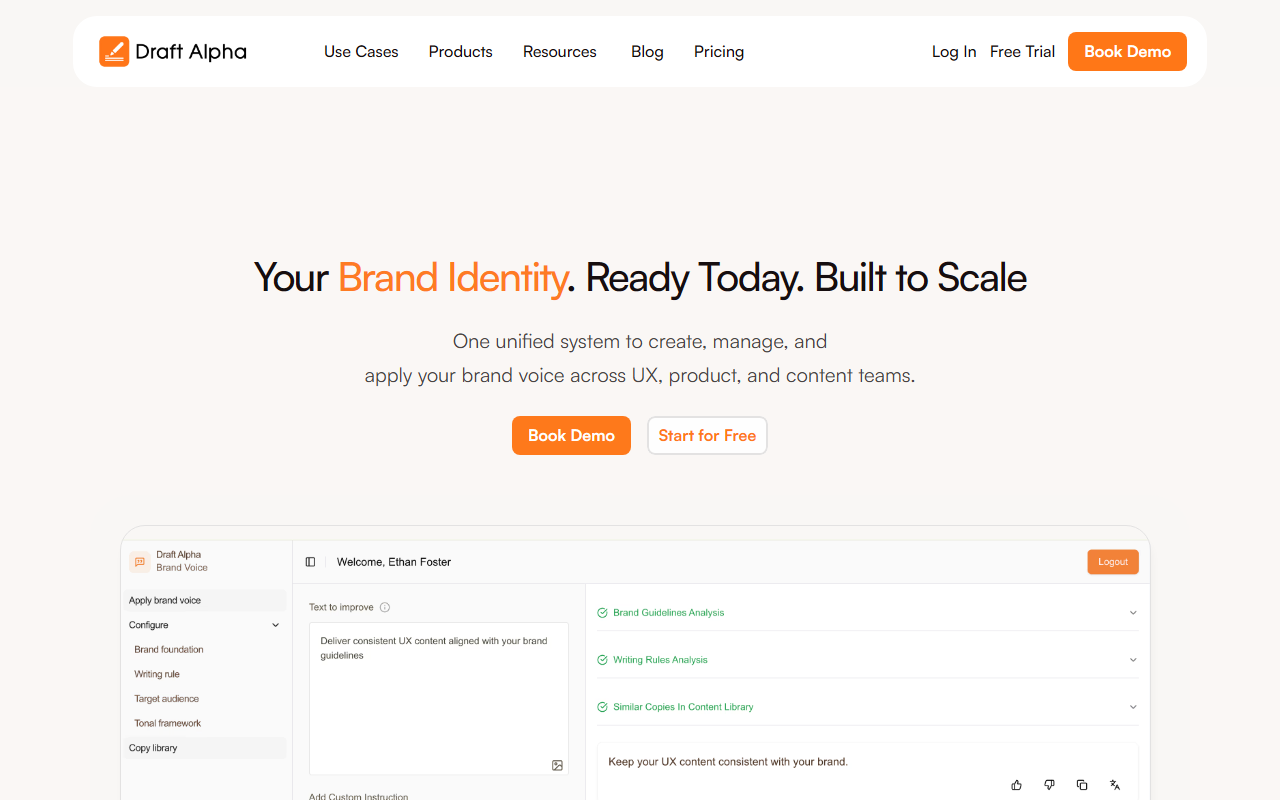
Upon visiting Draft Alpha, I was immediately struck by the clean, enterprise-focused landing page. The hero text reads, "Your Brand Identity. Ready Today. Built to Scale," which sets clear expectations. The site offers a "Start for Free" option alongside "Book Demo" — a smart dual funnel. I clicked the Free Trial and was prompted to create an account with email or Google sign-in. The onboarding asked me to define my brand's tone (e.g., casual, professional) and select from a few sample guidelines. Within five minutes, I had a basic style guide generated. The experience is smooth, though I noticed the free tier limits you to one brand and a handful of components.
Core Features and Workflow
Draft Alpha positions itself as a centralized platform for creating, managing, and enforcing brand voice across UX, product, and content teams. The dashboard shows three primary actions: Build New Brand, Improve Existing Brand, and Continuously Refine Brand. When I tested the "Build New Brand" flow, I was asked to input a few sample texts and select voice attributes. The AI then generated a full style guide covering tone, grammar, values, and personality. This is remarkably fast — perfect for teams that need to standardize copy without months of manual work.
The standout features are Brand Detection and Brand Enforcement. Brand Detection automatically flags UX copy that violates guidelines, while Enforcement offers real-time AI suggestions to fix issues. I uploaded a short piece of product copy that deliberately used inconsistent terminology; Draft Alpha correctly flagged two violations and proposed alternatives. The tool also offers a Figma plugin, which I briefly tested. It lets designers access guidelines and generate on-brand copy without leaving the design canvas. This tight integration is a major win for product design workflows.
Additionally, the platform supports Reusable Components and Centralized Collaboration with approval flows and user roles. For global teams, localization-ready variants are included. The AI claims to learn continuously — though in my short test, I couldn't verify significant improvement over time.
Pricing and Market Positioning
Pricing is not publicly listed on the website. The only options are "Free Trial" and "Book Demo," which suggests custom enterprise pricing. This opacity can frustrate smaller teams or solo founders who need upfront costs. Competitors like Frontitude and Wordsmith offer more transparent tiered plans. However, Draft Alpha's focus on brand enforcement (not just generation) differentiates it. It's clearly built for larger organizations with multiple product surfaces and dedicated UX writing teams.
The tool claims a 23% revenue increase from consistent branding — a stat cited from external research, but not directly attributed. The testimonials are from startup growth advisors and marketers, which lends some credibility, though I'd prefer to see case studies with measurable metrics.
Final Verdict and Recommendations
Draft Alpha excels at making brand style guides actionable. Its Brand Detection and Figma integration are genuinely useful for enterprise UX teams that struggle with copy consistency at scale. However, the lack of transparent pricing and the free tier's limitations are real drawbacks. For solo content creators or small startups, cheaper alternatives like Hemingway Editor or basic style guides may suffice.
I recommend Draft Alpha for product teams of 10+ people within organizations that already have established brand guidelines or need to enforce them across multiple products. If you value tight design-tool integration and automated quality control, it's worth booking a demo. Just be prepared for a sales conversation to discuss pricing.
Visit Draft Alpha at https://draftalpha.com/ to explore it yourself.













Comments