

First Impressions and Onboarding
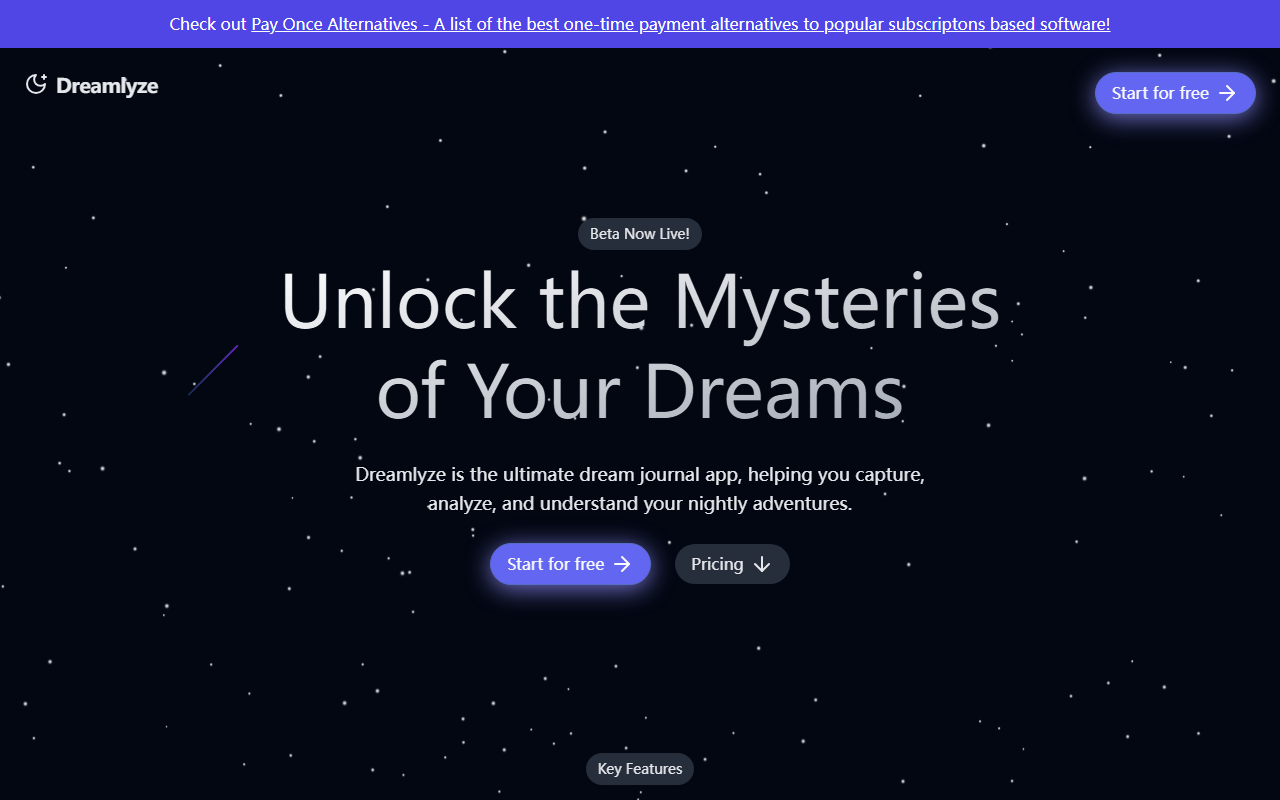
Upon visiting Dreamlyze, I was greeted by a clean, minimalist landing page with a dreamy, soft-blue aesthetic. The headline “Unlock the Mysteries of Your Dreams” sets the tone. A “Start for free” button leads to a simple sign-up. The beta label is clearly displayed, signaling the tool is still evolving. The dashboard is clutter-free: a single input field to log a dream and a button for analysis. The onboarding took less than 60 seconds, and I could immediately try the free tier—which offers a limited number of credits to test interpretations.
What Dreamlyze Does and How It Works
Dreamlyze is a dream journal app with built-in AI analysis. It solves the problem of manually wondering what your dreams might mean. The workflow is three steps: log your dream (type or paste text), then tap “Analyze.” The AI produces an interpretation focusing on main themes and a few core emotions. After analysis, it stores logs so you can view trends and emotional patterns over time. The AI appears to use a language model trained on dream symbolism—though the exact model isn’t mentioned on the site. There is no API or integration mentioned, which limits advanced users.
The free tier gave me a sample analysis of a dream about flying: The AI identified themes of freedom and escapism, and emotions like joy and slight anxiety. The interpretation was generic but plausible. For deeper dives, you need credits. Pricing is simple: $1.99 for 10 credits or $2.99 for 20 credits, where one dream log equals one credit. That’s a pay-per-use model, not a subscription—refreshingly transparent.
Strengths and Limitations
Strengths: The interface is extremely easy to use. The pricing is affordable and upfront. The focus on emotions and themes rather than fortune-telling makes it feel grounded. The ability to track patterns over time is a genuine feature for dream journal enthusiasts.
Limitations: The AI interpretations are surface-level. They lack depth compared to, say, a human dream therapist or even more advanced AI dream analyzers like DreamApp (which offers richer symbolism). There’s no support for voice recording or image analysis of dream sketches. Beta status means potential bugs or limited reliability. Also, the credit system means heavy users will rack up costs quickly—$10 for 50 dreams.
Who Should Use Dreamlyze
Dreamlyze is best for casual dreamers who want a low-effort way to record and get quick insights. It’s also perfect for anyone curious about dream patterns without wanting to spend money on a monthly subscription. Students, journalers, and the spiritually inclined will find value. However, if you need in-depth psychological analysis, automated dream interpretation with multiple frameworks (Freudian, Jungian, etc.), or robust data export, look elsewhere. Alternatives like “Dream Moods” or “DreamApp” offer more detailed reports, though often at higher subscription costs.
Overall, Dreamlyze is a solid, affordable tool for dream logging with a sprinkle of AI magic. It’s honest about what it offers and doesn’t overpromise. For the price of a coffee, you get ten interpretations—try it if you’re curious about what your subconscious is whispering.
Visit Dreamlyze at https://dreamlyze.com/ to explore it yourself.













Comments