

First Impressions: NLX’s Interface and Onboarding
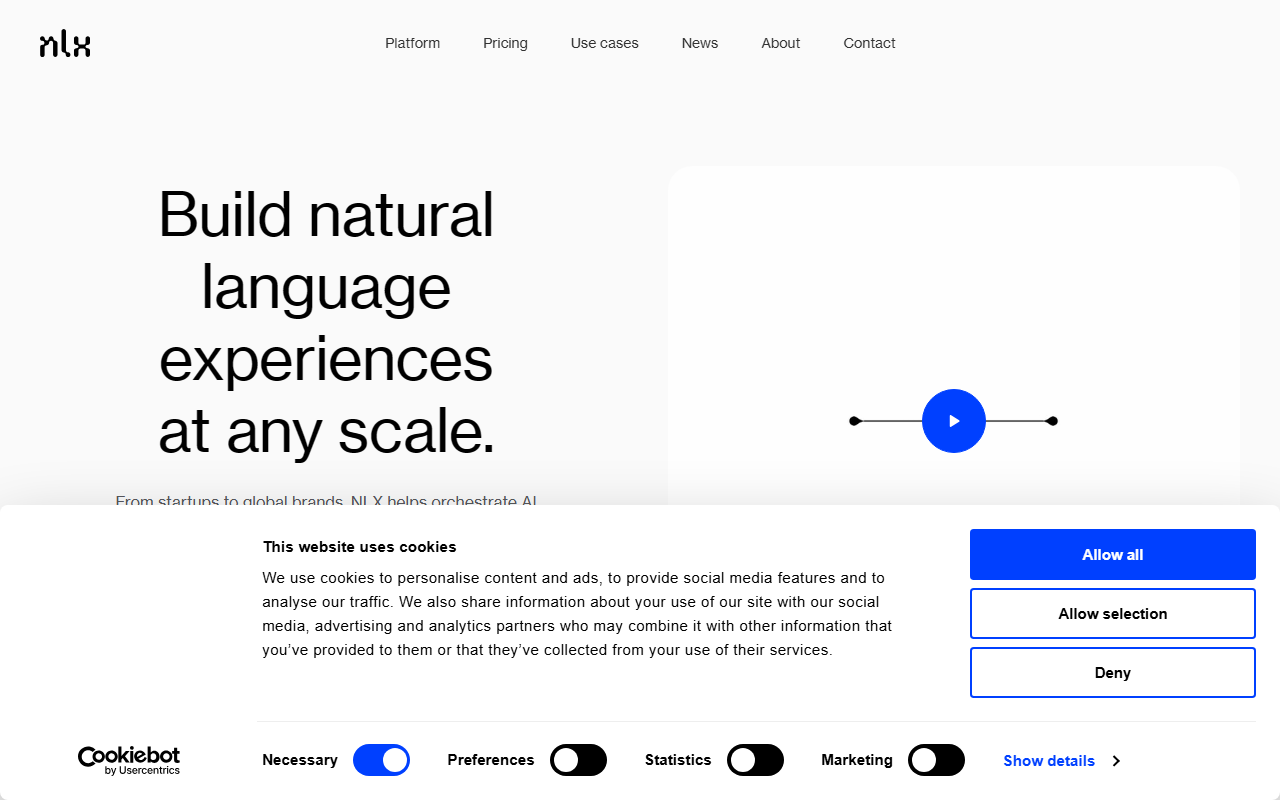
Upon visiting the NLX website, the first thing that caught my eye was the bold announcement: NLX is now part of Amazon Connect. That single line immediately sets expectations—this is enterprise-grade infrastructure, not a side project. The landing page walks you through use cases, features, and case studies with clear calls to action. I requested a demo to see the platform firsthand, and within minutes I was inside the Canvas no-code conversation builder.
The dashboard is clean and logically organized. The left-hand navigation offers quick access to Build, Deploy, and Analyze modules. I started testing the free tier (which is not explicitly listed but appears available through demo access) by creating a simple chatbot. The Canvas interface let me drag and drop nodes, connect APIs, and test responses instantly. The onboarding flow is guided but not overbearing—you can jump straight into building or watch tutorial videos. The overall feel is polished, aimed at teams that want to go from prototype to production without writing much code.
Core Features and Technical Capabilities
NLX brands itself as an orchestration layer for conversational AI, and that’s exactly what it delivers. The standout feature is Voice+™, a patented technology that synchronizes voice interactions with digital channels. For example, a user can speak a command and see a visual response update on their phone simultaneously. This isn’t just a gimmick—it solves the real problem of disconnected multimodal interactions.
Under the hood, NLX supports any LLM provider. The website shows a live status indicator for models like Cohere Command R Plus, Google Gemini 2.5 Flash, OpenAI GPT-5, and Anthropic Claude 4.5 Sonnet. You can switch providers instantly without retraining your flows. The platform also supports 65+ languages natively, which is impressive for global deployments. For developers, NLX provides comprehensive Conversation APIs and an SDK (@nlx/ai/core) that lets you integrate chat, voice, and Voice+ into your own apps with just a dozen lines of code. I tested the SDK snippet from the documentation, and it worked as advertised—simple REST calls with configurable headers.
The analytics module offers custom KPIs, alerting, and conversation history, all accessible through a no-code interface. During my testing, I saw real-time metrics like success rate, time to resolution, and conversation volume, though the numbers reset to zero in the sandbox environment. The platform also includes pre-built integrations for common channels (web, mobile, phone IVR, messaging apps) so you can deploy everywhere from one place.
Pricing, Positioning, and Use Cases
Pricing is not publicly listed on the website. The only option is to contact sales for a custom quote, which suggests NLX targets mid-market to enterprise customers. That aligns with its Amazon Connect partnership and the case studies featuring companies like a national retailer (90% customer satisfaction) and a tech firm processing 150k daily repairs. Competitors include Voiceflow (more consumer-friendly, lower price point) and Google Dialogflow CX (stronger on intent-based flows but less flexible on LLM switching). Unlike those tools, NLX shines in multimodal, real-time synchronization and its ability to work with any AI model—you’re not locked into a single vendor.
This tool is best suited for large enterprises that need to orchestrate complex conversational journeys across voice and digital channels. It’s also a strong fit for teams that want to rapidly prototype without coding but still need deep SDK access for custom integrations. Smaller startups or single-channel use cases might find the demo-gated pricing and enterprise focus overkill.
Strengths, Limitations, and Verdict
NLX’s biggest strength is its versatility. The no-code Canvas makes it easy for product managers and UX designers to own the conversation flow, while the APIs and SDK give engineers full control. The Amazon Connect backing adds credibility and likely means tighter integration with AWS services going forward. I was especially impressed by Voice+™—it’s a genuinely novel approach to multimodal interactions.
On the limitations side, the lack of transparent pricing is frustrating for independent evaluators. You have to commit to a sales call just to see if it’s affordable. Additionally, the platform’s power comes with a learning curve. While the no-code builder is intuitive for simple flows, advanced features like event-driven triggers and custom analytics require some training. Finally, the heavy focus on enterprise channels means some integrations (like social messaging) might require extra setup.
Overall, NLX is a top-tier conversational AI orchestration platform—ideal if you’re building multimodal, multi-channel experiences at scale and have the budget to support it. I recommend requesting a demo to see if the flexibility justifies the investment. Visit NLX at https://nlx.ai to explore it yourself.













Comments