

First Impressions: Onboarding and Interface
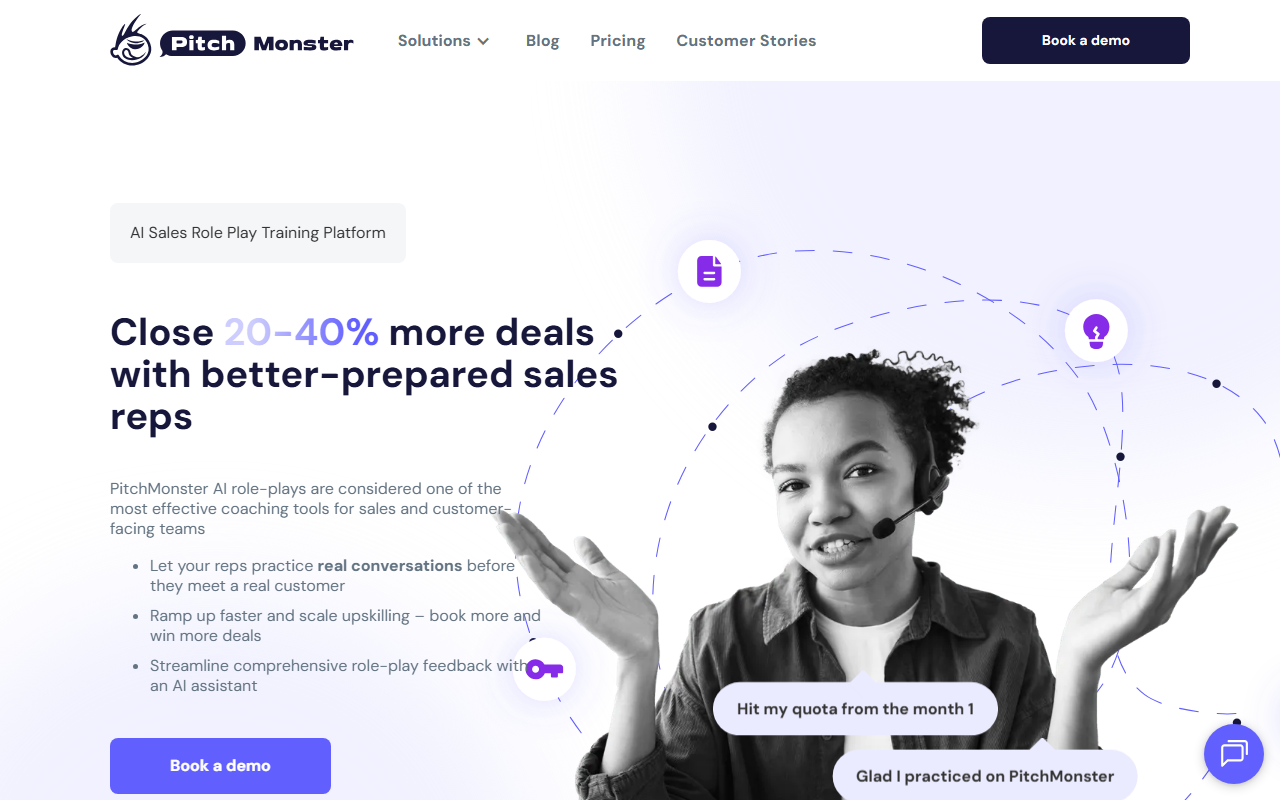
Upon visiting PitchMonster.io, the landing page immediately conveys a clear value proposition: AI-driven sales role-play training that helps reps close 20-40% more deals. The layout is clean and professional, with prominent calls-to-action for booking a demo and exploring a free trial. I decided to test the free tier, which offers a sample of the AI sales role-play analysis. The onboarding process was straightforward: I filled in a brief form specifying my sales scenario (cold call), and within seconds the platform generated an AI buyer persona tailored to my input. The dashboard is intuitive, with tabs for creating role-plays, reviewing feedback, and managing team leaderboards. I was impressed by the speed—no lengthy setup or configuration required.
Core Features and AI Capabilities
PitchMonster excels at simulating real sales conversations. It supports cold calls, discovery meetings, product demos, and even presentation uploads with custom questions. The AI adapts to your actual customer conversations, making practice sessions highly relevant. After completing a role-play, the platform provides detailed feedback powered by AI speech coaching. It acts like a “Sales Grammarly,” offering suggestions on sentence structure, pace, and eliminating filler words and clichés. I tested this with a recorded pitch; the feedback flagged overused phrases like “basically” and “um,” and recommended more confident phrasing. The custom AI scorecard is another standout: you upload your own metrics (e.g., “asked discovery questions”), and the AI evaluates reps against those criteria. This feature saves managers countless hours of manual review.
Pricing and Market Positioning
PitchMonster’s pricing is not publicly listed on the website—a common tactic for enterprise-focused tools. The company offers a free trial for individual users, but full access likely requires a subscription per rep or per team. This positions PitchMonster as a premium solution for mid-market to large sales teams. Compared to alternatives like Gong (more call analytics focused) or Lessonly (LMS with role-play modules), PitchMonster specializes purely in scalable role-play practice with AI feedback. Its pre-built exercise library—featuring 48 scenarios covering objection handling, discovery, and demos—is a major time-saver for enablement teams lacking content creation resources. The testimonials from B2B SaaS leaders highlight a 37% average increase in sales performance and 2x more opportunities booked, which are compelling metrics for any sales ops leader.
Strengths, Limitations, and Final Verdict
PitchMonster’s greatest strength is its ability to deliver personalized, instant feedback at scale. Managers can set coaching standards once, and the AI replicates that guidance for hundreds of role-plays daily. The leaderboard and self-coaching features also boost engagement—reps can rework mistakes before awaiting human review. However, the tool has limitations. The AI feedback, while impressive, can sometimes miss nuanced context (e.g., industry-specific jargon that isn’t a true filler). Additionally, the lack of transparent pricing may deter smaller teams or freelancers. Finally, creating highly custom scorecards requires a short learning curve to define AI assessment criteria clearly. Overall, PitchMonster is best suited for sales enablement leaders at growing B2B companies who need to ramp reps faster and reinforce training without overwhelming their coaching bandwidth. If you have a small team or a tight budget, you may want to explore simpler alternatives first. Visit PitchMonster at https://pitchmonster.io to explore it yourself.













Comments