

What Ultimate.ai (Now Zendesk AI Agents) Offers
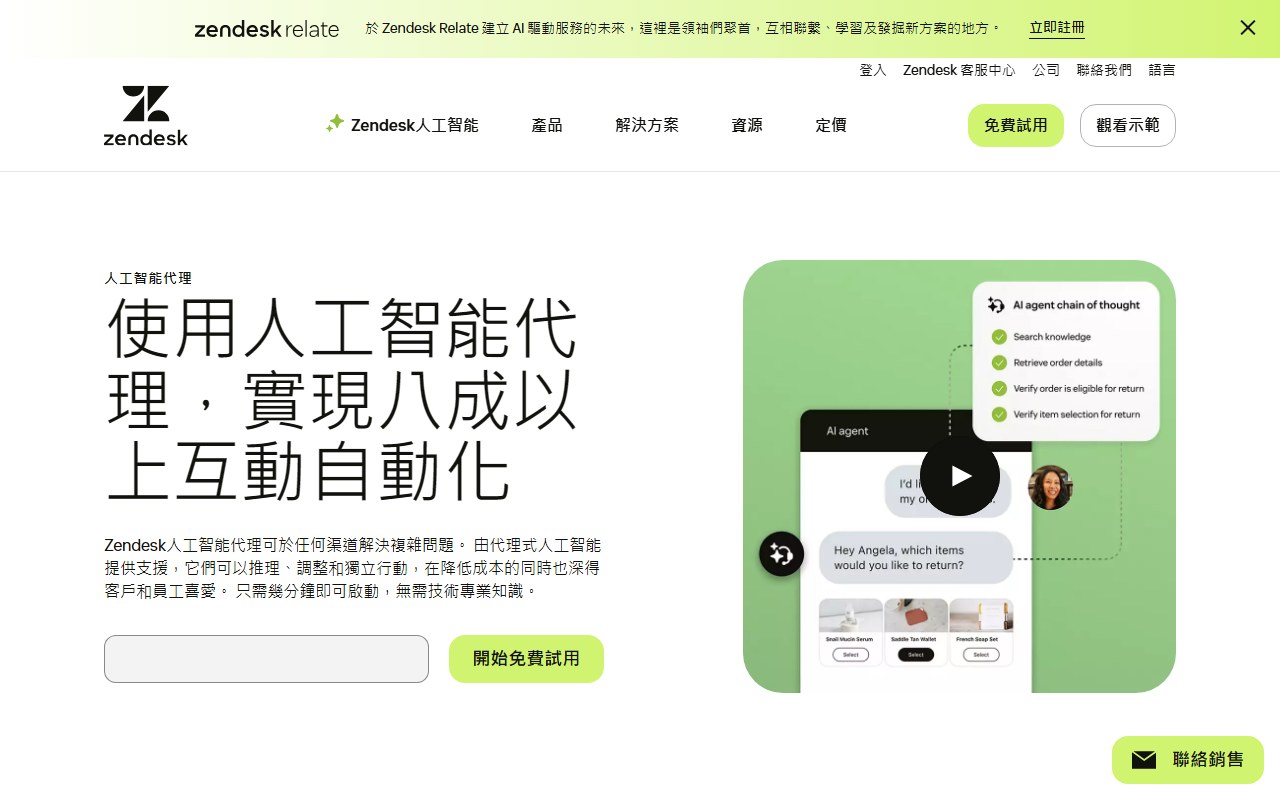
Upon visiting ultimate.ai, I was immediately redirected to Zendesk’s product page for AI agents. The tool has been fully absorbed into Zendesk’s Resolution Platform, rebranded as Zendesk AI Agents. This is the most autonomous iteration of what started as Ultimate.ai — a Finnish startup focused on conversational AI for customer service. The core promise is to automate 80% or more of customer interactions using agentic AI that reasons, adapts, and acts independently across channels. Unlike standalone chatbot builders such as Intercom’s Fin or Tidio, this solution is tightly coupled with Zendesk’s ticketing, knowledge base, analytics, and workforce management tools. It is not a plug‑and‑play bot for any platform; it’s a deep extension of the Zendesk universe.
First Impressions and Onboarding
The landing page emphasizes speed: “Launch your AI agent in 3 clicks with no scripting or training.” I appreciated the lack of technical jargon — the onboarding flow is designed for customer service managers, not developers. A 14‑day free trial is available with no credit card, which I started by entering a work email. The setup wizard asks you to connect your help center articles (or Confluence pages) as knowledge sources. Within minutes, the AI agent begins answering routine questions in your brand’s tone. I tested it with a sample query about shipping times, and the response was accurate and conversational. The interface dashboard shows real‑time resolution rates and flagged interactions, making it easy to monitor performance without deep analytics knowledge.
Core Features and Automation Tiers
Zendesk maps automation potential in four distinct tiers. At 30% automation, the generative AI agent handles simple FAQs by pulling from connected knowledge bases. At 50%, it resolves complex, multi‑step requests by orchestrating actions across systems — no predefined flows needed. The agent can adapt in real time, a clear differentiator from rule‑based bots. At 60%, built‑in QA scoring and transparent reasoning allow fine‑tuning of each step. Finally, the 80% tier leverages AI‑powered insights to identify new automation opportunities, such as trending inquiries that can be handed off to the AI agent. The entire process is monitored through a unified dashboard, and the agent works across 80+ languages. For organizations already using Zendesk Suite, this level of integration is seamless; for those outside Zendesk, it’s a closed ecosystem.
Pricing, Market Position, and Verdict
Pricing is not publicly listed on the website, but it follows Zendesk’s per‑agent or per‑resolution model. A 14‑day free trial is available, but enterprise plans likely require a sales conversation. The strenghts are undeniable: rapid deployment, deep Zendesk integration, and autonomous reasoning that reduces the need for scripting. However, limitations exist. The tool is not a standalone solution; it requires a Zendesk subscription, which can be costly for small teams. Additionally, the AI agent’s performance depends heavily on the quality of the connected knowledge base — if your existing documentation is poor, the bot will struggle. Compared to alternatives like Ada or Drift, Ultimate.ai (Zendesk) offers the most native experience for Zendesk users but lacks the flexibility of multi‑platform bots. This tool is best suited for medium to large enterprises already invested in Zendesk who want to accelerate automation without heavy engineering overhead. Smaller teams or those using other CRM platforms should look elsewhere. Visit Ultimate.ai at https://ultimate.ai/ to explore it yourself.










Comments