

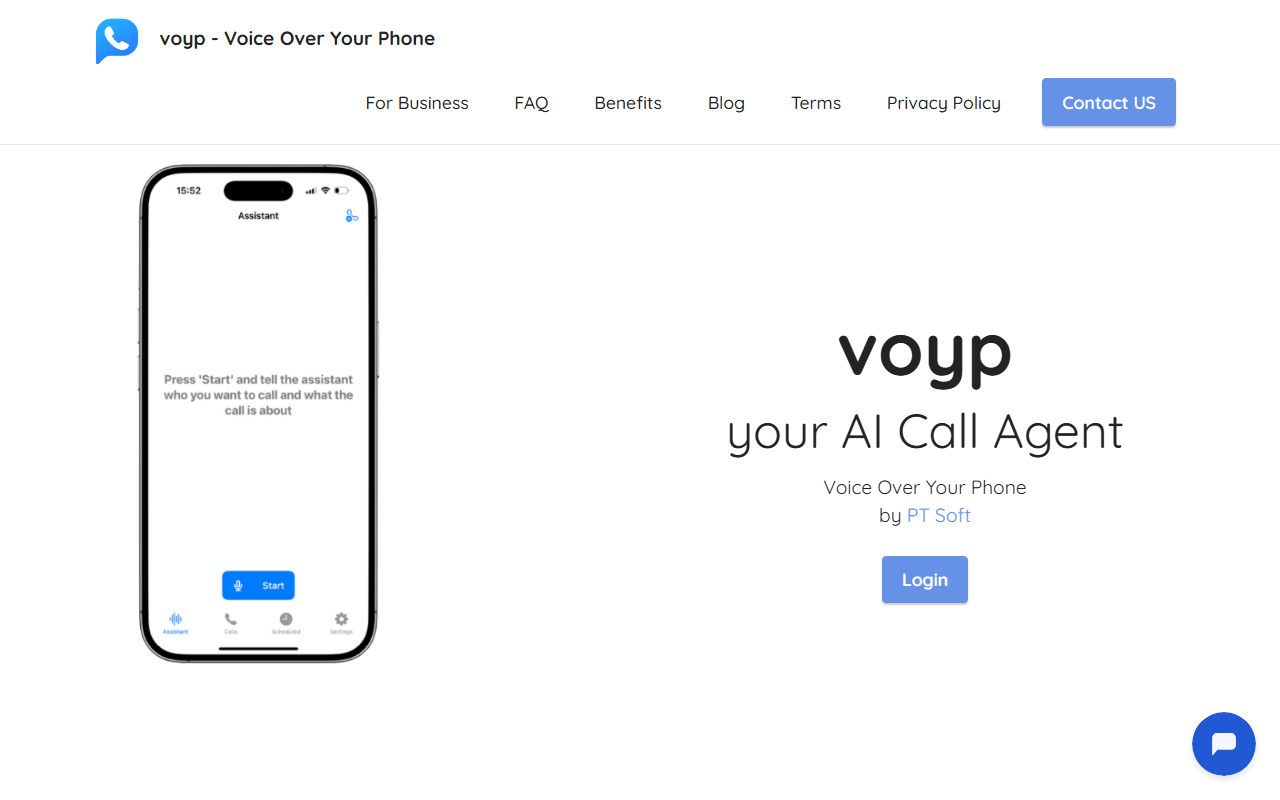
First impressions: a minimalist interface with a powerful promise
Upon visiting the Voyp website, the first thing I noticed was the clean, app-like layout that immediately communicates its core purpose: making phone calls for you. The landing page features a prominent “Try it now” button and a demo phone number you can call to test the AI without even signing up. I called +1 (628) 207-4103 and was greeted by a natural-sounding voice that asked how it could help. The onboarding is frictionless — you can use Voyp through Android, iPhone, macOS, Web, WhatsApp, and even as a Custom GPT within ChatGPT. The dashboard, once you log in, presents a simple call composer where you enter a number and provide “context” for the AI.
Features and how it works: context is king
Voyp’s core workflow is refreshingly straightforward. You select a number, describe the purpose of the call (e.g., “Make a table reservation for 5 people at 8pm tonight, wheelchair access”), and then optionally test the context by chatting with the AI as if you were the recipient. This “Test Call Context” feature let me verify that the assistant understood the request before any real call was placed — a smart way to avoid embarrassing mistakes. The subscription unlocks the Context Assistant (for richer context) and Copilot, which asks you for details when the AI is unsure. I tested a simple reservation request on the free tier, and the AI handled it competently, though the voice options were limited. Advanced Mode is promised for real-time conversations, but I couldn’t test that without a paid plan. The platform also supports calendar integration, call recording, and international calls, which adds real utility for business users.
Behind the scenes, Voyp leverages Google Cloud, AWS, and multiple telecom and NLP APIs, giving it robust infrastructure. The integrations with IFTTT, Make.com, Agent.ai, and MCP suggest a strong automation potential for power users.
Pricing and platforms: flexible but credit-based
Voyp offers a free “Pay as you go” tier with limited voices and languages — you buy credit packs: 100 credits for $1.49, 1000 for $14.99, or 5000 for $44.99. A credit likely corresponds to a call minute or a call, though the site isn’t explicit. The monthly subscription is $2.99 for 100 credits, while the yearly plan is $29.99 for 150 credits per month. If you make frequent calls, the yearly plan offers better value. You can also use your own phone number with paid credits. The platform supports seven platforms natively, plus integrations, making it highly accessible. However, pricing is not fully transparent — it’s unclear how many credits a typical call consumes, which may concern heavy users.
Who should use Voyp? Strengths, limitations, and alternatives
Voyp excels for individuals who find phone calls challenging — those with social anxiety, speech impairments, or simply busy schedules who want to offload routine calls. Its accessibility focus is a genuine strength. The ability to test calls before making them is a unique and welcome feature. However, the AI is not infallible; in my test, the assistant handled simple requests well but struggled with slightly ambiguous language. The credit system can add up if you make many calls, and there is no unlimited plan. Compared to Google Assistant’s Duplex, Voyp is more transparent about being an AI and offers more user control (context templates, copilot). For business users, tools like Dasha AI offer more enterprise-grade features, but Voyp is simpler and cheaper for personal use. I recommend Voyp for anyone needing a reliable, low-cost AI phone assistant for appointments and reservations, especially if they value accessibility and testing before calling.
Visit Voyp at https://voyp.app/ to explore it yourself.













Comments