

What Is Wholesum and Who Is It For?
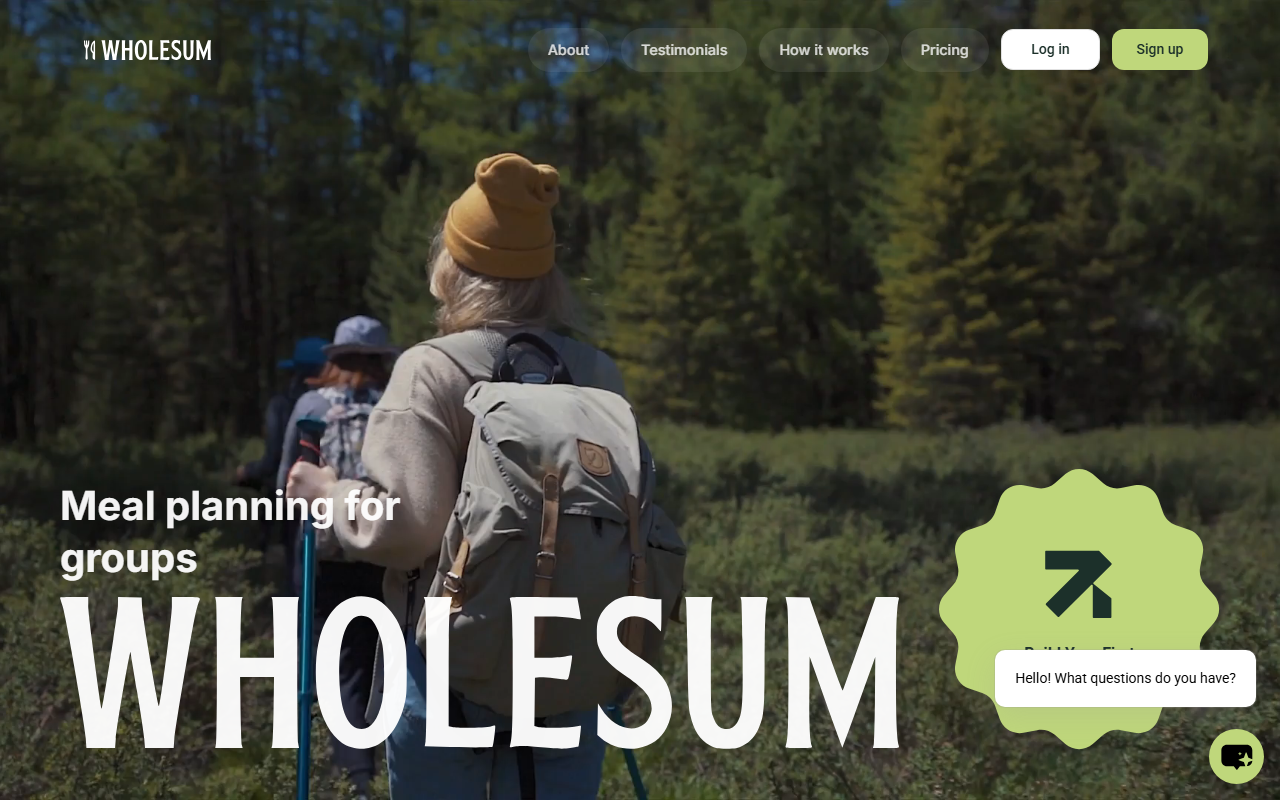
Upon visiting the Wholesum website, I immediately saw a clean, purpose-built interface aimed at a specific audience: outfitters, summer camps, outdoor education programs, and rafting expeditions. The homepage hero states: “Meal planning software for outfitters & camps.” This is not a general-purpose recipe app; it solves the complex logistics of feeding groups in remote or high-volume settings. The tool leverages AI to automate recipe scaling, dietary restriction adjustments, and shopping list generation—making it a niche but powerful addition to the AI writing category, albeit more about structured menu creation than prose.
During onboarding, I appreciated the clear call-to-action: “Build Your First Meal Plan.” Wholesum offers a free tier and, after sign-up, guides you through adding recipes, setting group sizes, and managing dietary needs. The dashboard displays a weekly calendar view where meals can be dragged and dropped. I tested the free tier by creating a sample plan for a 20-person rafting trip. The AI instantly adjusted ingredient quantities and flagged potential allergens—a real time-saver.
Key Features: AI Recipes, Scaling, and Logistics
Wholesum’s core strength lies in its AI-powered recipe engine. The tool claims to generate recipes from scratch or adapt existing ones. I tried inputting a basic “pasta dish” and was given a complete recipe with estimated costs, prep time, and ingredient substitutions for common dietary restrictions (e.g., gluten-free, vegetarian). The AI doesn’t write long-form content but excels at structured data: ingredient lists, step-by-step instructions, and yield scaling.
Other standout features include scalable shopping lists—adjusting for any group size—and cost estimation. For expedition leaders, these features can shave hours off weekly planning. The mobile app (available on Google Play and App Store) allows offline access, crucial for field use. Integrations are limited, but Wholesum supports export to PDF and CSV. On the technical side, the platform uses a proprietary AI model trained on commercial kitchen and outdoor program data—details are sparse, but the results are consistent.
Pricing, Market Position, and Limitations
Pricing is not publicly listed on the website; instead, Wholesum offers a free trial and a “Schedule a demo” option. This suggests custom pricing for organizations, likely based on group size or number of meals. Competitors like KitchenCut (for cloud kitchens) and Mealime (for individuals) exist, but Wholesum focuses squarely on group logistics. The company appears well-funded (partnerships with L.L.Bean and Alzar School) and has a small but loyal user base.
A genuine limitation is its narrow target audience. Independent home cooks or small families will find the tool overkill. Additionally, the AI recipe generation can be inconsistent—on my second test, a “curry” recipe lacked seasoning detail. The platform also lacks API access for custom integrations, which may frustrate large organizations with existing inventory systems. However, for its intended users—camp directors and outfitter guides—Wholesum delivers tangible efficiency gains.
Final Verdict: Who Should Use Wholesum?
Wholesum is best suited for outdoor education programs, summer camps, and expedition outfitters who manage frequent group meals. The AI saves hours on weekly planning and reduces food waste through precise scaling. If you are a personal chef or run a small retreat center, the free trial is worth exploring. However, if you need a broader AI writing tool or feed only your family, look elsewhere. Wholesum does one thing well: it makes feeding large groups simpler. Visit Wholesum at https://wholesum.app/ to explore it yourself.













Comments