

First Impressions: Interface and Onboarding
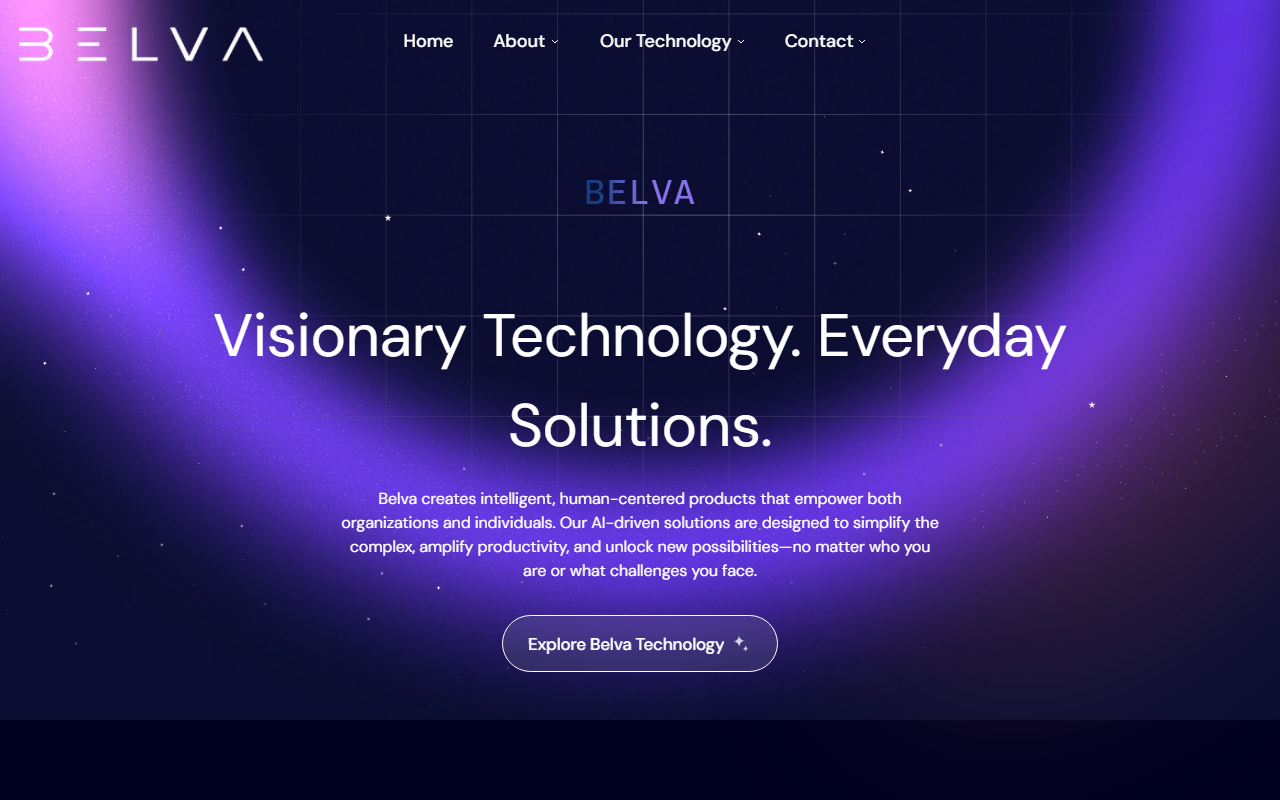
Upon visiting Belva’s website at belva.ai, I was greeted by a clean, modern landing page that emphasizes “Visionary Technology. Everyday Solutions.” The navigation is minimal: sections on About, Technology, and Contact. There is no immediate sign-up or demo link, which felt like a barrier. The site describes Belva’s mission and features but does not offer a direct free tier or trial for me to test. The introductory flow is more of a brand overview than a product onboarding. I clicked through to learn about their proprietary AiDB system and the LawGoat product. The page is well-styled but lacks the hands-on experience I typically seek for an in-depth tool review. There is no clear dashboard or sample workflow shown; instead, the site leans heavily on descriptive copy and conceptual diagrams. This leaves me with more questions than answers about actual user interaction.
Core Technology: AiDB and Context Optimization
Belva’s standout technological claim is its AiDB, described as a “proprietary knowledge system that keeps your organization’s information organized, current, and easy to access.” It acts as an intelligence layer for AI tools and workflows, syncing automatically as teams update data. This is designed to reduce the context burden on large language models (LLMs), enabling larger context windows, fewer hallucinations, and better task execution. While these are bold claims, I could not find independent benchmarks or open documentation on AiDB. The technology appears to be the foundation for all Belva products, including LawGoat. Belva states that “by lowering the context burden on LLMs, Belva enables unprecedented scale and performance.” This is a clever approach to address a known LLM limitation, but without seeing it in action, it remains hypothetical. Compared to alternatives like Notion AI, which focuses on note-taking and project management, or Microsoft Copilot, which integrates deeply with Office 365, Belva positions itself as more of a custom AI layer for organizations. The focus on legal use cases via LawGoat gives it a niche that could be compelling for law firms.
Featured Solution: LawGoat and Its Potential
LawGoat is presented as Belva’s flagship application, described as “Your Firm’s Intelligent Legal Operating System.” It offers no-code customization using plain language to shape AI agents for a firm’s unique needs. It also includes seamless integration with case management, email, and document storage via MCP connections, with bi-directional sync. The consumer side of LawGoat helps individuals find lawyers through a conversational AI. This dual-sided platform is innovative: it bridges professional and personal legal needs. During my exploration, I tried to find a demo or case study but found none. The page describes that after a “human-like conversation,” the AI matches you with a lawyer. For firms, it automates lead qualification and routine casework. This could be a game-changer for small-to-mid-sized law firms that struggle with administrative overload. However, the lack of pricing or a free trial makes it hard to evaluate. In the legal tech space, competitors like Clio and PracticePanther offer integrated practice management, but without a custom AI agent layer. LawGoat’s no-code customization is a notable differentiator, if it works as advertised. Belva appears to be targeting legal professionals directly, but the broader AI office suite is less defined—there are no other products listed besides LawGoat.
Strengths, Limitations, and Final Verdict
The primary strength of Belva is its proprietary AiDB system, which promises to keep organizational data synced and improve LLM performance, especially for complex environments. The LawGoat product shows a clear, real-world application that solves a specific problem for legal firms: automating client intake and case management with AI. The no-code customization is a user-friendly touch. However, there are significant limitations. The website lacks concrete details on pricing, API availability, or a direct demo. I could not find any user base indicators, funding details, or independent reviews. The lack of a free tier means potential users cannot test the tool before commitment. Additionally, the “AI Office” category feels sparse when only one application (LawGoat) is highlighted. The page mentions “portfolio of AI products” but does not list them. This vagueness undermines trust. For now, Belva is best suited for law firms and legal professionals who are willing to engage with a sales team to explore LawGoat. Individual users or organizations looking for a general AI office assistant (like Google Workspace AI or ChatGPT Enterprise) should look elsewhere until Belva releases more products. While the technology concept is promising, I cannot confidently recommend adoption without further evidence and a trial. Belva needs to offer more transparency and hands-on access to build credibility in the competitive AI tool market.
Visit Belva at https://belva.ai/ to explore it yourself.













Comments