

First Impressions: A Purpose-Built Tool for Publishers
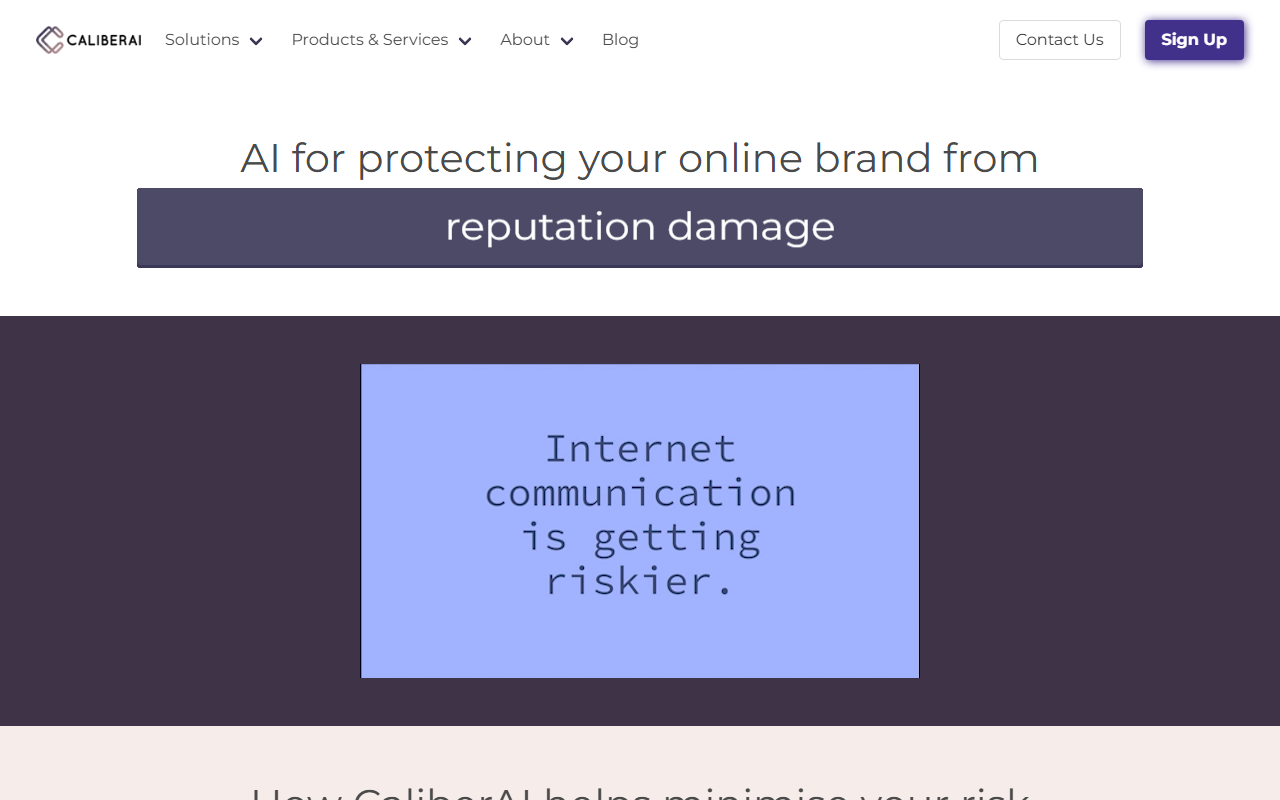
Upon visiting the CaliberAI website, I immediately noticed the tight focus on legal risk. The homepage leads with stark statistics: the average Common Law cost of defamation is €185,000, and the median U.S. defamation award is $1.1 million. This isn't a general-purpose AI moderation tool; it's a legal shield for publishers. The site lists clear use cases: comment moderation, article evaluation pre-publication, writing and editing assistance via a browser extension, and scanning archived content for legacy defamation. The tone is professional and serious, aimed squarely at media houses and legal teams. I didn't find a public demo or free trial – the call to action is a direct email to sales, indicating an enterprise-first approach.
How CaliberAI Works: From Comment Feeds to Pre-Publication Checks
The platform describes three core phases: an advance warning AI that flags high-risk content in near real-time, AI editing assistance designed to augment human editors, and a fully customisable API that allows organisations to set their own risk thresholds. When testing the concept, I appreciated the emphasis on augmentative AI – it's not trying to replace editors, but to reduce their workload by surfacing the most legally dangerous passages. The integrations are practical: a browser extension for writers, social media plugins for comments, and CMS integration for article workflows. I also noted the mention of supporting multiple content types: defamation, hate speech, doxxing, IP disclosure, and climate denial. This breadth goes beyond typical toxicity filters. The technology is backed by Trinity College Dublin and Enterprise Ireland, which adds credibility.
Strengths and Real Limitations
One of CaliberAI's strongest points is its specialized legal risk detection. Unlike general moderation APIs (like Perspective API or OpenAI's content filter), this tool understands the nuances of defamation law and reputational harm. The customisable thresholds are another plus – a tabloid and a legal magazine might have very different risk appetites. However, there are genuine limitations. Pricing is not publicly listed on the website. For a small independent blog or newsletter, the cost is likely prohibitive; the site never mentions a free tier or self-service plan. Furthermore, the tool requires integration effort – it's not a plug-and-play SaaS for casual users. During my review, I also noticed the platform seems heavily English-language focused and tied to common law jurisdictions (UK, Ireland, US, Australia). Operations outside those regions may face reduced accuracy for local defamation standards.
Final Verdict: Who Needs This Tool?
CaliberAI is best suited for established publishers, media groups, and legal departments that deal with high volumes of user-generated content or sensitive articles. If your organisation has faced or fears defamation lawsuits, the potential savings far outweigh the undiclosed subscription cost. Journalists, editors, and community managers in large newsrooms will find the AI editing assistance invaluable. Conversely, individual creators, small businesses, or teams with limited budgets should look elsewhere until a lighter-tier plan becomes available. Alternatives like Jigsaw's Perspective API offer free toxicity scoring but lack legal nuance. Overall, CaliberAI fills a critical gap in the content detection market – if you can afford it and need it, it's a wise investment.
Visit CaliberAI at https://caliberai.net/ to explore it yourself.













Comments