

First Impressions and Onboarding
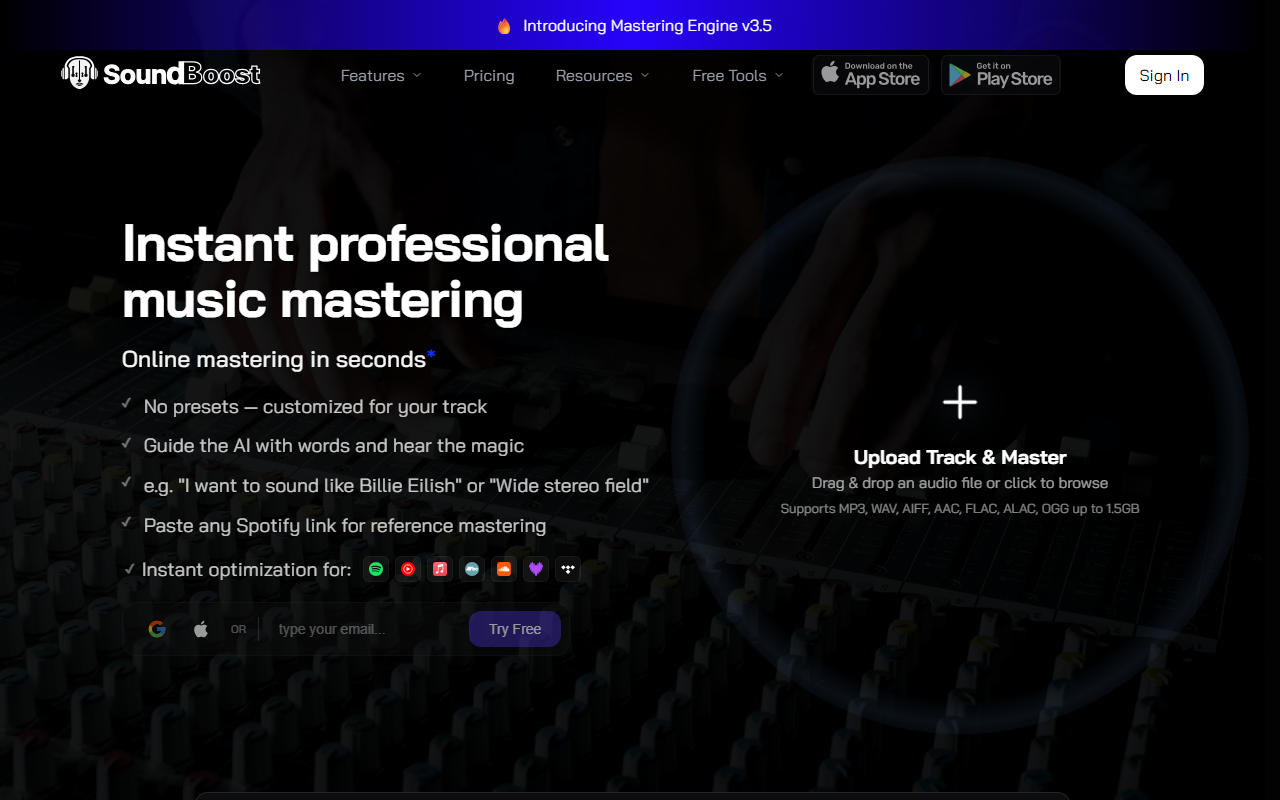
Upon visiting the SoundBoost.ai site, I was greeted by a clean, modern interface. The tagline "Instant professional music mastering" immediately sets expectations. The dashboard is minimal: an upload button and a text box for prompts like "I want to sound like Billie Eilish" or "Wide stereo field." I uploaded a short .wav file within seconds—no signup required for the free preview. The processing took about 30 seconds, and I could A/B compare the original with the mastered version. The results were impressive: the track gained clarity and punch without sounding overprocessed. The entire experience felt quick and intuitive, perfect for musicians who want immediate feedback.
Core Features and Technology
SoundBoost.ai differentiates itself from traditional AI mastering tools by focusing on prompt-guided mastering. Instead of presets, you describe the desired sound in words. The engine claims to analyze genre, BPM, LUFS, then assembles a tailored signal chain from hundreds of modeled analog and digital processors. I tested the reference mastering feature by pasting a Spotify link—it matched loudness and tonal balance accurately. There are also AI mastering engineer personas like Sophia (smoothness) and Marcus (Skrillex-style). Switching between them subtly changed the stereo width and compression. The stem splitter and vocal remover worked well, separating drums and vocals cleanly. Additionally, the Visual Creator generates album covers and Spotify Canvas videos from a selfie—a nice bonus for indie artists. All features are available on mobile apps for iOS and Android.
Pricing and Market Position
Pricing is not publicly listed on the landing page, but the navigation includes a "Pricing" link. Based on the free tier with limited preview, SoundBoost likely operates on a subscription model. Competitors like LANDR and eMastered offer tiered plans ($19–$39/month). SoundBoost’s unique selling point is its prompt-guided, no-preset approach, which gives more creative control. It is best suited for independent musicians, bedroom producers, and even mastering engineers who want quick iterations. However, professionals who require precise manual EQ and compression might still prefer dedicated DAW plugins. The company claims over 290,000 masterings processed, indicating a growing user base. The ethical stance—vowing not to train AI on user music—builds trust, especially compared to some competitors.
Strengths, Limitations, and Verdict
SoundBoost’s main strength is its intuitive, word-driven mastering workflow. It saves time and inspires new directions. The stem splitter and visual creator add value for a holistic music production suite. However, I found the AI engineers somewhat limited—sometimes the differences felt subtle, and I wanted more granular control over dynamics. Also, without transparent pricing, potential users may hesitate. Another limitation: the free preview only lets you master a short clip, not full tracks. For serious releases, you must subscribe. Overall, SoundBoost is an innovative tool that democratizes professional mastering. I recommend it especially for musicians who want to explore different sonic flavors quickly without technical jargon. If you need surgical precision, pair it with a manual limiter. Visit SoundBoost.ai at https://diktatorial.com/ to explore it yourself.













Comments