

First Impressions: A Conference, Not a Tool
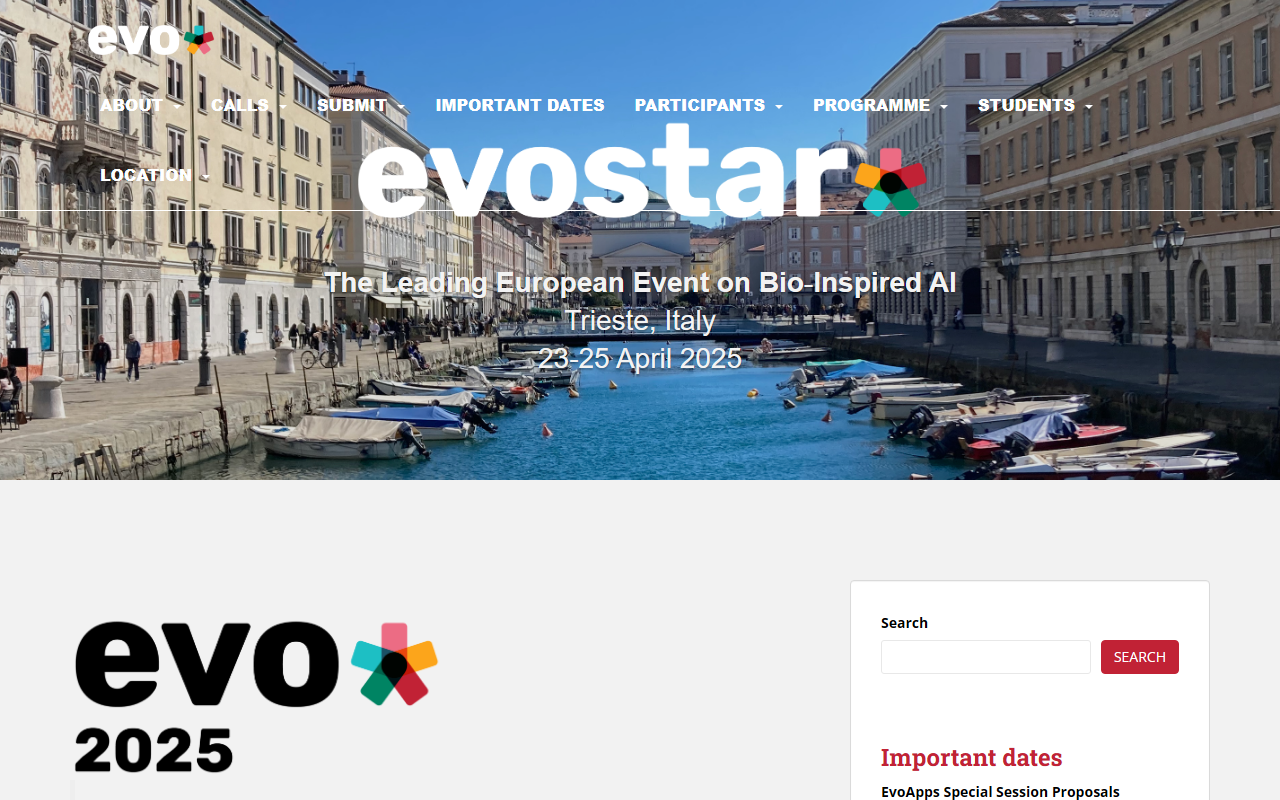
Upon visiting evostar.org, I immediately noticed that EvoStar is not a software product or an AI tool in the conventional sense—it is a major European academic conference on bio‑inspired artificial intelligence. The site is a straightforward event page for the 2026 edition, held in Toulouse, France, from 8‑10 April. The layout is clean: a navigation bar, key dates, news ticker, and links to four sub‑conferences (EuroGP, EvoApplications, EvoCOP, EvoMUSART). The dashboard shows a Twitter feed highlighting keynote speakers and award winners. For anyone expecting an interactive learning platform or a downloadable AI model, this may be confusing. However, as a learning platform in the "Text AI" category, the conference itself serves as a rich repository of research papers, talks, and networking opportunities.
What It Offers and How It Works
EvoStar is the leading European event on bio‑inspired AI, covering evolutionary computation, genetic programming, and swarm intelligence. The website aggregates conference proceedings through SpringerLink, making papers from 2026 freely available for download. The sub‑conferences each focus on a specific domain: EuroGP on genetic programming, EvoApplications on real‑world applications, EvoCOP on combinatorial optimisation, and EvoMUSART on art and music generated by evolutionary algorithms. The platform also features late‑breaking abstracts hosted on arXiv. For learners, the site provides important dates (submission deadlines, early registration) and links to call for papers. But it does not offer any interactive learning modules, tutorials, or hands‑on exercises—it is strictly an information portal for an in‑person and hybrid conference.
When testing the free tier (the public website), I followed the links to the EuroGP proceedings and found a list of PDFs. That is the extent of the "learning" resource available without registration. The Twitter feed offers occasional glimpses into student programmes and keynote summaries, but it is not a structured curriculum. The tool’s core technology is the conference itself: bio‑inspired AI models and methods are presented here, but neither the site nor the event provides direct access to AI models or APIs.
Strengths and Limitations
One genuine strength is the breadth of cutting‑edge research made openly accessible post‑conference. The proceedings are free to read, which is rare for many academic publishers. This makes EvoStar a valuable research hub for academics and graduate students specialising in evolutionary computation. Another strength is the community aspect: the event brings together leading researchers (e.g., Guy Theraulaz as a 2026 keynote speaker) and offers student workshops, fostering direct mentorship.
On the limitations side, the website is purely informational—it offers no active learning tools, no AI playground, no interactive demos, and no self‑paced courses. If you are looking for a tool to practice text‑based AI (like ChatGPT or a code assistant), this is not it. The event is also time‑bound: content is only available after each edition, and the site is not updated frequently between conferences. Additionally, pricing is not publicly listed on the website for attending in person or virtually; you would need to register through a separate portal. In terms of user experience, the site’s text‑heavy layout and lack of multimedia make it less engaging than typical online learning platforms like Coursera or Udacity.
Positioning in the Market and Final Recommendation
EvoStar competes indirectly with other academic conferences such as GECCO (ACM) and PPSN, but it is uniquely focused on European bio‑inspired AI. Unlike Coursera or edX, it does not offer a structured curriculum or certification—it is purely a research‑oriented event. As an academic resource, it excels at disseminating peer‑reviewed findings. For a learner seeking an interactive AI tool, I would recommend looking elsewhere (e.g., Google’s TensorFlow Playground or OpenAI’s ChatGPT). However, for a postgraduate student or researcher deep in evolutionary computation, EvoStar is an essential annual event. The free proceedings alone make it worth bookmarking.
To summarise: if you want to attend a premier conference on bio‑inspired AI and gain access to high‑quality research papers, visit EvoStar’s site. If you expect a hands‑on tool or a self‑guided learning platform, you will be disappointed. It is a conference, not a learning platform in the traditional ed‑tech sense. I recommend it for academics and PhD students in the field; skip it if you are a casual learner or practitioner looking for interactive AI experiences.
Visit EvoStar at https://evostar.org/ to explore it yourself.













Comments