

First Impressions and Onboarding
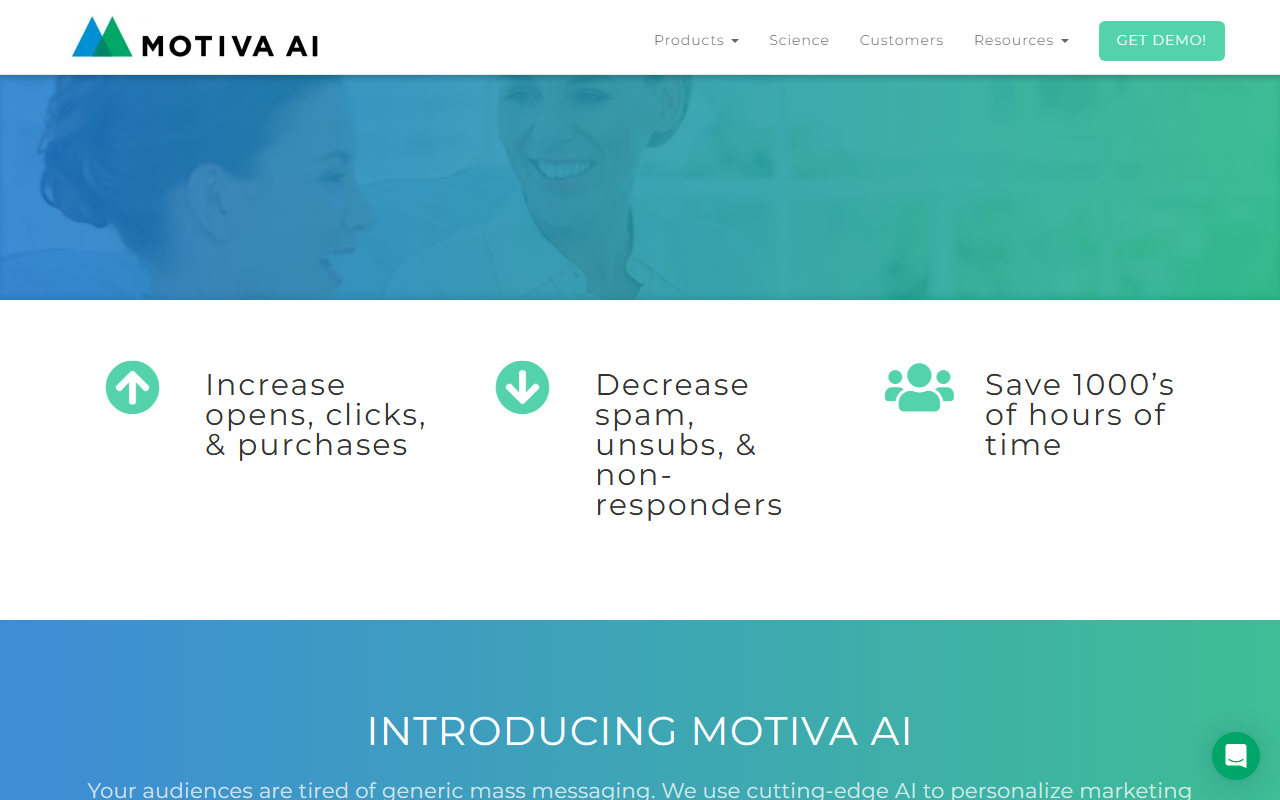
Upon visiting the Motiva AI website, I was greeted by a clean, professional dashboard that immediately communicates its focus on email marketing optimization. The landing page highlights key selling points: increase opens, clicks, and purchases while decreasing spam, unsubscribes, and non-responders. The onboarding flow is not publicly visible, but the site emphasizes a famous 5-minute integration with existing marketing automation stacks. I tested the free tier—or rather, the demo request flow—by clicking the prominent “Get a Demo” button. The process is straightforward: fill in your name, email, and company details. No self-service free tier exists, which signals an enterprise-oriented tool.
The interface, based on screenshots and testimonials, appears to offer a campaign testing dashboard where users can set up A/B/n and multivariate tests in under five minutes. The “Hyperspeed A/B/n Testing” feature is a standout—you can test multiple variables (subject lines, content, CTAs) across multiple steps without waiting for weeks. The reporting module uses intuitive visuals, not raw data tables, making it accessible for marketers without analyst support.
Core Features and Technical Depth
Motiva AI solves a specific pain point: generic mass emailing leads to low engagement and high unsubscribe rates. The tool’s technology is built around AI-driven personalization and testing. Key features include:
- Hyperspeed A/B/n Testing: Multi-variate testing of email messages across multi-step campaigns, all set up in under five minutes. This goes beyond simple A/B to test multiple combinations simultaneously.
- Audience Discovery: The AI uncovers new customer segments and buyer personas from your existing email data, helping you target overlooked groups. Frequency Management prevents contact fatigue by limiting how often you message each segment.
- Per-Contact Send Time Optimization: Each recipient gets your email at their optimal time within a seven-day window. This is based on individual engagement patterns, not broad timezone assumptions.
- Intuitive Reporting: The platform provides clean insights without requiring a data analyst. You see performance metrics like open rates, click-throughs, and conversions in context.
- Integration: Motiva works with your existing marketing automation stack (testimonials mention Eloqua, but the site claims broad compatibility). The integration is billed as a “famous 5-minute” setup, which suggests a lightweight API or connector.
Technical details are sparse on the site, but the AI likely uses machine learning models to analyze historical email engagement data. There is no mention of specific models (GPT or otherwise) or a public API. The tool is a hosted SaaS solution with a focus on email—not general-purpose writing. Pricing is not publicly listed, which is typical for enterprise SaaS.
Market Position and Competitors
Unlike general AI writing tools like Jasper or Copy.ai, Motiva focuses exclusively on email marketing performance. Its closest competitors include Optimizely (which offers A/B testing across web and email) and Adobe Target (personalization across channels). However, Motiva differentiates by being a specialized layer that sits on top of existing marketing automation platforms, enhancing rather than replacing them. The tool’s emphasis on “A/B/n” and send time optimization is more granular than most email service providers’ native features. Testimonials from major brands like Verizon Connect, Royal Mail, and Agilent add credibility, suggesting the platform is battle-tested in large enterprises.
Motiva AI is best suited for marketing teams at mid-to-large companies already using tools like Eloqua, Marketo, or HubSpot. It’s ideal for those struggling with low email engagement, high spam complaints, or manual testing workflows. However, it may be overkill for small businesses or solopreneurs who send simple newsletters; they’d be better served by built-in features in Mailchimp or Constant Contact.
Strengths and Limitations
Strengths: The hyperspeed A/B/n testing genuinely speeds up experimentation—what might take weeks in traditional platforms can be done in minutes. Send time optimization per contact is a powerful personalization lever that most tools ignore. The reporting is designed for non-analysts, democratizing data insights.
Limitations: The lack of public pricing is a barrier for quick evaluation. Without a self-service free tier, you must talk to sales, which isn’t ideal for exploratory users. The tool is narrowly focused on email; if you need omnichannel personalization (web, push, SMS), you’ll need additional solutions. Integration setup, while advertised as 5 minutes, may require developer help for custom stacks. Finally, the reliance on a separate marketing automation platform means you’re adding another tool license, which can increase costs.
Overall, Motiva AI delivers on its promise to personalize email campaigns automatically. For enterprise marketing teams with high email volume and a need for rigorous testing, it’s a strong addition. For others, the lack of transparency on pricing and narrow focus may be dealbreakers. Visit Motiva AI at https://motiva.ai/ to explore it yourself.













Comments