

First Impressions and Onboarding
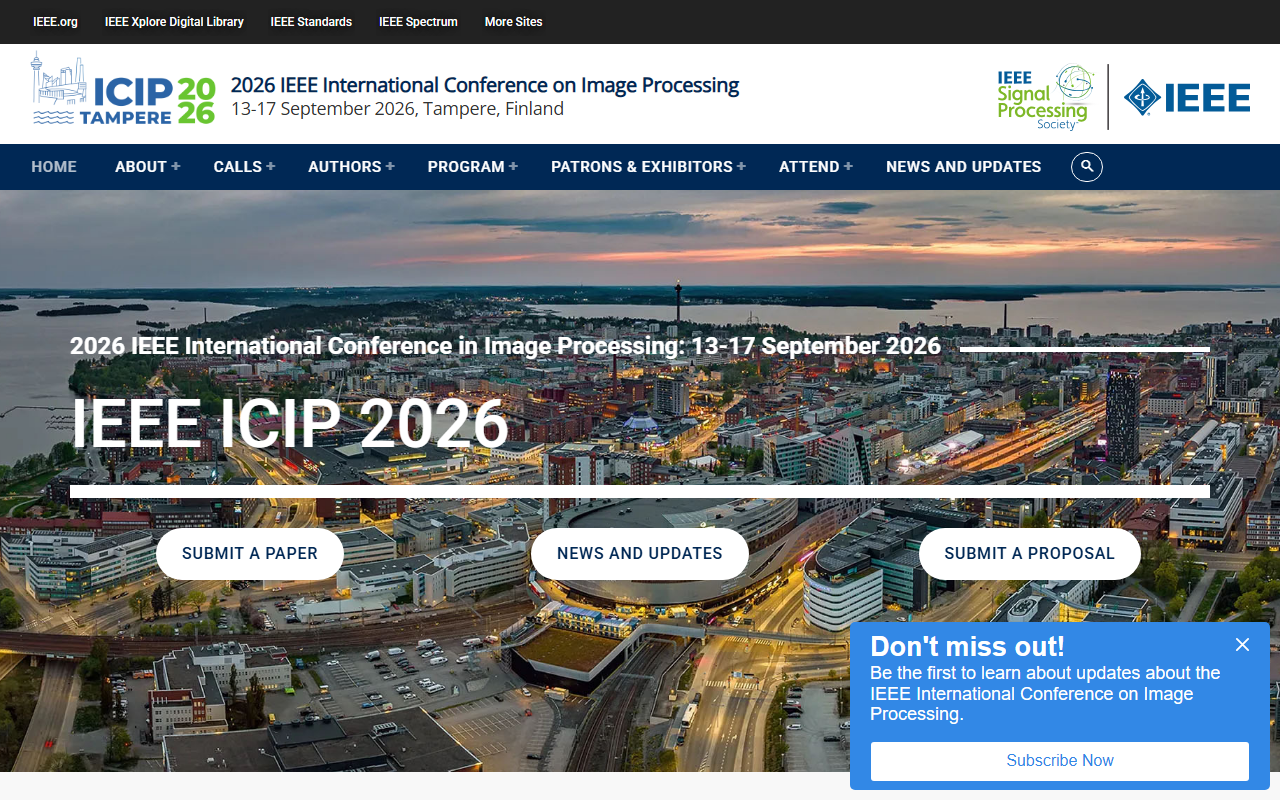
Upon visiting the IEEE ICIP 2026 site, I was immediately struck by its clean, professional layout. The header offers quick links to IEEE.org, IEEE Xplore, and other resources, underscoring the conference’s institutional backing. The homepage centers on a bold call-to-action button—“Submit a Paper or Abstract”—which makes the primary purpose clear from the start. Below that, a short news update plus a Tove Jansson quote adds a human touch. The dashboard is essentially a static promotional page; there is no interactive tool or demo. The onboarding flow is straightforward: you navigate to submission deadlines, registration, and program details via the menu. For a conference website, this is exactly what you’d expect—efficient but not flashy. When testing the free tier (browsing publicly available information), I found all keynote and plenary speaker bios listed, along with their affiliations. This gives a solid glimpse into the expertise on offer.
What IEEE ICIP Offers as a Learning Platform
Classified under Image AI > Learning Platform, IEEE ICIP is a one-week event (13–17 September 2026 in Tampere, Finland) that serves as a concentrated learning environment. The problem it solves is the need for researchers and practitioners to stay current with cutting-edge image processing, computer vision, and imaging research. Unlike typical online courses or software tools, this platform relies on peer-reviewed paper presentations, invited talks, and networking. The technical details: it is organized by IEEE, the world’s largest technical professional organization, and uses the traditional conference model. No API or product integration is visible—it’s purely an educational gathering. Plenary speakers include Ulugbek Kamilov, Rebecca Willett, and Stéphane Mallat, all leading figures in computational imaging and machine learning. Keynote speakers come from Netflix (Anne Aaron, Senior Director of Encoding Tech), NVIDIA (Pavlo Molchanov, Research Director), and others, providing direct industry insight. This lineup signals that attendees will gain exposure to both fundamental theory and applied engineering challenges. For anyone serious about image AI, the conference is a prime opportunity to learn from top experts and network with peers.
Pricing and Suitability
Pricing is not publicly listed on the website; IEEE conferences typically offer early-bird, standard, and student rates, but the 2026 page does not include fee details yet. Given the conference’s prestige, registration costs are generally several hundred dollars, with discounts for IEEE members and students. Compared to alternatives like CVPR or ICCV, ICIP is also a major venue but with a stronger emphasis on image processing fundamentals. This tool is best suited for academic researchers, PhD students, and R&D engineers who need to stay at the forefront of image AI. It is less appropriate for hobbyists or professionals seeking a hands-on software tool—there is no code repository or interactive demo here. The conference also highlights “Experience the Finnish way of happy living,” so the location adds a cultural learning aspect. One genuine strength is the caliber of speakers and the breadth of topics covered. A real limitation is the lack of on-demand content; you must attend in person to fully benefit, and the single annual occurrence means infrequent updates.
Final Verdict
IEEE ICIP 2026 is a high-value learning platform for image processing professionals who thrive on live presentations and networking. If you can travel to Finland and afford the registration, the exposure to pioneering research and industry leaders is unmatched. For those seeking a free, always-available AI tool, look elsewhere—this conference is an investment in deep, in-person education. I recommend it for graduate students and researchers aiming to publish and learn from the global community. Visit IEEE ICIP at https://2026.ieeeicip.org/ to explore it yourself.













Comments