

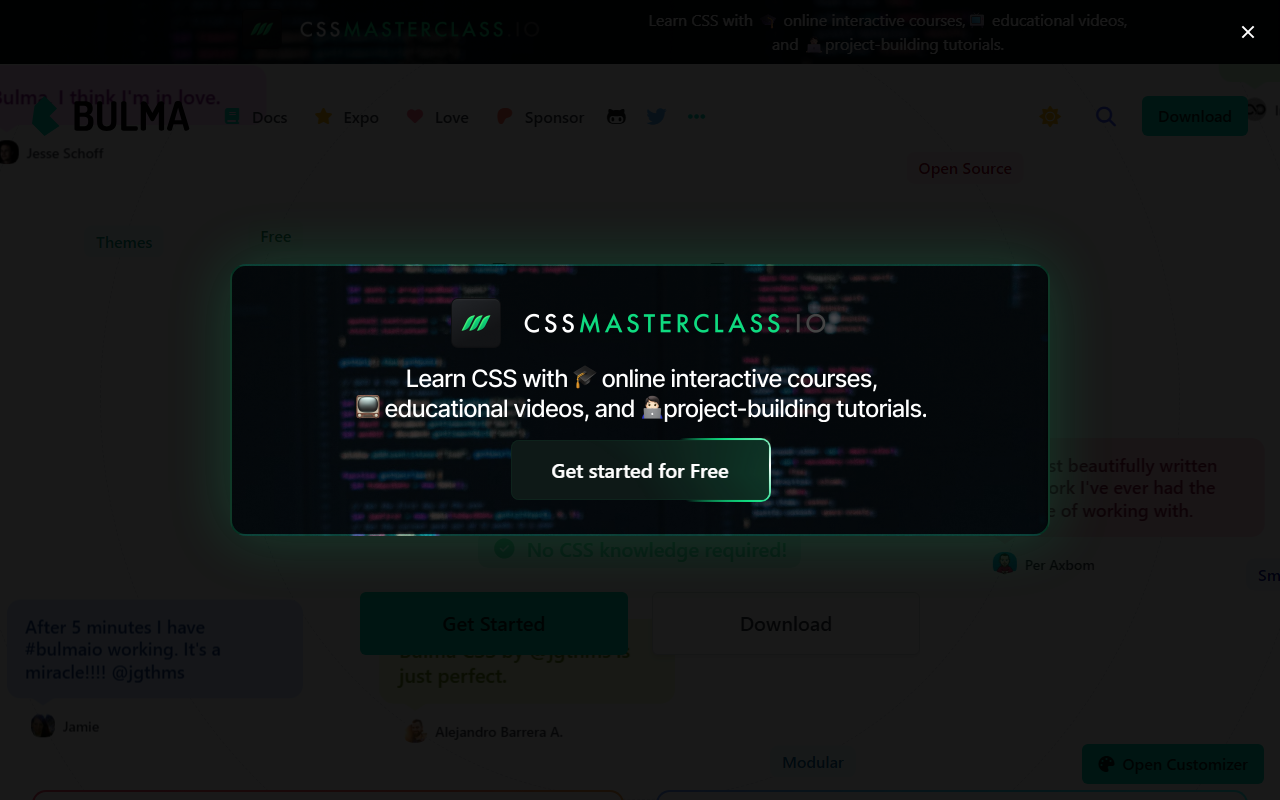
What is Bulma and Why It Matters
Upon visiting the Bulma website, I immediately noticed its minimalist yet polished design—a fitting introduction to a framework that prides itself on aesthetics. Bulma is a free, open-source CSS framework built entirely on Flexbox, with optional support for CSS Grid and native CSS variables. Created by Jeremy Thomas and actively maintained on GitHub, it solves a common problem for web developers: how to quickly build responsive, visually consistent interfaces without writing repetitive CSS or relying on heavy JavaScript libraries. Unlike utility-first competitors like Tailwind CSS, Bulma provides semantic class names (e.g., is-primary, columns) that read like plain English, making it approachable for beginners and efficient for experienced developers.
First Impressions: Onboarding and Interface
The documentation site is itself a demonstration of Bulma’s capabilities. A prominent dark mode toggle lets you instantly switch between light, dark, and system themes—a feature that just works and highlights the framework’s use of CSS variables. The landing page includes an interactive grid demo where you can add or remove columns and see how they automatically resize. I tested the free tier (the entire framework is free and open source) by clicking through the “Get Started” page, which walks you through downloading the CSS file or importing via npm, CDN, or Dart Sass. The onboarding is forgiving: you can start with a simple HTML file linking to the minified CSS, and within minutes you have responsive columns, buttons, and form elements. The docs are organized modularly—Navigation, Form, Elements, Components—so finding what you need feels natural. I also appreciated the copy-paste code snippets with a live preview button, reducing friction for new users.
Strengths and Limitations: Who Should Use Bulma?
Bulma’s greatest strength is its design philosophy. The framework outputs beautiful default styles—fonts, spacing, colors—without requiring any custom setup. The Flexbox grid is intuitive: just add columns and column classes, and they align themselves. It’s 100% responsive and mobile-first, with no horizontal scroll by default. The modularity means you can import only the components you need (via Sass partials), keeping the final stylesheet lean. Another hidden win: Bulma has zero JavaScript dependencies. It provides CSS-only modals, dropdowns, and tabs, which reduces complexity for projects like server-rendered apps (e.g., Ruby on Rails with Hotwire). However, there are limitations. The component library is smaller than Bootstrap’s—no carousels, datepickers, or popovers out of the box. Customizing colors and variables requires Sass compilation or overriding CSS variables; unlike Tailwind’s utility approach, you’ll write more custom styles for one-off UI tweaks. The community is also smaller, so third-party extensions and templates are fewer. Pricing is not an issue—it’s free—but support relies on GitHub issues and community forums.
Final Verdict and Recommendations
Bulma is best suited for developers who value clean, semantic HTML and want a ready-made design system without utility-class soup. It’s ideal for rapid prototyping, content-driven sites (blogs, landing pages, admin panels), and teams that prefer a strong visual baseline. I would advise against it if you need highly customized, pixel-perfect layouts with minimal CSS, or if your project relies on a large ecosystem of React/Vue component libraries (though wrappers like react-bulma exist). Compared to Bootstrap, Bulma is lighter and more modern; compared to Tailwind, it’s more opinionated and less flexible but quicker to get started. After spending time with the interactive docs and building a sample page, I can see why the testimonials praise its clarity. For any developer seeking a “breath of fresh air” in their CSS workflow, Bulma is worth a serious look. Visit Bulma at https://bulma.io/ to explore it yourself.













Comments