

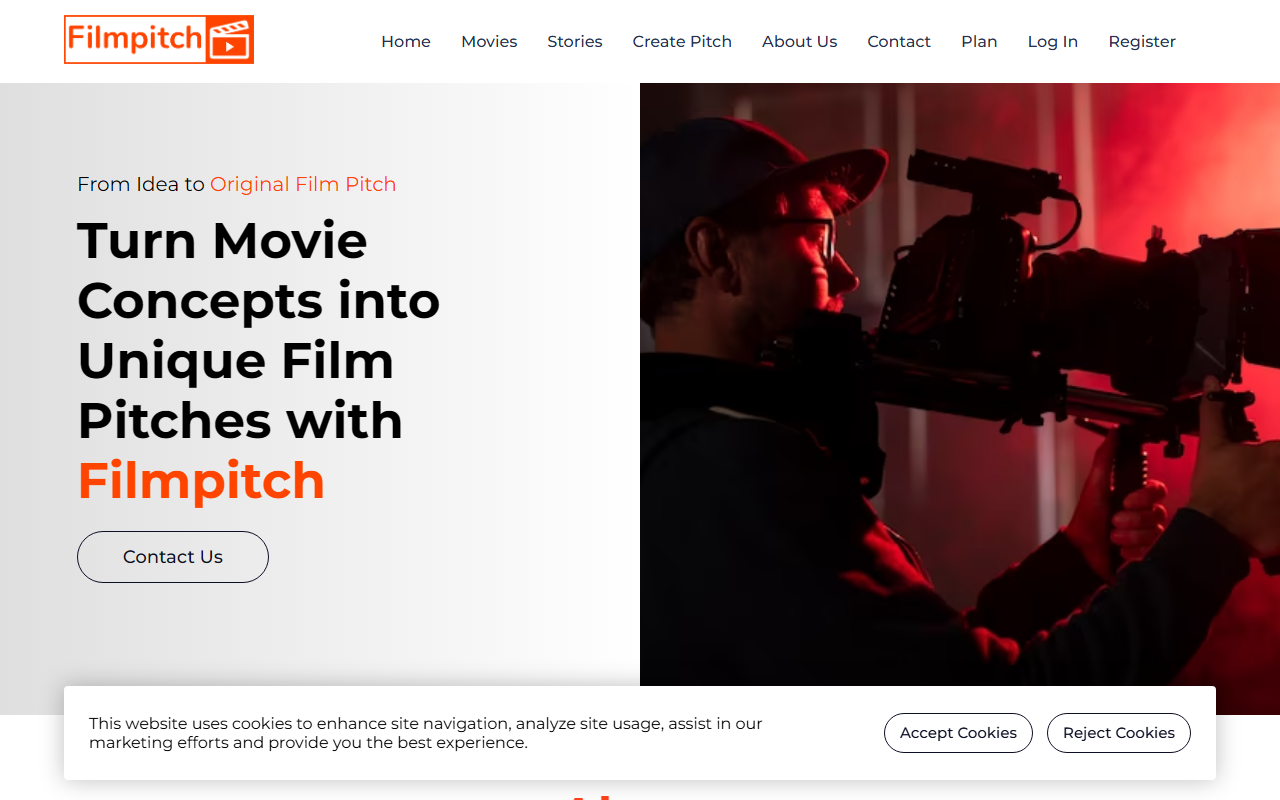
What Is Filmpitch and How Does It Work?
Filmpitch is a specialized AI writing tool designed for filmmakers, screenwriters, and anyone who needs to turn a raw movie concept into a professional pitch package. Unlike general AI writing assistants, Filmpitch focuses purely on the language and structure of film and television pitch decks. You start with a short synopsis—just a few sentences describing your idea—and the platform expands it into a complete pitch: a logline, a synopsis, character breakdowns, a moodboard, and a full pitch deck ready to share. The tool pulls from a vast knowledge base of cinematic styles, genres, and narrative structures to ensure the output feels industry-specific.
First Impressions and Onboarding Flow
Upon visiting the site, I saw a clean, modern landing page with a clear call-to-action: “Get Started.” The free version is prominently advertised—three pitch creations per week at no cost. There is no forced sign-up immediately; clicking the CTA leads to a simple input field where you paste your synopsis. I tested the free tier by entering a brief concept: “A retired detective is pulled back into the underworld when his estranged daughter goes missing, forcing him to confront old enemies and his own past.” Within seconds, the interface presented a slick dashboard showing progress bars for each pitch component. The experience is smooth and intuitive, with no confusing menus. The tool does not require you to choose genre or tone explicitly—it inferred those from my synopsis, which felt seamless.
Output Quality and Features
After my test, the generated pitch included a logline that actually hooked me: “When his daughter vanishes, a retired detective must navigate a dangerous criminal underworld to rescue her before buried secrets destroy his family.” The synopsis expanded my original idea into a three-paragraph story arc, while the character breakdown gave the protagonist and two supporting characters names, motivations, and flaws. The moodboard was not interactive but displayed a curated set of images aligned with the thriller genre. The final pitch deck was a shareable PDF with clean formatting. However, I noticed limited ability to edit individual elements without regenerating the entire pitch. The free tier’s cap of three per week means heavy users will quickly want more. The tool does not currently support uploading reference images or specifying a particular film style (e.g., neo-noir vs. gritty realism). It also lacks an API for integration with other screenwriting software.
Pricing, Competition, and Verdict
Pricing is not publicly listed on the website beyond the free tier of three pitches per week. Likely there is a paid subscription for unlimited use, but no details are provided during onboarding. Competitors include general AI writing tools like Jasper or Copy.ai, which can produce loglines but lack the specialized pitch-deck format. More direct alternatives are screenwriting AI like Sudowrite’s “Story Engine” or Fade In’s script analysis features, but those focus on full script generation rather than pitching. Filmpitch’s strength is its laser focus on the pitch stage of filmmaking—time-consuming and often poorly executed by novices. Its limitation is the lack of customizability and the artificial cap on free usage. This tool is best suited for indie filmmakers or students who need a quick, professional-looking pitch to submit to festivals or contest. Experienced screenwriters who want granular control over every word may find it too constraining. Overall, Filmpitch delivers on its promise to turn a film idea into a polished pitch in minutes, earning a solid recommendation for its target audience.
Visit Filmpitch at https://filmpitch.ai/ to explore it yourself.













Comments